








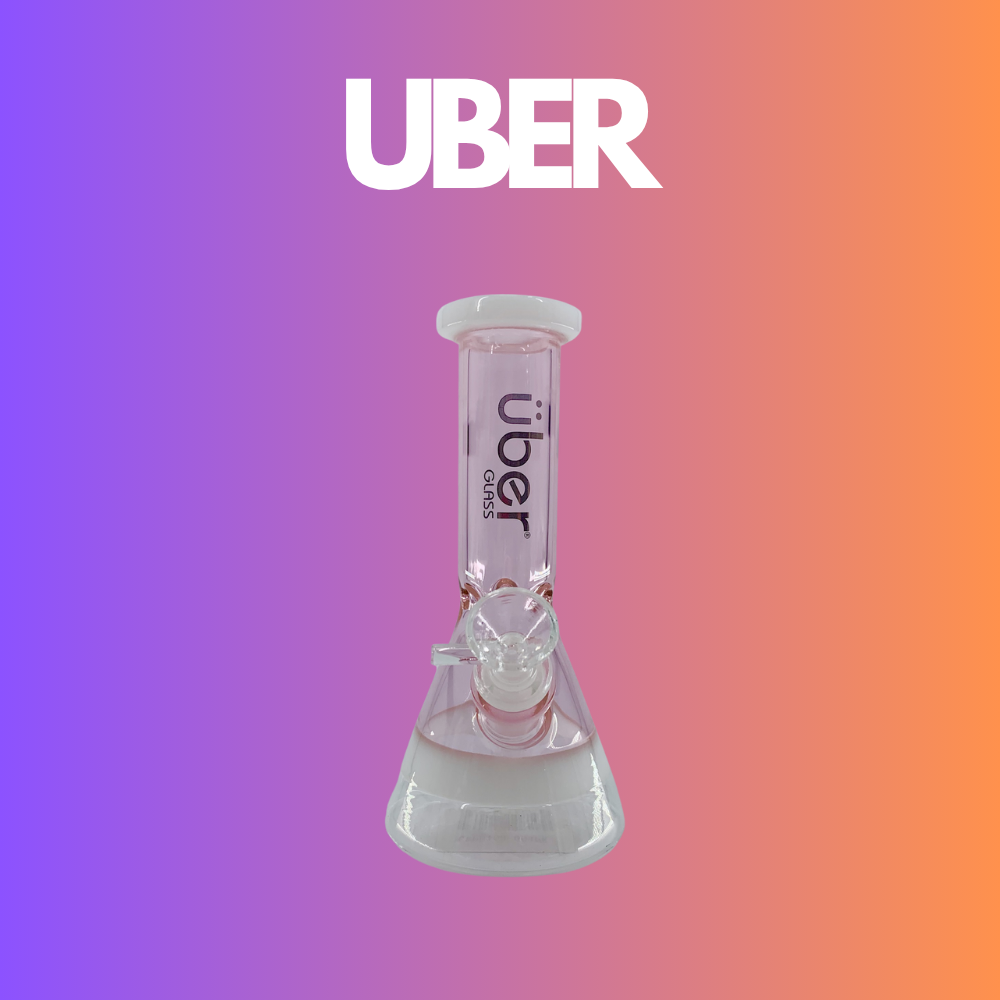




No. Water filtration does not make cannabis smoke safe to inhale. Water can cool smoke and retain some material, but smoke passing through water still exposes you to harmful combustion products. A smoother sensation is not proof of lower lung injury risk, and filtration does not prevent THC-related impairment.
- Water filtration cannabis smoke safety: cooling does not establish safety; harmful combustion products remain.
- CDC identifies lung-tissue damage and respiratory symptoms as concerns with smoked cannabis, regardless of how it is smoked.
- A cannabis lab report describes tested samples, not the safety of smoke after combustion.
- Dubcharge’s cannabis education separates filtration claims from evidence of reduced harm.
Why this matters
A water pipe changes how smoke feels. That creates an easy mistake: treating less heat or throat irritation as evidence that the lungs face less harm. Comfort and safety are different outcomes.
For adults evaluating cannabis information in 2026, the useful question is whether a claim measures a physical change, a chemical exposure, or an actual health outcome. Those are not interchangeable. The same distinction applies to testing: how to read a cannabis lab report explains information about a tested sample, not a guarantee about inhaling its smoke.
Does water filtration make cannabis smoke safe?
Water filtration does not establish that cannabis smoke is safe. Burning plant material creates a mixture of particles and gases. Passing that mixture through water does not eliminate the hazards of combustion or establish a harmless exposure level.
The CDC’s Cannabis and Lung Health guidance states that smoked cannabis can harm lung tissue and small blood vessels, regardless of how it is smoked. It also identifies many of the same toxins, irritants, and carcinogens found in tobacco smoke. That overlap does not mean every disease risk is identical; it means a water chamber cannot be treated as a safety certificate.
| Exposure situation | What changes | What the change does not establish |
|---|---|---|
| Cannabis smoke passing through water | Smoke contacts water; temperature and composition can change | That remaining smoke is harmless or causes less disease |
| Cannabis smoke without water filtration | Smoke does not pass through a water chamber | That every exposure is equivalent to every water-pipe exposure |
| No cannabis smoke inhalation | Direct exposure from actively smoking cannabis is avoided | Protection from nearby secondhand smoke or unrelated exposures |
There is no supported basis for assigning a universal safety percentage to water filtration. A measurement for one substance under one laboratory setup cannot represent the entire smoke mixture or predict an individual’s long-term health.
What water changes—and what remains
Cooling: a sensory change, not a safety result
Water can reduce smoke temperature before inhalation. That physical change can alter the sensation in your mouth and throat, but it does not demonstrate that harmful gases and particles have been removed.
A claim about smoother smoke is therefore narrower than a claim about safer smoke. Neither a comfortable inhalation nor the absence of an immediate cough establishes that lung exposure was harmless.
Retention: some material stays behind, but exposure continues
Material can collect in the water and on the device’s surfaces. Visible residue shows that something was retained; it does not identify everything retained, measure everything that passed through, or establish the health effects of the remaining mixture.
Different substances behave differently when smoke contacts water. Treating all smoke contaminants as though they dissolve or get trapped in the same way is a chemical error. Visible filtration is not complete removal.
Impairment: water is not a protective barrier
Water filtration does not make cannabis non-intoxicating. THC exposure can affect attention, coordination, judgment, and reaction time, independently of whether smoke feels harsh.
Do not drive or operate machinery after using cannabis. A device’s design, water clarity, or cooling effect cannot establish that you are unimpaired.
Why water-filtration safety claims vary
Different claims often answer different questions. Before accepting a statement about water filtration cannabis smoke safety in 2026, identify what was measured and what conclusion the evidence actually supports.
- Measured substance: A result about a particular chemical does not describe every particle, gas, or combustion byproduct.
- Test conditions: Laboratory collection methods do not automatically reproduce a person’s real-world exposure.
- Outcome measured: Cooler smoke, reduced concentration of a substance, and reduced disease risk are separate findings.
- Exposure pattern: Frequency and duration of smoke exposure matter when assessing health risk; a device feature cannot replace that assessment.
- Individual vulnerability: Existing lung disease, pregnancy, and other health circumstances change the concerns a clinician needs to consider.
These factors explain why a broad claim such as filtered smoke is safe exceeds what a narrow test can show. They are not instructions for adjusting a device or changing inhalation technique.
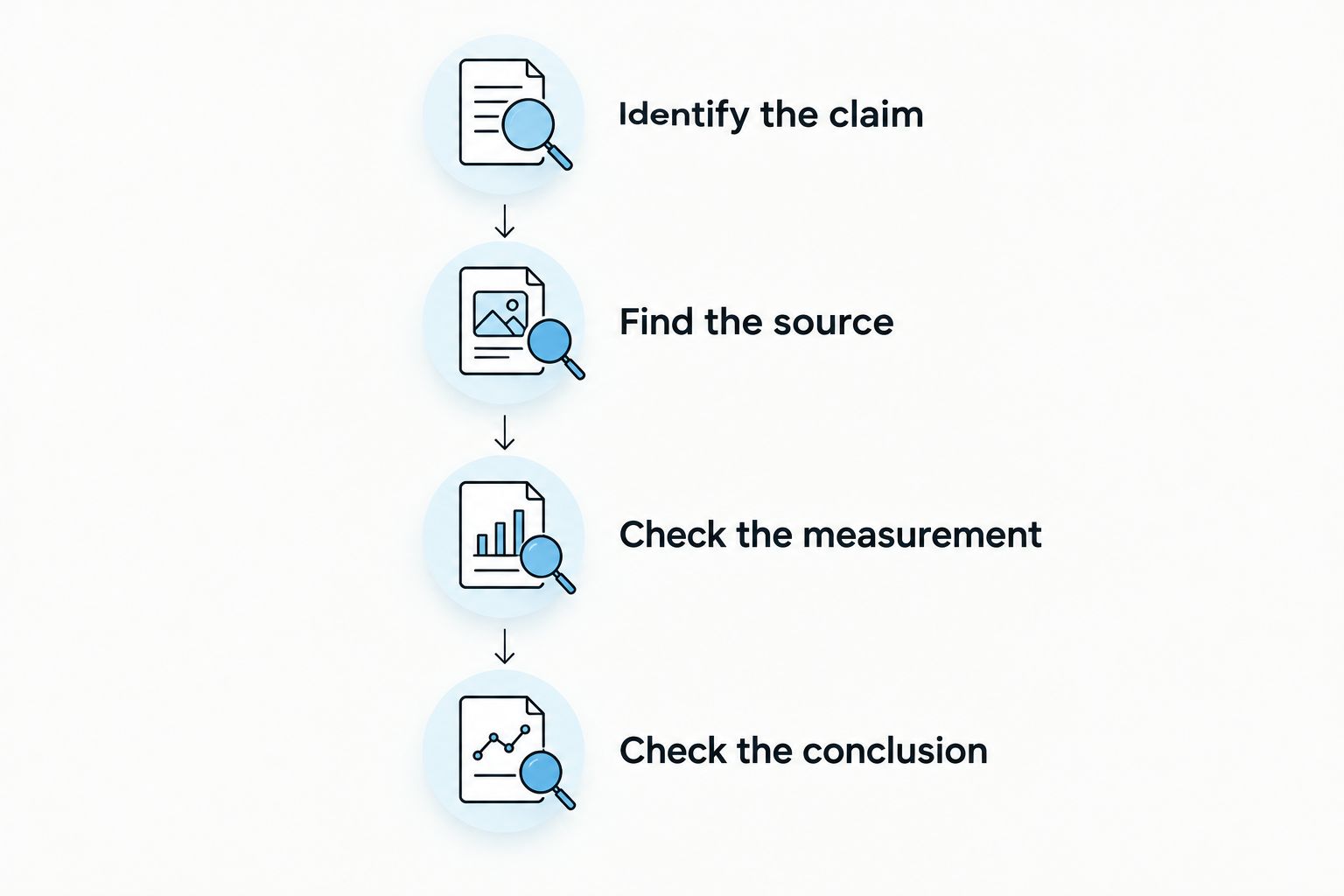
How to check a filtration claim
Use this sequence when a label, advertisement, or social post describes cannabis smoke as clean, purified, or safe. The goal is to evaluate evidence, not choose smoking equipment.
- Identify the claim. Determine whether the statement concerns cooling, chemical removal, symptoms, or disease prevention. A vague word such as clean does not specify an outcome.
- Find the source. Look for an identifiable study, public-health agency, or laboratory document. An unsupported diagram or testimonial is not a substitute.
- Check the measurement. Identify the substance measured, sampling method, comparison, and limits. A photograph of discolored water supplies none of those details.
- Check the conclusion. Ask whether the evidence measures human health outcomes or only a physical or chemical change. Do not convert the latter into a safety claim.
This is the evidence check used throughout Dubcharge’s cannabis education: a filtration claim needs evidence about the claimed outcome, not just evidence that water catches residue.
A credible explanation also states its limits. If a source cannot distinguish a measured change from an assumed health benefit, its conclusion is too broad.
What health risks remain after smoke passes through water?
Airway irritation and respiratory symptoms
The CDC links cannabis smoking with bronchitis, cough, and mucus production. These respiratory concerns remain relevant when assessing smoke that has passed through water.
The American Lung Association’s Marijuana and Lung Health guidance also describes injury to the cell linings of large airways and an association with chronic bronchitis symptoms. These sources support avoiding smoke exposure; they do not establish a harmless water-pipe configuration.
Exposure to harmful combustion products
Combustion creates hazards beyond the contaminants that might have been present in the original plant material. Smoke contains gases and particles that require their own exposure assessment.
A product’s laboratory result therefore cannot answer every question about what reaches your lungs after burning. Removing a possible contaminant from the original material and preventing combustion exposure are different problems.
Secondhand exposure
People nearby can inhale cannabis smoke without using cannabis themselves. The CDC’s Cannabis and Secondhand Smoke guidance identifies toxic and cancer-causing chemicals in secondhand cannabis smoke, along with THC exposure concerns.
Do not treat a water chamber, open window, or reduced odor as proof that an indoor space is safe. Keep smoke away from other people, especially children and people with respiratory conditions.
Important evidence limits
A sound 2026 explanation must separate established respiratory concerns from questions that remain unresolved. Evidence about cannabis smoking does not justify assigning the same certainty to every possible long-term disease outcome.
For example, the American Lung Association calls for more research on cannabis smoking and lung cancer. That uncertainty does not establish safety: the presence of harmful smoke constituents and evidence of airway effects remain reasons for concern.
Does a passing cannabis lab report make filtered smoke safe?
No. A passing lab report does not establish that filtered smoke is safe. A certificate of analysis reports results for the submitted sample, the substances tested, and the methods and limits used.
That scope matters. The result does not automatically describe every item in a batch, every possible contaminant, or the mixture produced when material burns. It also does not predict how a particular person’s lungs will respond.
In the United States, cannabis testing requirements differ by jurisdiction and product category. For any 2026 testing claim, check the relevant regulator’s current requirements rather than assuming one state’s rules apply nationally.
Match the report’s batch identifier to the product label and check whether official recall notices apply. A recall or safety warning takes priority over a general statement that a product was tested.
Does clear water mean cannabis smoke is clean?
No. Clear water does not prove that cannabis smoke is clean or harmless. Appearance cannot measure dissolved chemicals, airborne particles, or gases that continue through the device.
The reverse inference also fails: darker water does not provide a reliable measure of how much protection occurred. Color is an observation, not a toxicology result. Smell and taste are not substitutes for exposure testing either.
Can water filtration prevent cannabis-related lung symptoms?
No. Water filtration cannot be relied on to prevent cannabis-related respiratory symptoms. A lack of coughing during use does not establish that the lungs escaped exposure or injury.
Stop exposure and seek medical advice for persistent cough, wheezing, chest discomfort, or breathlessness. Tell the clinician what substances you used and how you were exposed; accurate information helps the assessment.
Call 911 for severe trouble breathing, severe chest pain, collapse, or inability to wake someone. Do not wait for a device inspection or lab-report check before seeking emergency care.
Storage, recalls, and disposal still matter
Water filtration does not address accidental ingestion or access by children and pets. Keep cannabis in its original labeled packaging inside locked storage, separate from ordinary food and drinks. Keep devices and contaminated residues out of reach as well.
If you receive a recall notice, follow the issuing regulator’s or manufacturer’s instructions. Do not assume water filtration makes a recalled product acceptable to use, and do not pass a recalled product to someone else.
For disposal in 2026, follow local waste rules and any specific recall directions. Do not leave cannabis waste accessible in household trash or give it away as a disposal method.
In the United States, Poison Control is available at 1-800-222-1222 for suspected poisoning or accidental exposure. For a pet exposure, contact a veterinarian promptly; human poison advice is not a substitute for veterinary care.
FAQ
Does a bong make cannabis smoke safe for my lungs?
No. A bong does not make cannabis smoke safe for your lungs. Water can change smoke temperature and retain some material, but harmful combustion products remain a concern.
Is water-filtered cannabis smoke safer than unfiltered smoke?
Water filtration alone does not establish a reliable reduction in health risk. A change in one measured substance cannot establish the safety of the remaining smoke mixture or predict disease outcomes.
Does adding ice remove harmful chemicals from cannabis smoke?
Cooling cannabis smoke with ice does not establish that harmful chemicals have been removed. A temperature change is not evidence of reduced toxicity or protection from lung injury.
Can I trust clear water as a sign that cannabis smoke is clean?
No. Clear water cannot show whether harmful gases or particles remain in cannabis smoke. Appearance, smell, and taste do not establish inhalation safety.
Does a passing cannabis lab test mean smoking it is safe?
No. A passing cannabis lab test does not establish smoking safety. It describes the tested sample and specified analytes, not every substance created during combustion.
Can water filtration stop THC from impairing me?
No. Water filtration does not prevent THC-related impairment. Do not use the device’s cooling effect or your comfort level to decide whether you can drive.
What should I do if I have trouble breathing after cannabis smoke exposure?
Stop exposure and seek medical help for breathing symptoms. Call 911 for severe difficulty breathing, severe chest pain, collapse, or inability to wake someone.
One last thing
Dirty water can demonstrate that material was retained without demonstrating that your lungs were protected. Both statements can be true at once. The missing information is what remained in the smoke and what that exposure means for health.
When reading Dubcharge’s cannabis education or any other source, keep that distinction in view: physical filtration is a process; safety is a conclusion that requires separate evidence.


Leave a comment
This site is protected by hCaptcha and the hCaptcha Privacy Policy and Terms of Service apply.