





To check cannabis recall notices, start with the government agency responsible for the product in the state where it was sold, then match the notice against the package’s batch or lot identifier. Read the full notice for affected products, distribution details, and instructions—not just the headline. If your package matches, stop using it and follow the issuing agency’s directions for storage, return, or disposal.
- Check cannabis recall notices through the responsible government agency, then match the package’s batch or lot identifier.
- California’s Department of Cannabis Control publishes cannabis recalls; other jurisdictions maintain their own notices.
- A passing cannabis lab report does not cancel a recall or prove that a product is safe.
- Keep potentially recalled cannabis away from children and pets while you confirm the official instructions.
How do you check official cannabis recall notices?
Match the official notice to the physical package, not just the brand name. For a 2026 U.S. recall check, identify the jurisdiction, locate its responsible agency, and compare the affected identifiers with your label. A news story or retailer message can alert you, but the issuing agency’s notice supplies the instructions to follow.
If you need help finding batch information in supporting paperwork, DubCharge’s educational guide explains how to read a cannabis lab report. Keep the package and report together; a report for a different batch does not establish anything about yours.
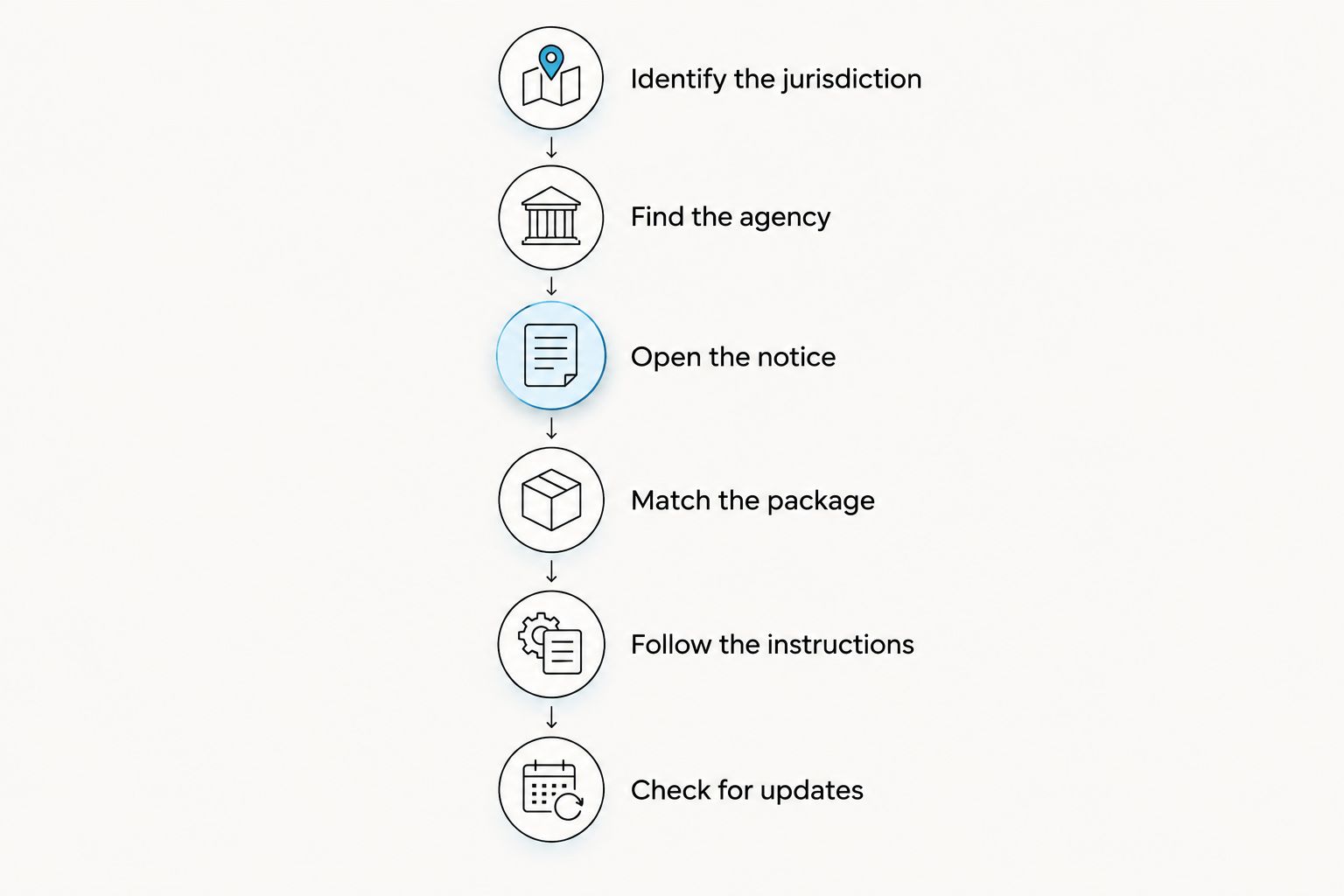
- Identify the jurisdiction. Record where the product was purchased and what the package says about the manufacturer or license holder. An online seller’s location alone does not establish which agency has authority.
- Find the responsible agency. Search the state government’s cannabis regulator, health department, or relevant hemp oversight agency. Confirm the agency’s identity through the official state government directory.
- Open the full notice. Check its publication date, updates, affected-product list, and attachments. Search-result snippets can omit the identifiers you need.
- Match the package. Compare the product name, manufacturer, batch or lot identifier, and any additional identifiers specified in the notice. Dates and package sizes matter when the notice uses them to define the affected products.
- Follow the instructions. Stop using a matching product. Keep it secured while you follow the agency’s return, reporting, or disposal directions.
- Check for updates. Revisit the original notice before taking the final action, particularly if its scope or handling instructions have changed.
Photograph the label before surrendering or disposing of the package. Preserve your receipt and any relevant correspondence so you can answer questions without relying on memory.
Why this matters
A recall can cover a particular batch rather than every product carrying the same brand name. Reading only the headline can cause you to overlook an affected package or incorrectly assume an unrelated package is included.
DubCharge’s cannabis education is for understanding labels and risks; the issuing agency determines a recall’s scope. Use educational material to understand the terminology, then rely on the current official notice for the affected identifiers and required action.
A recall search also has limits. Finding no matching notice does not prove that a product is uncontaminated, accurately labeled, lawful, or suitable for you.
Which official sources should you check?
Start with the regulator responsible for the product’s market. State-regulated cannabis and products marketed as hemp do not necessarily follow the same oversight route, so the word “cannabis” alone is not enough to select an agency.
For your 2026 search, these source types serve different purposes:
| Source | Best for | Strength | Limitation |
|---|---|---|---|
| State cannabis regulator | Notices involving the state’s regulated cannabis market | Identifies affected products and state-specific instructions | Does not establish nationwide coverage |
| State health or agriculture agency | Relevant hemp, food, or public-health notices within its authority | Addresses the product categories assigned to that agency | Responsibility differs by jurisdiction |
| U.S. Food and Drug Administration | FDA-posted recalls and federal safety alerts | Supplies federal notices within FDA’s scope | Is not a complete directory of state cannabis recalls |
| Manufacturer or retailer notice | Purchase-specific communication and implementation details | Can help connect your purchase to an affected lot | Does not replace verification against an official agency notice |
State-regulated cannabis notices
California’s Department of Cannabis Control publishes cannabis recall information. New York’s Office of Cannabis Management also publishes cannabis recall information. Search the responsible regulator for the state involved rather than treating either agency as a nationwide source.
Agency names differ. A government directory is a better starting point than assuming every state uses “cannabis control” in its department name.
Hemp-related notices and federal alerts
For products marketed as hemp or THC-A, identify the relevant state authority and check applicable federal alerts. FDA’s recall listings are relevant to products within its oversight, but an empty FDA search does not clear a product of state-level concerns.
A hemp label is not proof of safety or universal legal eligibility. If the responsible authority is unclear, ask the state health or agriculture department which agency handles that product category.
What details must match the recall notice?
Read the notice as a set of identifying conditions. A similar name or package design is a reason to investigate, not a sufficient basis for deciding whether your package is affected.
Compare these details when the notice provides them:
- Product name: Include the variety or formulation if the notice distinguishes it.
- Batch or lot identifier: Compare the full identifier, including letters, punctuation, and leading zeros.
- Manufacturer: Check the named business and any license information included in the notice.
- Package details: Compare package size, form, and identifiers used to distinguish affected items.
- Relevant dates: Check production, packaging, sale, or expiration dates only as specified by the notice.
- Distribution information: Check the listed retailers or locations without assuming an incomplete list clears your package.
Do not substitute a laboratory sample number for a production lot unless the documentation explicitly connects them. Likewise, a QR code that opens a lab report does not by itself prove the report belongs to your package.
If the label is unreadable, photograph what remains and contact the agency or the contact identified in the notice. Do not treat missing identification as evidence that the product is unaffected. Keep it secured and unused while you seek clarification.
Why cannabis recall searches vary
There is no single search pattern that resolves every product. The right route depends on what was sold, where it entered the market, and which authority issued the notice.
- Jurisdiction: Agencies have geographic and statutory limits; a notice from one state is not an all-state clearance.
- Product category: State-regulated cannabis, hemp products, and foods can fall under different oversight arrangements.
- Notice scope: A recall can identify specific lots, dates, manufacturers, or other product boundaries.
- Identifiers: Labels, receipts, and laboratory reports can use different reference numbers that require an explicit connection.
- Updates: An agency can revise the affected list or instructions after the original announcement.
- Notice terminology: Relevant information can appear under recalls, safety alerts, health advisories, or enforcement announcements.
In a 2026 search, use the product name and manufacturer alongside those terms. Check the official result itself rather than assuming the newest-looking search result contains the latest instructions.
Does a passing lab report mean a recalled product is safe?
No. A passing laboratory report does not override an official recall. A certificate of analysis describes results for the tested sample, the listed analytes, and the methods and reporting limits used.
It does not establish that every package is identical to the sample, that every possible hazard was tested, or that the product remained unchanged afterward. A reported non-detect also does not mean a substance is absent at every conceivable concentration.
Compare the report’s batch identifier with the package, then check whether the recall discusses testing concerns or other reasons for action. Do not use an older passing report to dismiss a later official notice.
DubCharge’s cannabis education distinguishes test results from broader safety conclusions. Neither a potency percentage nor a “pass” label is a general health guarantee.
What should you do with a potentially recalled package?
Stop using it while you confirm whether the notice applies. Keep the original packaging, secure the product away from children and pets, and avoid opening it unnecessarily.
Do not taste, smell, heat, or otherwise test the product yourself. Appearance cannot establish that a product is free of pesticides, heavy metals, microbes, or other hazards named in a recall.
Follow the notice’s handling instructions rather than improvising a disposal method. Do not give the product away, resell it, flush it, or mail it back without explicit applicable instructions. If the notice does not explain disposal, contact the issuing agency or your local waste authority.
For a product containing an embedded battery, ask about the appropriate hazardous-waste or battery collection route. Do not open, puncture, or dismantle the device to separate its contents.
What if someone has already used the product?
Stop further use and retain the package information. Contact a healthcare professional or Poison Control for advice about an exposure, especially if symptoms occur; do not wait for the recall investigation to establish the cause.
In the United States, Poison Control is available at 1-800-222-1222. Call 911 for a medical emergency, including trouble breathing, collapse, a seizure, or inability to wake the person.
Describe the product, the exposure, symptoms, and timing as accurately as possible. Share the recall notice and package identifiers with the clinician, but do not assume that symptoms prove the recalled hazard caused them.
For a 2026 incident record, save the notice as well as the package photographs. Document when you checked it so later changes do not erase the instructions you originally saw.
FAQ
Where do I check cannabis recall notices in the United States?
Start with the government agency responsible for the product in the state where it was sold. Check the state cannabis regulator or relevant health or agriculture agency, and review applicable FDA alerts without treating FDA as a complete state-cannabis recall directory.
How do I know whether my cannabis package is recalled?
Match the package against the identifiers specified in the official notice, especially the batch or lot identifier. Compare the manufacturer, product name, dates, and package details when the notice uses them to define the affected products.
Does a recall include every product from the same brand?
Not necessarily; the official notice defines which products are affected. Do not expand or narrow its scope based only on a shared brand name.
Is a passing certificate of analysis enough to ignore a recall?
No, a passing certificate of analysis does not override a recall. The report concerns a tested sample and listed tests; it does not prove every package is safe.
What should I do if I cannot read the batch number?
Keep the product unused and secured while you ask the issuing agency or designated contact for help. Photograph the remaining label and retain your receipt; an unreadable identifier does not establish that the package is unaffected.
Can I throw recalled cannabis in the trash?
Follow the official notice and applicable local disposal instructions rather than assuming household trash is appropriate. Products containing batteries can require a separate waste route, and you should not dismantle them.
Who should I call after a possible cannabis poisoning?
In the United States, call Poison Control at 1-800-222-1222 for exposure advice. Call 911 for a medical emergency, including trouble breathing, collapse, seizures, or inability to wake the person.
Does finding no cannabis recall mean a product is safe?
No, an unsuccessful recall search does not establish safety. It does not verify the product’s contents, labeling, legal status, or suitability for an individual.
One last thing
Save the instructions, not just the recall headline. A screenshot of a search result can leave out the affected-lot attachment, revised scope, or disposal directions you actually need.
For your 2026 records, keep the full notice, its attachments, package photographs, and correspondence together. DubCharge’s educational resources can explain the terminology, but your final handling decision should follow the responsible agency’s current instructions.


Leave a comment
This site is protected by hCaptcha and the hCaptcha Privacy Policy and Terms of Service apply.