





























After accidental cannabis ingestion, call 911 immediately if the person collapses, has a seizure, has trouble breathing, or cannot be awakened. Otherwise, call Poison Control at 1-800-222-1222 in the United States for individualized instructions, including when a child has swallowed cannabis but has no symptoms. Do not induce vomiting, and do not wait for symptoms before seeking advice about a child's exposure.
- Accidental cannabis ingestion requires prompt assessment; call 911 for breathing trouble, seizures, collapse, or inability to awaken.
- U.S. Poison Control provides exposure-specific instructions at 1-800-222-1222, including for children without symptoms.
- CDC guidance warns that edible effects can take 30 minutes to 2 hours to appear.
- Keep the package, prevent further exposure, and follow professional instructions rather than home remedies.
Why this matters
An edible can look like ordinary candy, and an exposed person can appear well before effects develop. CDC guidance on cannabis poisoning identifies children as particularly vulnerable to serious illness after swallowing cannabis products.
This Dubcharge cannabis safety guide separates emergency actions from prevention. Once immediate care is arranged, the cannabis storage and child-pet safety guide explains how to reduce repeat exposures.
A quiet person is not necessarily a person who is safe to leave alone. Increasing sleepiness, abnormal breathing, or difficulty waking someone requires action, not reassurance based on the package label.
What should you do after accidental cannabis ingestion?
Use this U.S. response checklist in 2026. Poison Control and emergency dispatchers should direct the person's care; an article cannot determine whether observation at home is appropriate.
| Situation | Immediate action | Important limit |
|---|---|---|
| Collapse, seizure, breathing trouble, or inability to awaken | Call 911 immediately | Do not delay the call to identify the product |
| Suspected ingestion without emergency signs | Call Poison Control at 1-800-222-1222 | No symptoms does not establish that the exposure is harmless |
| A pet swallowed cannabis | Contact a veterinarian or emergency veterinary hospital promptly | Human poison advice does not replace veterinary assessment |
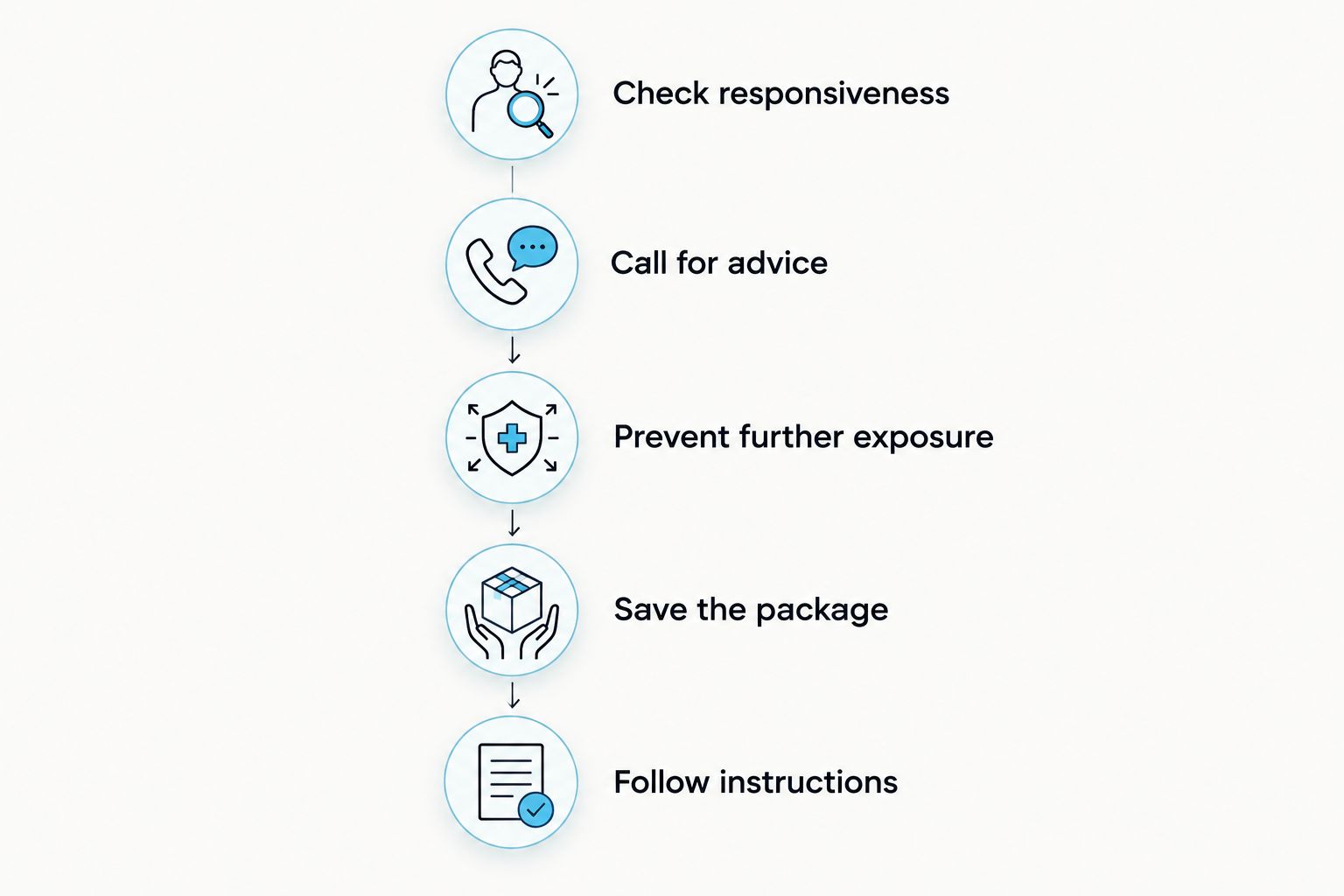
Check responsiveness
Speak to the person and check whether they respond normally. Look for difficulty breathing, a seizure, collapse, or inability to awaken; these are emergency warning signs identified by Poison Control.
Call 911 before searching for a receipt, lab report, or ingredient list. Put your phone on speaker if that helps you follow the dispatcher's instructions while staying with the person.
If the person is not breathing normally, follow the dispatcher's CPR instructions. Do not put anything in the mouth of someone having a seizure, and move nearby hazards away without restraining them.
Call for advice
For a suspected ingestion without emergency signs, call U.S. Poison Control at 1-800-222-1222. The service is available 24 hours a day and provides case-specific advice based on the person's age, symptoms, product, and circumstances.
Call about a child's suspected exposure even if you did not see the child swallow anything. A missing edible, opened package, or residue around the mouth is information to report—not a reason to wait for proof.
Prevent further exposure
Move the remaining product out of reach. If the person is awake and cooperative, have them spit out any material still in the mouth; do not force your fingers into their mouth or give anything by mouth if they are drowsy or having trouble swallowing.
Do not induce vomiting. Do not give activated charcoal, medication, alcohol, or a home remedy unless a poison specialist or clinician specifically instructs you to do so.
Save the package
Keep the original packaging and any remaining material for identification. Take a clear photo of the label if that is easier, but do not delay a call or transportation to collect it.
Tell the specialist what you know and distinguish it from what you are estimating. An unknown amount is useful information; an invented dose is not.
Follow instructions
Stay with the person while help is being arranged. Do not let an impaired person drive, operate equipment, or leave alone.
If the person is unconscious but breathing, follow the dispatcher's positioning instructions. If symptoms worsen after an initial call, contact Poison Control again or call 911 for emergency warning signs.
What information should you give Poison Control?
Prepare what is available while someone else calls, or gather it during the conversation. The specialist can begin advising you before every detail is known.
- Person: Age, approximate weight, relevant medical conditions, and current medicines.
- Product: Name, ingredient list, cannabinoid information, and whether it was food, a drink, oil, or another substance.
- Amount: What was swallowed, what remains, and whether the amount is uncertain.
- Timing: When the exposure happened or when you first discovered it.
- Symptoms: Alertness, breathing, vomiting, confusion, movement, and changes since discovery.
- Other substances: Possible alcohol, medicines, or additional ingredients involved.
Read the label rather than translating it into a guessed dose. A package total and an amount per serving are not interchangeable, and a partially eaten item does not establish an exact exposure.
For a 2026 household emergency plan, keep the poison number somewhere caregivers can find without opening a shopping account. A seller's order history can help identify an item later, but it is not an emergency service.
Why the response to cannabis ingestion varies
Poison specialists assess the person and the exposure together. These factors affect the response; none provides a reliable home rule for declaring someone safe.
- Age and body size: Children can experience serious effects from amounts that adults do not recognize as substantial.
- Amount and uncertainty: An unknown amount prevents a dependable estimate from the label alone.
- Product and ingredients: Cannabis food, concentrated oil, and mixed-ingredient products present different assessment questions.
- Time since ingestion: Symptoms can be delayed, so an early symptom-free period does not rule out poisoning.
- Current symptoms: Breathing difficulty or inability to awaken changes the response immediately.
- Other exposures and health conditions: Alcohol, medicines, and underlying conditions can complicate assessment.
Do not use another person's experience as a comparison. A previous uneventful exposure does not establish what will happen in the current situation.
How long does it take for symptoms to appear?
Edible effects can take 30 minutes to 2 hours to appear, according to CDC cannabis guidance. That delay is a reason to call about a suspected exposure, not a waiting period to complete before calling.
Symptoms can include sleepiness, confusion, impaired coordination, anxiety, vomiting, or a fast heart rate. Severe poisoning can involve seizures, reduced responsiveness, and breathing problems, particularly in children.
The onset window does not set a home observation deadline. Poison Control or the treating clinician should tell you where observation belongs, what changes to watch for, and when further assessment is necessary.
For caregivers using this guide in 2026, the practical rule is unchanged: act on suspected exposure and current symptoms, not on a countdown. Do not assume that feeling normal immediately after swallowing something means the risk has passed.
Can someone sleep after accidental cannabis ingestion?
Call 911 if the person cannot be awakened. Sleepiness after cannabis exposure needs assessment because ordinary sleep and reduced consciousness are not interchangeable.
Do not decide to let someone sleep it off without professional advice. If Poison Control recommends observation at home, follow the specific instructions about supervision and when to call back.
Do not give food, drinks, or oral medicines to someone who is too drowsy to swallow safely. Coffee, a cold shower, or walking around does not replace an exposure assessment and can introduce additional hazards.
What should you do if a pet eats cannabis?
Contact a veterinarian or emergency veterinary hospital promptly after suspected ingestion. Tell the veterinary team about the entire product, not just the cannabis ingredient.
Some edible ingredients, including chocolate or xylitol, create additional risks for pets. Save the packaging so the veterinarian can assess the ingredients and the suspected amount.
Do not induce vomiting or give a home treatment unless the veterinary professional directs you. Keep the animal away from stairs and other hazards while arranging care, and follow the clinic's transportation instructions.
What can a label or lab report tell you?
A label can help identify the product and its stated ingredients. A laboratory report can describe findings for the sample tested, but neither determines how an exposed person will respond or proves that an ingestion is safe.
Dubcharge's cannabis education is not a substitute for Poison Control or emergency care. Do not postpone a call while trying to authenticate a certificate of analysis, decode a cannabinoid abbreviation, or calculate an exact swallowed amount.
After immediate care, how to read a cannabis lab report explains the difference between reported results and broader safety assumptions. That distinction matters when a caregiver sees a passing result and assumes no medical assessment is needed.
A hemp or THC-A description is not an emergency clearance. Report the wording to the specialist, especially when the ingredients or actual contents are uncertain.
How do you prevent another accidental ingestion?
Store cannabis products locked away, out of sight and reach of children and pets. Keep them in their original labeled packaging, separate from ordinary food, drinks, medicines, and pet treats.
Child-resistant packaging is not childproof. Close it fully after every opening, and do not transfer edibles into sandwich bags, candy jars, or unmarked kitchen containers.
For your 2026 caregiver checklist, cover these practical points:
- Tell visiting adults that cannabis products must remain secured, including items in bags or luggage.
- Check shared spaces after guests leave, including low tables and areas pets can reach.
- Make sure every caregiver knows where to find the poison number and the child's medical information.
- Follow local disposal instructions so discarded products remain inaccessible to children and animals.
If an exposure occurred at school, childcare, or another shared setting, tell the responsible staff what happened so they can secure remaining material. Do not let an investigation delay medical care.
FAQ
Who should I call after accidental cannabis ingestion in the United States?
Call Poison Control at 1-800-222-1222 for suspected ingestion without emergency warning signs. Call 911 immediately for collapse, a seizure, breathing trouble, or inability to awaken.
Should I call if my child ate a cannabis edible but seems fine?
Yes, call Poison Control immediately after a child's suspected cannabis ingestion, even without symptoms. Edible effects can be delayed, and the specialist will assess the circumstances.
Should I make someone vomit after swallowing cannabis?
No, do not induce vomiting after cannabis ingestion. Follow Poison Control or emergency clinicians' instructions rather than giving home remedies or activated charcoal yourself.
Can water or coffee reverse cannabis poisoning?
Water and coffee do not reverse cannabis poisoning. Do not give anything by mouth to someone who is drowsy, unable to swallow normally, or unconscious; seek professional instructions.
How soon can cannabis edibles cause symptoms?
Cannabis edible effects can take 30 minutes to 2 hours to appear, according to CDC guidance. Do not wait for symptoms before calling about a child's suspected ingestion.
Does a passing cannabis lab report mean an accidental ingestion is safe?
No, a passing cannabis lab report does not establish that an accidental ingestion is safe. Share the label and report if available, but let Poison Control or a clinician assess the person.
Can I contact Dubcharge instead of Poison Control?
Contact Poison Control or emergency services for exposure assessment, not Dubcharge. Product identification can support the medical conversation, but a retailer cannot replace emergency care.
One last thing
Save the poison number before an emergency, not during one. Put 1-800-222-1222 in your phone and on the caregiver information sheet; include 911 for emergency warning signs.
For your 2026 safety check, ask another caregiver to find both numbers and the locked storage location. A prevention plan only helps when the person supervising the home can use it.


Leave a comment
This site is protected by hCaptcha and the hCaptcha Privacy Policy and Terms of Service apply.