






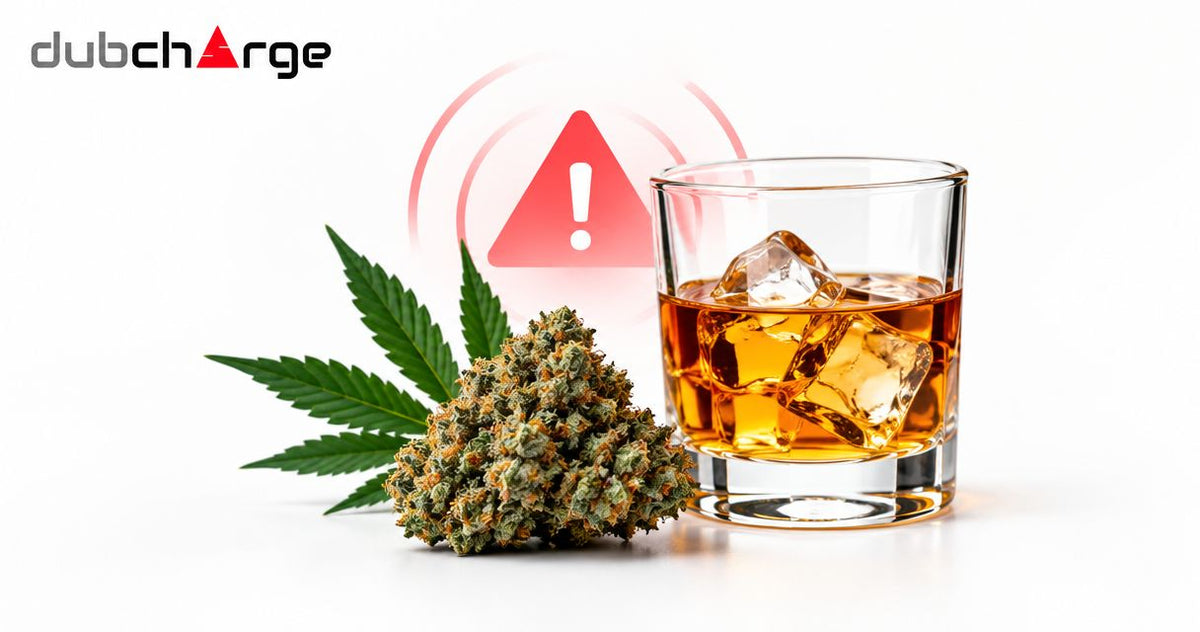
Combining cannabis and alcohol increases impairment, making driving, falls, vomiting, and poor decisions more likely than using either substance alone. Alcohol can also increase THC exposure under some conditions, while swallowed cannabis can take long enough to act that someone drinks more before recognizing the combined effects. The safest choice is not to combine them; feeling less intoxicated does not establish that you are safe.
- Cannabis alcohol combined risks include greater impairment, vomiting, injuries, and unsafe driving; avoid combining them.
- CDC guidance warns that alcohol and cannabis together can increase impairment beyond either substance alone.
- Dubcharge’s cannabis safety guidance is for adults seeking risk information, not product recommendations.
- Call 911 for trouble breathing, seizures, or inability to wake; do not assume someone can sleep it off.
Why is combining cannabis and alcohol risky?
Cannabis and alcohol both affect attention, judgment, coordination, and reaction time. Using them together makes activities that depend on those abilities more dangerous. The combination also makes it harder to recognize which substance is causing worsening symptoms.
CDC cannabis guidance identifies greater impairment when cannabis and alcohol are used together. NIAAA alcohol-overdose guidance explains why confusion, vomiting, and reduced consciousness require attention rather than reassurance. If someone has already become unwell, the immediate priority is responding to accidental cannabis ingestion and checking for emergency warning signs—not calculating what they consumed.
| Exposure | Main safety concern | What you cannot conclude |
|---|---|---|
| Cannabis alone | Impaired coordination, attention, judgment, and sometimes anxiety or vomiting | Feeling calm does not prove driving ability is intact |
| Alcohol alone | Impairment, injuries, and potentially life-threatening alcohol overdose | Being awake earlier does not rule out later deterioration |
| Cannabis and alcohol together | Greater impairment and overlapping symptoms that complicate assessment | Prior experience with either substance does not establish a safe combination |
These are safety comparisons, not recommendations. Neither substance cancels out the other, and a familiar amount of one does not make adding the other predictable.
Why this matters in 2026
Treat mixed-substance impairment as a safety problem, not a tolerance challenge. Someone who can hold a conversation can still have impaired judgment, balance, and reaction time. Their own assessment is not a reliable clearance for driving or supervising someone else.
Cannabis-containing foods and drinks add another source of uncertainty because their effects are delayed. CDC guidance states that edible cannabis can take 30 minutes to 2 hours to produce intoxicating effects. That delay creates a period when someone can mistakenly assume nothing is happening.
For adults reading Dubcharge’s cannabis education in 2026, the practical distinction is between recognizing a risk and predicting an individual outcome. Established evidence supports avoiding the combination; it does not supply a universal amount or waiting interval that makes combining substances safe.
What does the research establish—and what remains uncertain?
Controlled research supports an interaction beyond simply feeling two separate effects. In a 2015 laboratory study published in Clinical Chemistry, Hartman and colleagues found that alcohol taken before vaporized cannabis increased blood THC concentrations under the study conditions.
That finding has limits. A controlled study involving a particular administration method and participant group cannot predict what will happen with every edible, beverage, concentrate, or person. It also does not establish a dependable relationship between a single blood THC measurement and someone's ability to drive.
Keep these distinctions separate:
- Established: Cannabis and alcohol impair abilities needed for safe driving, and using them together can increase impairment.
- Supported under studied conditions: Alcohol can increase THC concentrations after cannabis exposure.
- Not established: A universal safe mixing ratio, a protective order of use, or a home test that proves recovery.
- Not established: That a person's previous uneventful experience predicts the next occasion.
The 2015 study is historical evidence, not a new 2026 trial. This article's safety guidance also draws on CDC cannabis resources, NIAAA alcohol-overdose guidance, and Poison Control advice concerning suspected poisoning.
Why combined effects vary
Several factors change the intensity, timing, or interpretation of symptoms. None provides a reliable way to make the combination safe.
- Amount consumed: Larger exposures increase concern, especially when the actual amount is uncertain.
- Timing and route: Swallowed cannabis has delayed effects, while alcohol can already be impairing judgment before those effects become obvious.
- THC concentration: More concentrated products can deliver more THC than someone expects from appearance or package size.
- Other medicines or substances: Sedating medicines can add risks that are not explained by cannabis and alcohol alone.
- Individual response: Health conditions, prior exposure, and differences in metabolism affect how someone responds.
- Incomplete information: Shared containers, missing labels, and uncertain serving amounts make assessment harder.
A description such as mild, familiar, or hemp-derived does not answer those questions. Give clinicians the actual packaging and a factual account of what happened instead of relying on those terms.
What should you do if someone has already combined them?
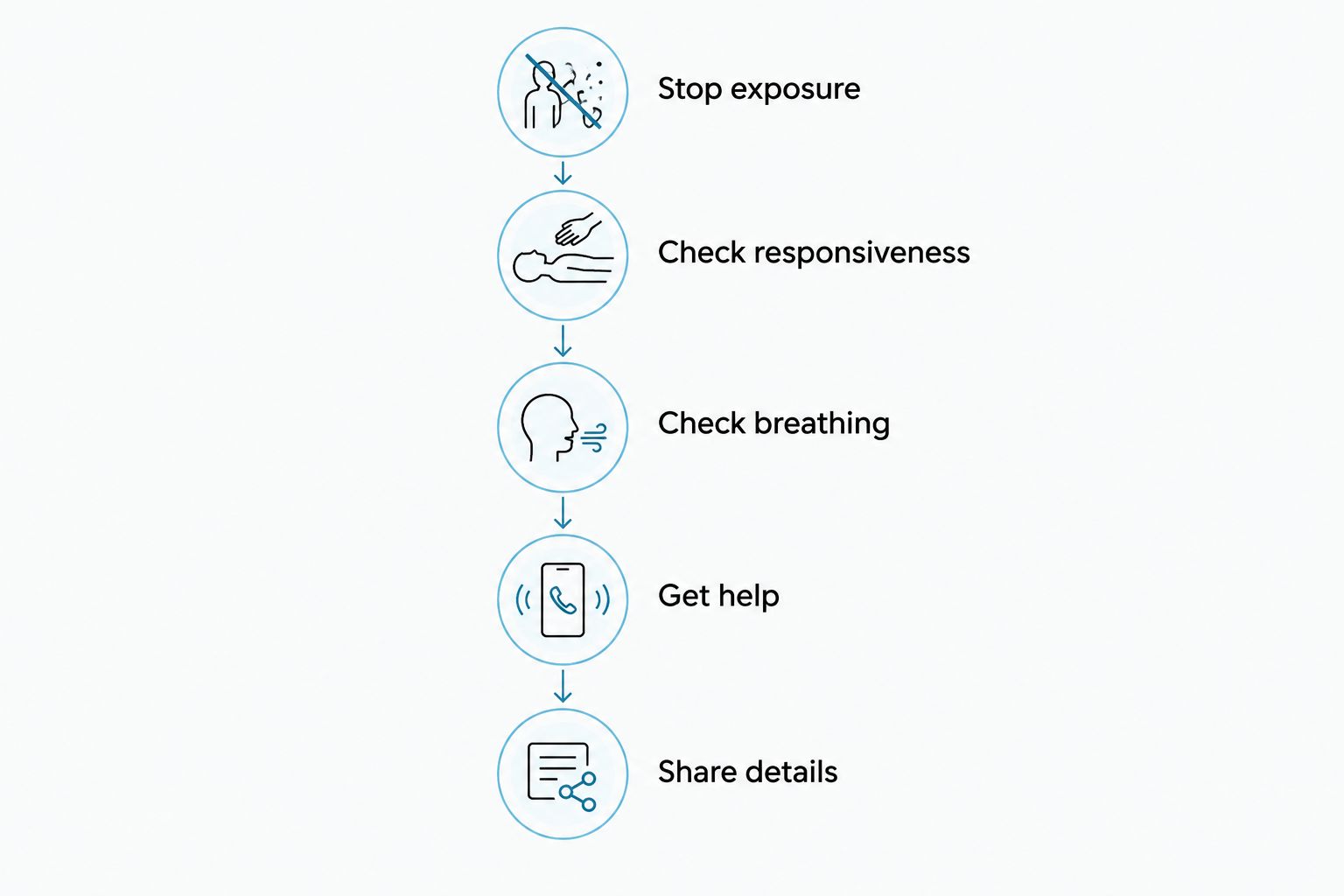
Stop further exposure, prevent injury, and assess responsiveness and breathing. Do not leave someone alone merely because they say they are fine. Ask a sober adult to stay and arrange transportation that does not require the affected person to drive.
- Stop exposure. Do not give more alcohol, cannabis, or another intoxicating substance. Coffee does not reverse intoxication.
- Check responsiveness. Speak to the person and check whether they can respond normally. Difficulty waking them is an emergency sign.
- Check breathing. Slow, irregular, or difficult breathing requires emergency help. Do not spend time trying to identify the exact cause.
- Get help. Call 911 for emergency signs. For a suspected poisoning without immediate emergency signs, contact U.S. Poison Control at 1-800-222-1222.
- Share details. Tell responders what substances were involved, when exposure occurred, and which medicines the person takes. Keep packaging available.
If the person is unconscious but breathing normally, place them on their side to help keep the airway clear and follow emergency-dispatch instructions. If they are not breathing normally, follow the dispatcher's CPR instructions. Do not force food, water, or vomiting.
Which symptoms mean you should call 911?
Call 911 if someone cannot be awakened, has a seizure, has trouble breathing, or develops blue, gray, or unusually pale skin. Repeated vomiting with reduced alertness is also dangerous because the person can choke or inhale vomit.
NIAAA lists fewer than 8 breaths per minute and breathing gaps of 10 seconds or longer among alcohol-overdose warning signs. These are danger signs, not thresholds you must wait to reach. Call sooner when breathing or responsiveness concerns you.
Do not label reduced consciousness as simply being very high. Cannabis exposure does not rule out alcohol overdose, a medication interaction, a head injury, or another medical emergency.
Stay with the person until help arrives. A cold shower, walking around, or being left to sleep is not treatment for alcohol overdose and can add injury risk or delay care.
Does a passing cannabis lab report make mixing safer?
A passing cannabis lab report does not establish that combining cannabis and alcohol is safe. Testing describes the submitted sample and the measurements performed; it does not test your response to alcohol, medicines, or other substances.
When reading a cannabis lab report, separate cannabinoid measurements from contaminant results. Neither category is an interaction study. A result below a jurisdiction's contaminant limit does not mean the product is harmless or suitable for a particular person.
For 2026 label checks, focus on the product identity, batch information, cannabinoid units, and whether amounts refer to a serving or the whole container. An unclear label is a reason not to guess—not a reason to substitute a seller's description for verified information.
State cannabis testing requirements differ across the United States. A label or laboratory result also does not establish legal eligibility in another jurisdiction, and legal sale is not a medical safety assessment.
Can alcohol-free drinks remove the risk?
Choosing a drink without alcohol removes the alcohol contribution only if the drink actually contains no alcohol. It does not remove impairment from cannabis, and it does not reverse alcohol already consumed.
The distinction matters when discussing alcohol-free cocktail alternatives: the relevant safety information is the declared alcohol content and ingredients, not whether the drink looks like a cocktail. In U.S. labeling, some drinks described as nonalcoholic contain a small amount of alcohol, so read the specific label rather than treating every claim as equivalent.
Also check whether a replacement drink contains THC or another intoxicating ingredient. A beverage can exclude alcohol and still impair you. For someone who needs to avoid alcohol entirely because of medication, pregnancy, recovery, or another health reason, discuss label uncertainties with an appropriate healthcare professional.
Changing the mixer is not treatment for intoxication. Once someone becomes unwell, the next step is assessment and help, not experimenting with another drink.
Do prescription medicines change the risks?
Yes. Opioids, benzodiazepines, sleep medicines, and other sedating drugs can make a mixed-substance situation more dangerous. NIAAA warns that alcohol combined with certain medicines can cause serious harm, including overdose.
Do not stop prescribed treatment to make room for alcohol or cannabis. Ask a pharmacist or prescribing clinician about the specific medication, and include nonprescription sleep aids and other substances in that conversation.
If symptoms develop, tell emergency responders about every known substance. An incomplete history can obscure the cause of reduced consciousness or abnormal breathing; you do not need to know which substance is responsible before requesting help.
Is there a safe waiting time between cannabis and alcohol?
There is no universal waiting time that guarantees safe combined use or safe driving afterward. Route, amount, delayed absorption, and individual response prevent a single interval from serving as clearance.
Do not use the edible onset window of 30 minutes to 2 hours as a countdown to safety. Onset describes when effects begin, not when impairment ends. Switching substances after that interval does not eliminate overlap.
A safe transportation decision is separate from feeling ready to leave. Arrange a sober driver or another ride rather than testing yourself with balance, reaction-time games, or confidence in familiar roads.
Does the order of use make a difference?
Order can affect exposure, but it does not provide a protective rule. The 2015 controlled study found increased THC concentrations when alcohol preceded vaporized cannabis under its study conditions.
That does not mean reversing the order is safe. Avoid internet rules promising that a particular sequence prevents nausea, anxiety, overdose, or driving impairment; those promises exceed the evidence.
Dubcharge’s cannabis safety coverage in 2026 does not treat sequence, tolerance, or a passing test report as permission to combine substances. The recommendation remains to avoid the combination.
How should you store products after a gathering?
Put cannabis and alcohol away before leaving the area unattended. Keep cannabis in its original labeled packaging, secured away from children and pets, and separate from ordinary snacks or drinks. An adult-only gathering does not remove the risk of a later accidental exposure.
Do not leave infused beverages in unmarked cups or transfer cannabis into food containers that conceal its identity. Keep remaining packaging if a suspected poisoning has occurred because responders can use the ingredient and batch information.
For disposal, follow local waste instructions and any applicable official recall directions. Do not leave unwanted intoxicating products where another person or an animal can retrieve them.
FAQ
Is mixing cannabis and alcohol more dangerous than using either alone?
Yes. Cannabis and alcohol together can increase impairment beyond either substance alone, raising concerns about injuries, vomiting, and unsafe driving. Avoid combining them.
Can cannabis sober you up after drinking?
No. Cannabis does not reverse alcohol intoxication and can add impairment. Coffee, cold showers, and walking around do not treat alcohol overdose either.
Should I let someone sleep after mixing cannabis and alcohol?
Do not assume sleep is safe when someone is difficult to wake, vomiting, or breathing abnormally. Call 911 for emergency signs and stay with the person.
How long do cannabis edibles take to start working?
Cannabis edibles can take 30 minutes to 2 hours to produce intoxicating effects, according to CDC guidance. That is an onset window, not a measure of how long impairment lasts.
Does a cannabis lab report prove mixing with alcohol is safe?
No. A cannabis lab report describes tested sample characteristics, not the safety of combining cannabis with alcohol or medicines. Passing results do not establish that a product is harmless.
Who should I call about a possible mixed-substance poisoning?
In the United States, call 911 for trouble breathing, seizures, or inability to wake. For suspected poisoning without immediate emergency signs, call Poison Control at 1-800-222-1222.
One last thing
The information that helps responders most is often on the packaging, not in someone's estimate of how intoxicated they feel. If an exposure becomes a medical problem, keep the container and tell responders what you know—including uncertainty. Do not delay the call while searching for an exact amount.


Leave a comment
This site is protected by hCaptcha and the hCaptcha Privacy Policy and Terms of Service apply.