


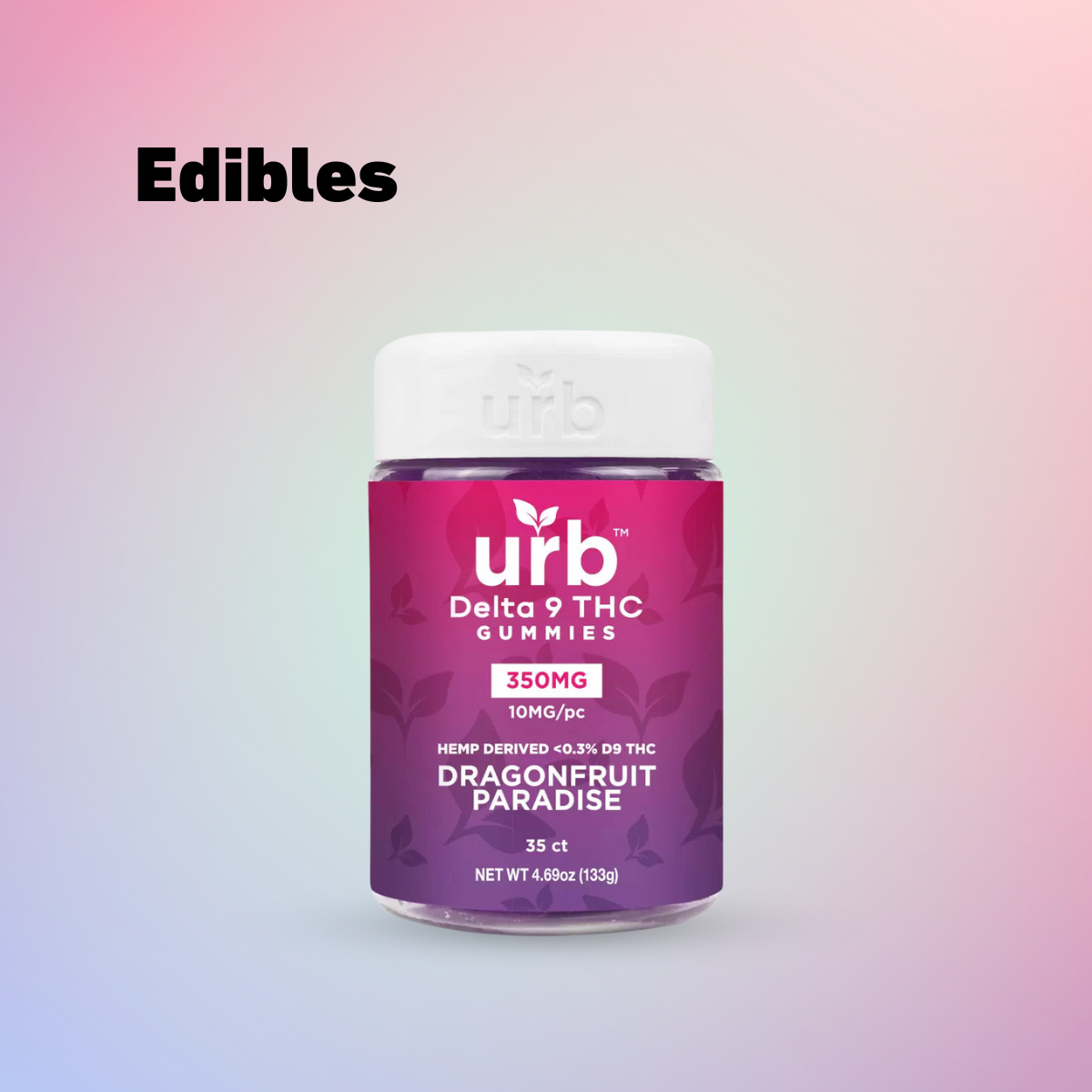





Cannabinoid amounts can vary between edible pieces because ingredients are not distributed evenly, portions differ in size, or cannabinoids change during processing and storage. A laboratory result describes the material tested—not necessarily every piece in the package—and a different reaction does not prove that the cannabinoid amount changed.
- Cannabinoid variation edibles: uneven distribution and unequal portions can produce different amounts per piece.
- A cannabis certificate of analysis describes tested material; it does not establish every piece’s cannabinoid content.
- NIST measurement guidance distinguishes sampling uncertainty from laboratory measurement uncertainty; both matter when interpreting edible results.
- Different effects do not prove different potency. Keep suspect edibles secured and check official recall notices.
Why this matters
A package average is not a measurement of every edible. That distinction matters when you read a cannabinoid label, compare it with a laboratory report, or investigate an unexpected reaction. A passing result also does not establish that an edible is safe for a particular person.
Start with Dubcharge’s educational guide to reading a cannabis lab report. For adults checking an edible in 2026, the useful questions are whether the report matches the package, what material was sampled, and what the laboratory actually measured.
Why can cannabinoid amounts vary between edible pieces?
Cannabinoid amounts differ when the concentration, piece weight, or both differ. A package can also appear inconsistent when its label and laboratory report describe different quantities—for example, a whole package versus a single serving.
These are separate issues. Evidence for one does not automatically establish another.
| Possible explanation | What it means | What does not establish it |
|---|---|---|
| Uneven distribution | Cannabinoid concentration differs within the food | Matching color or shape |
| Unequal portions | Pieces contain different amounts of food, even at the same concentration | A package’s total weight alone |
| Processing or storage changes | Cannabinoid composition changes under relevant conditions | An expiration date without supporting stability evidence |
| Limited sampling | The tested material does not capture all piece-to-piece differences | One batch-level potency result |
| Label interpretation | The reader compares different units, cannabinoids, or serving definitions | A large number on the package front |
| Different individual effects | The experience changes without a demonstrated content difference | Feeling a stronger or weaker effect |
The first three explanations concern the food itself. Sampling concerns the evidence available about that food. Label interpretation and individual effects can create an apparent discrepancy without demonstrating a manufacturing problem.
You cannot identify the cause of a suspected mismatch from appearance or effects alone. Establishing actual piece-to-piece variation requires measurements designed to answer that question.
Why cannabinoid amounts vary
Several factors explain why uniform-looking edibles need not contain identical cannabinoid amounts:
- Ingredient distribution: Cannabinoids must be distributed through the food. Uneven distribution creates areas with different concentrations.
- Piece weight: Equal concentration does not mean equal content when pieces have different weights. A larger piece contains more material.
- Food structure: A coating, filling, or separate layer can have a different composition from the surrounding food. Equal outside dimensions do not establish equal cannabinoid content.
- Processing conditions: Heat can change cannabinoid chemistry, including conversion of THCA to THC. The effect depends on the conditions, not simply whether a food was baked.
- Storage exposure: Light, oxygen, temperature, and time can affect cannabinoid stability. The direction and extent of change require evidence for the particular product and conditions.
These are possible mechanisms, not findings about a named edible. A report measuring potency in a finished sample does not, by itself, explain how a difference arose.
Uneven concentration is different from unequal size
Two pieces can have the same cannabinoid concentration but different total amounts because their weights differ. Conversely, pieces with the same weight can contain different amounts if their concentrations differ.
That distinction explains why weighing a piece cannot verify its cannabinoid content. Weight tells you how much food is present; chemical analysis addresses what that food contains.
Storage changes are not a reliable safety strategy
An older edible is not automatically non-intoxicating. Storage-related chemistry does not provide a dependable way to predict remaining potency, and food spoilage is a separate concern.
Do not treat heat exposure, age, or a change in texture as proof that an edible has become harmless. Keep a questionable product secured rather than testing it through consumption.
What does a laboratory report actually tell you?
A certificate of analysis, often called a COA, reports results for submitted material under specified test conditions. Its usefulness depends on sample identity, collection, preparation, methods, and the scope of testing.
In 2026, a QR code remains a route to information—not proof that the information matches the package in your hand. Check the report itself rather than relying on the presence of a code or a passing badge.
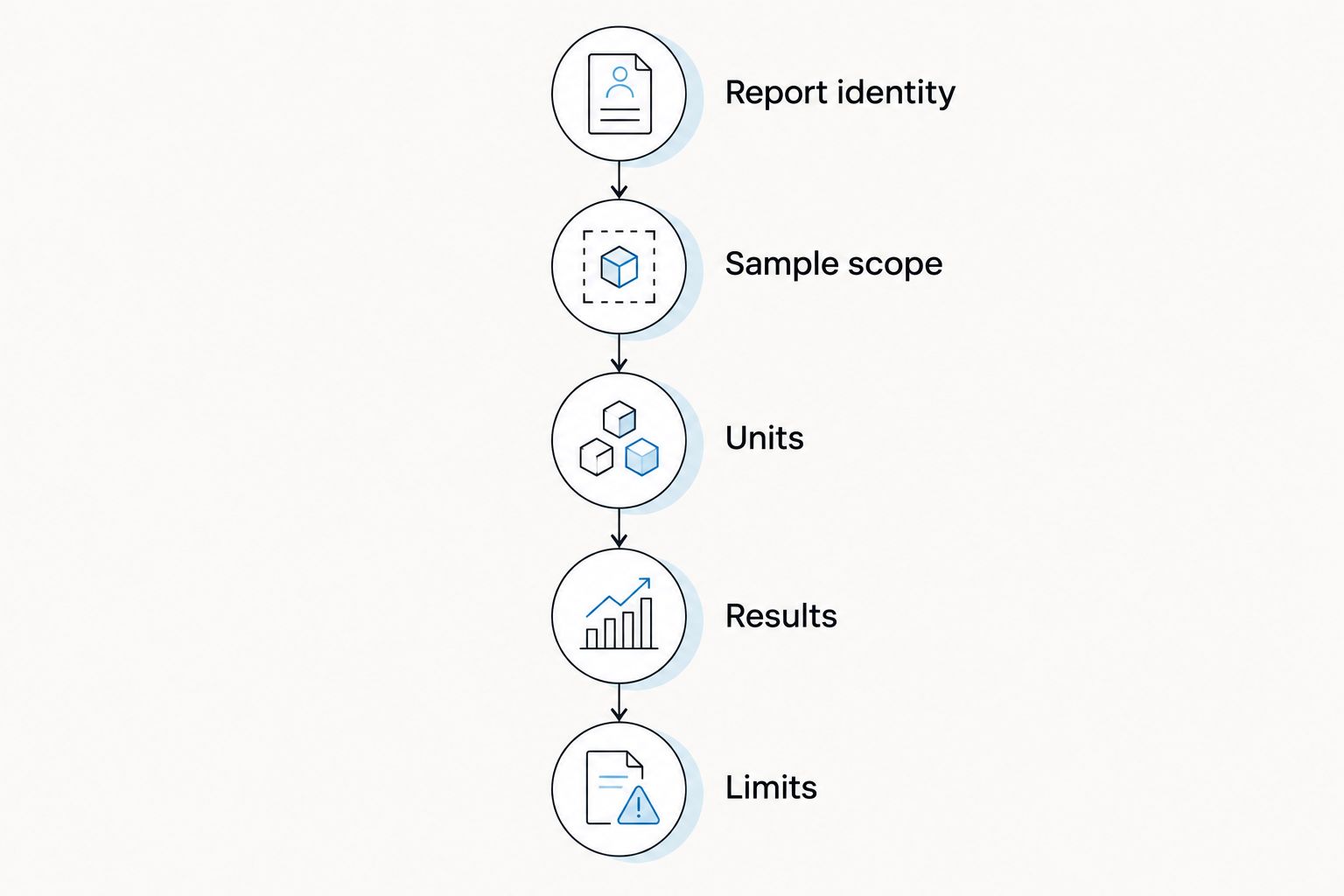
Check the report in this order
- Report identity: Match the product description and lot or batch identifier to the package. Check the laboratory name and report dates.
- Sample scope: Look for what was submitted and whether the report describes individual pieces, a combined sample, or another sample type.
- Units: Identify whether the result is a concentration, an amount per piece, or an amount per package.
- Results: Read the named cannabinoid results and distinguish them from any calculated totals.
- Limits: Check qualifications, reporting limits, and which contaminant panels were included. Do not assume an unlisted test was performed.
A report that lacks useful sampling information cannot establish how much variation exists between individual pieces. Asking for clarification is more reliable than assuming that a batch identifier means every item was tested.
For the distinction between tested material and the larger batch, read the educational explanation of cannabis testing sample variation.
Why a combined sample can hide differences
A laboratory can homogenize submitted material before taking a test portion. Homogenization helps make that test portion representative of the material prepared in the laboratory, but it does not retrospectively prove that the original pieces were uniform.
If several pieces are combined, the resulting concentration can conceal differences among those pieces. A batch average and a piece-by-piece uniformity assessment answer different questions.
NIST’s measurement-science work treats representative sampling and measurement quality as distinct concerns. For a 2026 COA review, apply that distinction: an analytically sound result can still have limited scope if the submitted sample does not answer the question you are asking.
Which label numbers are you comparing?
Compare the same cannabinoid, in the same units, on the same basis. Otherwise, a label and report can appear to disagree even when they describe different things.
A gram contains 1,000 milligrams. A milligram equals 0.001 gram. These are unit conversions, not estimates of an edible’s cannabinoid content.
| Label or report expression | What it describes | Main limitation |
|---|---|---|
| Milligrams per piece | An amount assigned to one piece | Does not itself demonstrate that each piece was measured |
| Milligrams per serving | An amount assigned to the defined serving | A serving is not necessarily one piece |
| Milligrams per package | An amount assigned to the full package | Does not establish distribution among pieces |
| Milligrams per gram | Concentration by food weight | Does not give per-piece content without piece weight |
| Percent by weight | Concentration expressed as a percentage | Must be interpreted on the same basis as the comparison result |
Also distinguish THC, THCA, CBD, and any stated total. They are not interchangeable labels. THCA can convert to THC through decarboxylation; a stated THCA amount is not a direct measurement of the THC already present.
A calculated total and a directly measured cannabinoid result serve different purposes. Read the report’s definitions rather than assuming that the largest number represents one chemically identical substance.
Can two pieces feel different even if their amounts match?
Yes. Food intake, individual metabolism, medications, tolerance, and other circumstances can affect the experience without proving a difference in the edible’s measured content.
The CDC identifies delayed and unpredictable effects as concerns with cannabis edibles. A reaction is a health observation, not a chemical assay; it cannot establish the amount of THC in a particular piece.
If a reaction is unexpected, record what happened for a clinician or poison specialist. Do not consume another piece to compare effects or try to confirm a suspected inconsistency.
Does a passing lab report prove every piece is safe?
No. A passing result applies to the tested material, measured substances, and applicable decision limits. It does not establish every piece’s cannabinoid content or eliminate health risks.
Potency testing is not the same as testing for pesticides, metals, solvents, or microorganisms. Even a report containing several panels addresses only its stated scope, and a substance below a reporting limit is not necessarily absent.
For U.S. readers in 2026, testing requirements depend on the jurisdiction and product category. FDA warnings about intoxicating cannabinoid products also make clear that retail presentation is not evidence of FDA approval or a guarantee of safety.
What should you do if you suspect an edible is inconsistent?
Stop using the suspect product and preserve its identifying information. Do not redistribute it or use another person’s reaction as a comparison test.
- Keep the original package, lot identifier, and any accessible laboratory report together.
- Record the concern plainly: unexpected effects, mismatched identifiers, unclear serving information, or a suspected labeling error.
- Secure the product away from children and pets while you seek guidance.
- Check the responsible state regulator and relevant federal notices for the exact product and lot.
- Follow an applicable recall’s instructions for reporting, return, or disposal.
A report mismatch does not prove contamination, but it does mean that report cannot reliably resolve your question about the package. Likewise, finding no recall does not establish that a product is safe.
When should you seek urgent help?
For a suspected poisoning in the United States, call Poison Control at 1-800-222-1222. Call 911 if someone collapses, has a seizure, has trouble breathing, or cannot be awakened.
Do not wait for a laboratory explanation before seeking medical advice. Keep packaging available for responders, and contact a veterinarian promptly for a suspected pet exposure.
Evidence limits to keep in mind
General food chemistry explains how variation can occur; it cannot establish how much variation exists in a specific package. That requires suitable sampling, validated analysis, and results that address individual-piece consistency.
The authoritative reference points for this 2026 educational guide have different scopes:
- NIST: Measurement science, reference materials, and laboratory comparability—not certification of a retail package.
- CDC: Cannabis health effects, edible-related risks, and poisoning prevention—not a product-specific potency assessment.
- FDA: Federal consumer warnings, product oversight information, and relevant recall notices—not a universal approval system for retail cannabis edibles.
- Poison Control: Exposure assessment and urgent guidance—not retrospective laboratory confirmation of product content.
Keep those roles separate. A health warning does not quantify a package’s variability, and a potency result does not replace medical guidance.
FAQ
Why can gummies from the same package contain different cannabinoid amounts?
Uneven ingredient distribution, different piece weights, or differences in coatings and fillings can produce different amounts. Confirming a difference requires testing designed to assess individual pieces.
Does the same size mean two edible pieces have the same THC amount?
No. Equal size does not establish equal weight or cannabinoid concentration, and appearance cannot verify THC content.
Can I divide the package total by the piece count to verify each piece?
No. Dividing the package total by the piece count gives an average, not an independent measurement of each piece.
Does a certificate of analysis test every edible in a package?
Not necessarily. A certificate of analysis describes submitted material; check its sampling information before drawing conclusions about individual pieces.
Can storage make an edible’s cannabinoid amount change?
Yes. Storage conditions can affect cannabinoid stability, but the extent of change requires evidence for the product and conditions. Age does not establish that an edible is harmless.
Does a stronger reaction prove an edible contained more THC?
No. Individual metabolism, food intake, medications, and other circumstances can affect the experience without establishing a content difference.
What should I do if someone becomes unwell after eating a cannabis edible?
In the United States, call Poison Control at 1-800-222-1222 for suspected poisoning. Call 911 for collapse, seizures, trouble breathing, or inability to awaken.
One last thing
A more precise-looking laboratory number is not automatically more representative of a package. Before comparing decimal places, check what was sampled. That question often determines whether the report can answer your concern at all.


Leave a comment
This site is protected by hCaptcha and the hCaptcha Privacy Policy and Terms of Service apply.