




































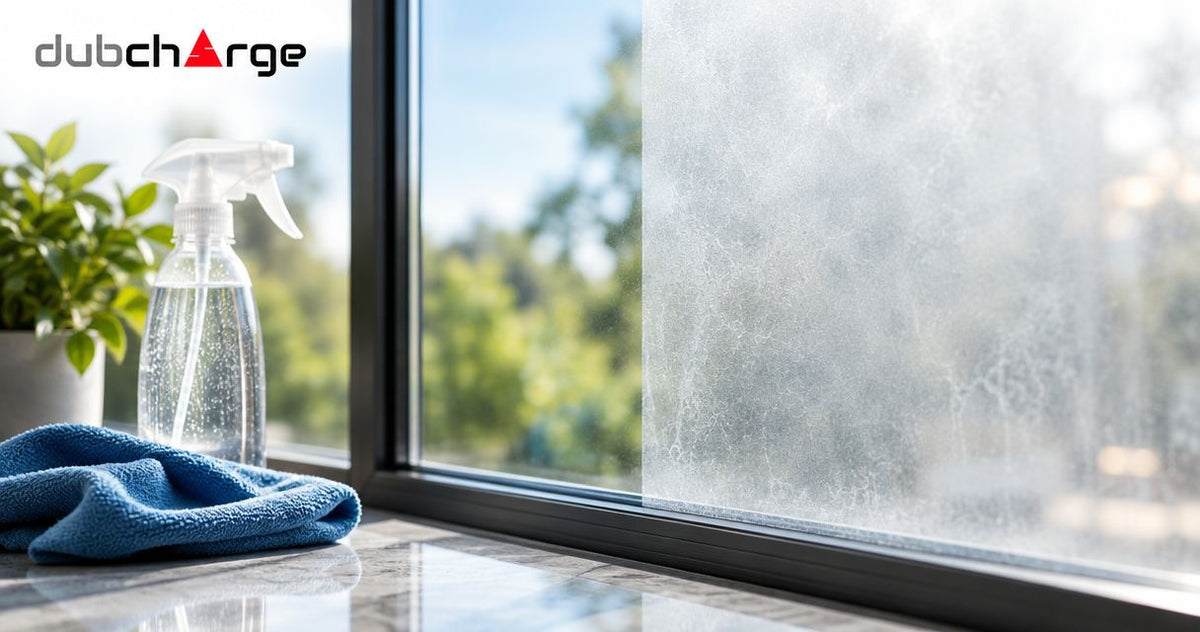
Glass looks cloudy after cleaning because mineral deposits, detergent film, leftover residue, or permanent surface damage scatter light instead of letting it pass clearly. Start with a fresh rinse and inspect the glass after it dries; repeated scrubbing will not fix etching and can add scratches.
- Why is glass cloudy after cleaning? Mineral deposits, soap film, residue, and etching are the main causes.
- DubCharge glass-care guidance starts with rinsing and inspection, not stronger chemicals.
- A compatible vinegar spot test helps identify mineral deposits; it does not prove unchanged glass is etched.
- Stop cleaning if you find cracks, chips, or loose glass fragments.
Why does glass look cloudy after cleaning?
Cloudiness is either something left on the glass or a change to the glass surface. That distinction decides your next move: remove a deposit gently, or stop trying to wash away damage.
Use this 2026 troubleshooting checklist before repeating the entire cleaning process. Never combine cleaners to tackle an unidentified film; review household cleaning chemicals you should never mix before changing products.
| Possible cause | What you might notice | Best for checking it | Benefit of this check | Limitation |
|---|---|---|---|---|
| Mineral deposits | White spots, drip marks, or a pale ring | A compatible vinegar spot test on plain, uncoated glass | Helps distinguish acid-soluble deposits from other haze | Not suitable for every finish or attached material |
| Detergent film | Streaks, smears, or a uniform veil | A thorough fresh-water rinse | Removes cleaner without adding another chemical | Will not remove permanent damage |
| Remaining residue | Uneven patches, especially around corners | Inspection under angled light | Shows where cleaning missed the surface | Appearance alone cannot identify the residue |
| Etching or scratches | Persistent frostiness or fine lines | Inspection after gentle cleaning and complete drying | Helps you recognize when to stop | A home inspection cannot always confirm the cause |
These clues overlap. A cloudy patch can contain both mineral deposits and scratches, so partial improvement does not mean every remaining mark needs more cleaner.
Why this matters
The wrong response to cloudy glass is more force. Abrasive pads, aggressive powders, and repeated scraping can turn a removable film into permanent surface damage.
For your 2026 glass-care routine, judge the result only after the item is rinsed and dry. Water can temporarily hide fine surface irregularities, while a drying droplet can leave a new mineral mark.
DubCharge glass-care guidance is best for accessory owners who want practical cleaning and damage-prevention steps. It does not replace the item's care instructions, especially for painted, coated, decorated, or mixed-material pieces.
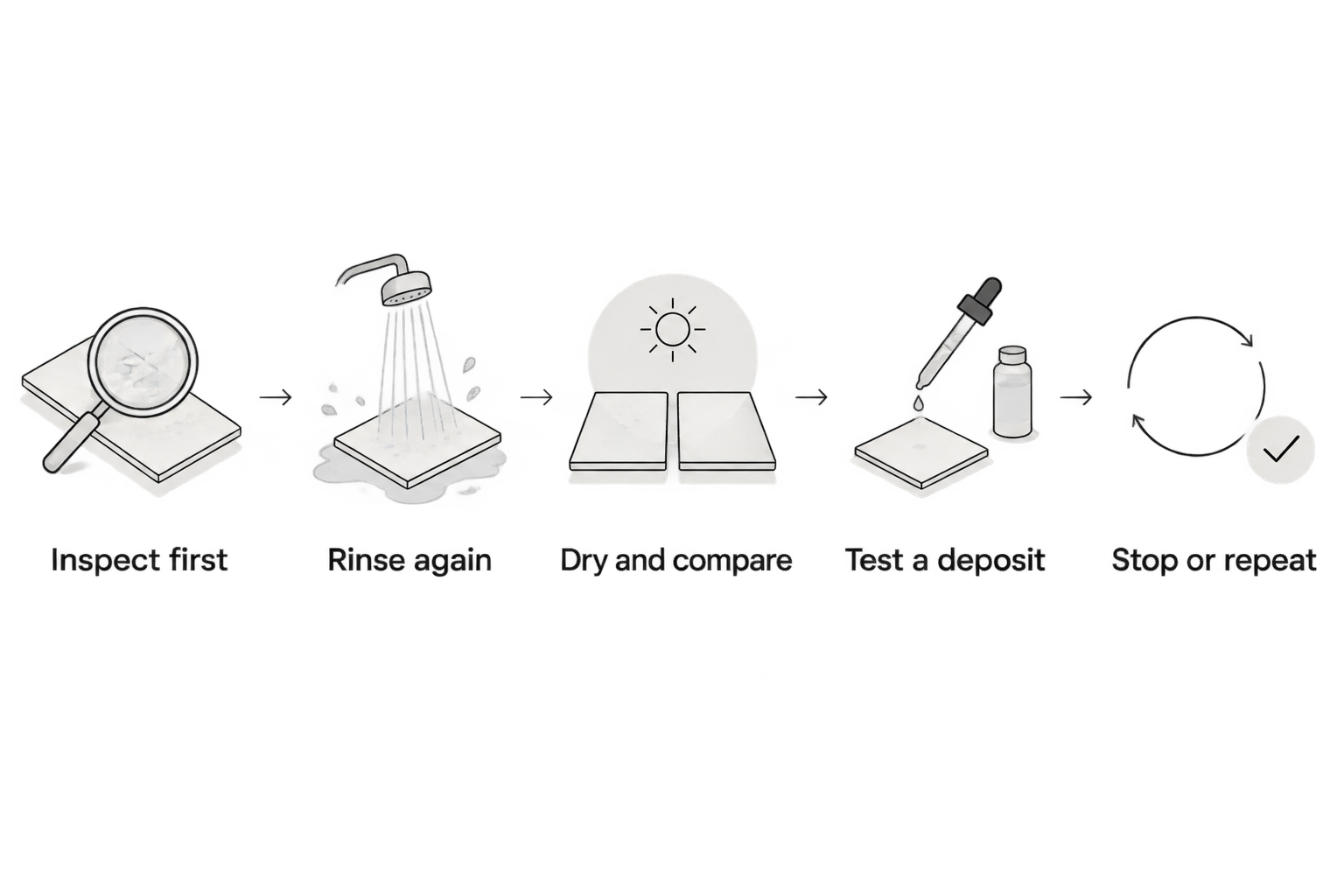
How to check cloudy glass without making it worse
Work over a stable, protected surface with good lighting. Let hot glass cool naturally before handling or rinsing it, and keep separate pieces from knocking together.
Inspect first
Look at the rim, base, corners, and any narrow connections before adding water. If you see a chip, crack, or loose fragment, stop handling the item as an ordinary cleaning job.
Do not run your fingers over a suspicious edge to see whether it feels sharp. A visual check is safer than testing damaged glass by touch.
Rinse again
If the previous cleaner is known and its label allows water rinsing, rinse thoroughly with fresh water. Follow the label's temperature guidance rather than assuming hotter water will work better.
Pay attention to recessed areas that can hold cleaner. Drain and reposition the item gently; do not shake it against the sink or force tools into narrow openings.
Dry and compare
Allow the item to drain on a clean, stable surface, then inspect it when dry. Use a freshly washed, lint-free cloth only where you can wipe without pressure or snagging.
Compare the same cloudy area under the same light. A change in viewing angle can make a mark look better without any actual cleaning progress.
Test a deposit
On plain, uncoated glass whose care instructions permit vinegar, apply ordinary white vinegar to a small cloudy area using a soft cloth. Keep it away from attached metal, stone, adhesives, painted details, and other materials without confirmed compatibility.
Rinse the test area thoroughly and let it dry before comparing. Improvement supports mineral deposits as part of the problem; no improvement does not automatically prove permanent etching.
Stop or repeat
Repeat only a method that produced visible improvement and remains within the manufacturer's instructions. If the haze does not change, stop escalating and confirm material compatibility before trying anything else.
A small test is more useful than treating the whole item with an unfamiliar product. It limits exposure and gives you a clear place to compare before and after.
Mineral deposits: white spots and drying rings
Tap water contains dissolved minerals. When water evaporates, those minerals can remain as spots, rings, or a thin cloudy layer; the US Geological Survey identifies calcium and magnesium as the main contributors to water hardness.
Mineral haze often follows the path of drying water. Look near the base of a drained item, around a previous waterline, or beneath visible drip trails.
For compatible plain glass, a small vinegar test is a reasonable diagnostic step because acid can dissolve common carbonate deposits. It is not a universal treatment for every cloudy surface, and it should never be added to bleach or another cleaner.
Best for preventing new mineral marks: avoid leaving droplets to evaporate on accessible surfaces. A distilled-water final rinse can reduce deposits introduced by the rinse water, but it will not reverse existing scratches or etching.
Detergent film: haze that needs more rinsing
Detergent left behind can dry as a veil or streaky film. Adding more detergent repeats the problem rather than solving it.
Use the cleaning product according to its label and rinse every accessible surface thoroughly. If an item has cavities that retain rinse water, drain them carefully without forcing anything into the glass.
A greasy or smeared appearance is a clue, not proof of soap film. Oils, cloth treatments, and other residues can produce a similar look.
For a 2026 care checklist, make cleaner removal a separate step from dirt removal. The surface is not finished just because visible dirt has disappeared; the cleaner also needs to come off.
Etching and scratches: haze cleaning cannot remove
Etching changes the glass surface itself. Scratches also scatter light, but they often show as lines or clusters of fine marks rather than an even frosted area.
Neither condition washes away. Stronger chemicals and harder scrubbing do not restore material that has already been damaged.
A patch that looks clearer when wet but cloudy again when dry can indicate surface irregularities. However, that observation is not enough to diagnose etching on its own because some deposits also become less visible when wet.
Stop when compatible gentle cleaning produces no improvement. Do not use polishing compounds, sandpaper, rotary tools, or repair methods on glass accessories with uncertain construction or damage.
Why cloudy results vary
The same cleaning routine does not produce the same result on every item. These factors change what remains on the surface and how easily you can remove it:
- Water hardness: rinse water with more dissolved minerals leaves more material behind as droplets evaporate.
- Cleaner removal: detergent retained in corners or cavities can dry into a fresh film.
- Surface finish: paint, coatings, and decorative details restrict which cleaners are compatible.
- Shape and access: narrow openings and recessed areas are harder to rinse and inspect than open surfaces.
- Cleaning tools: abrasive materials can scratch glass, while dirty cloths can transfer residue.
- Previous damage: existing etching or scratches remain visible even after removable deposits are gone.
Separate these variables instead of changing everything at once. If you switch cleaner, cloth, water source, and drying method together, you lose the ability to identify what helped.
How do you keep glass clear after the next wash?
Build your 2026 routine around three separate tasks: remove residue, remove cleaner, and control drying. Skipping the middle task is an easy way to leave freshly washed glass looking dirty again.
Use a clean basin or protected work surface, keep pieces apart, and follow the item's care instructions. Avoid sudden temperature changes, including cold water on hot glass.
For accessible outer surfaces, use a clean lint-free cloth without pressing hard. Let inaccessible areas drain and air-dry in a stable position rather than pushing cloth or paper into a narrow space.
Store the item only when dry, away from edges and other hard objects. Padding should prevent contact between pieces rather than simply surround a loose pile.
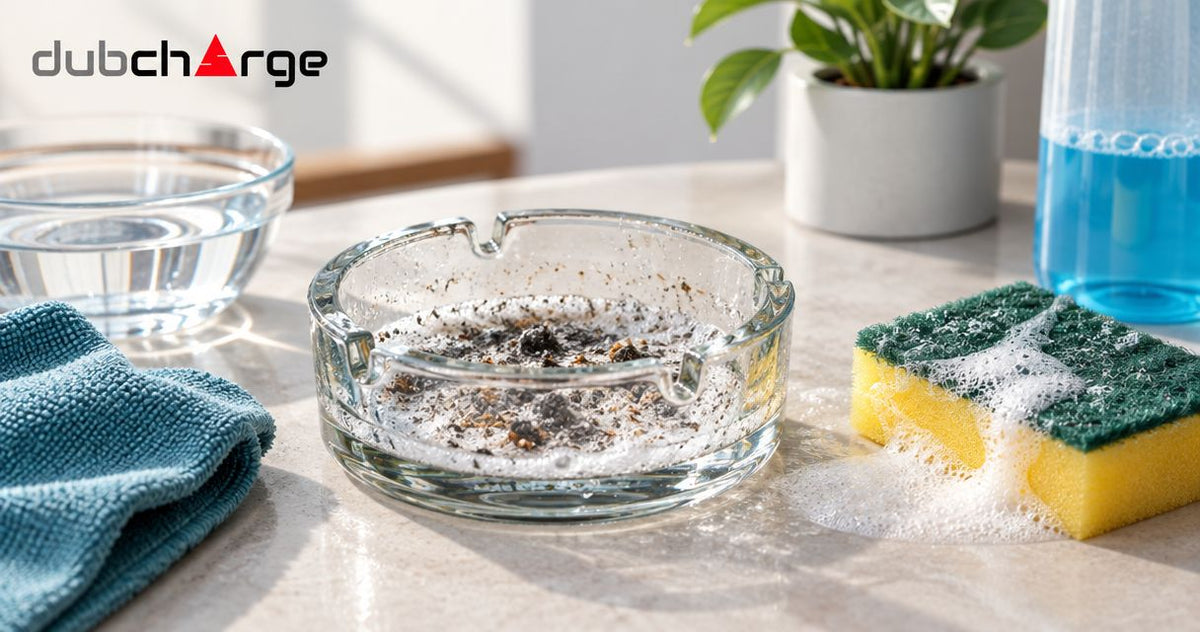
For a DubCharge glass accessory such as the SENSE GLASS Crystal Square Glass Ashtray, begin by checking the item's care instructions rather than choosing a cleaner from appearance alone. The listed glass material does not establish compatibility for every cleaning chemical.
Does cloudy glass mean it is still dirty?
Cloudy glass does not automatically mean loose dirt remains. Mineral deposits, cleaner residue, scratches, and etching can all leave a washed surface looking dull.
Clarity is not a hygiene test either. A clear-looking item still needs appropriate cleaning, while permanently etched glass can remain cloudy after surface residue is removed.
Can vinegar fix all cloudy glass?
Vinegar does not fix all cloudy glass. It can help with compatible mineral deposits, but it cannot remove scratches or reverse etching.
Check the material and finish before testing it, and never combine vinegar with bleach. Rinse away the previous cleaner completely before considering a different compatible method.
Should you clean cloudy glass again or stop?
Clean cloudy glass again only when a compatible method is removing a deposit. Stop if you find damage, lose confidence in material compatibility, or see no improvement after gentle cleaning.
That stopping rule belongs in any 2026 care routine. Repeated unsuccessful cleaning adds handling and chemical exposure without establishing what caused the haze.
FAQ
Why is glass cloudy after cleaning even when I used soap?
Glass can stay cloudy after soap cleaning because mineral deposits, detergent film, other residue, or surface damage remain. Rinse thoroughly and inspect the item when dry before choosing another cleaner.
How can I tell hard-water marks from etched glass?
A compatible vinegar spot test can help identify mineral deposits on plain, uncoated glass. If the patch stays cloudy, the cause still needs checking; an unchanged test is not proof of etching.
Can I use baking soda to scrub cloudy glass clear?
Do not make abrasive scrubbing your default treatment for cloudy glass. Powdered cleaners and forceful rubbing can scratch surfaces or damage finishes; follow the item's care instructions instead.
Why does glass look clear when wet but cloudy when dry?
Water can temporarily make fine surface irregularities or deposits less visible. Inspect the glass after it dries, because the wet appearance does not prove the haze has been removed.
Will a distilled-water rinse remove existing cloudiness?
A distilled-water rinse does not remove every existing cloudy deposit or repair surface damage. Its main benefit is reducing new mineral deposits introduced during the final rinse.
Is cloudy glass safe to keep using?
Cloudiness alone does not establish whether glass is safe or clean. Stop using an item with cracks, chips, or loose fragments, and identify unexplained residue before returning it to its intended purpose.
Can I put cloudy glass in the dishwasher?
Use a dishwasher only when the item's manufacturer permits it. Heat, detergent, movement, and contact with other items can be unsuitable for delicate shapes, finishes, or mixed-material pieces.
One last thing
Photograph the same dry patch before changing your cleaning method. Use the same background and lighting afterward so reflections do not pass for improvement.
The useful question is not whether you cleaned harder. It is whether a compatible method actually changed the deposit without changing the glass.

Leave a comment
This site is protected by hCaptcha and the hCaptcha Privacy Policy and Terms of Service apply.