



















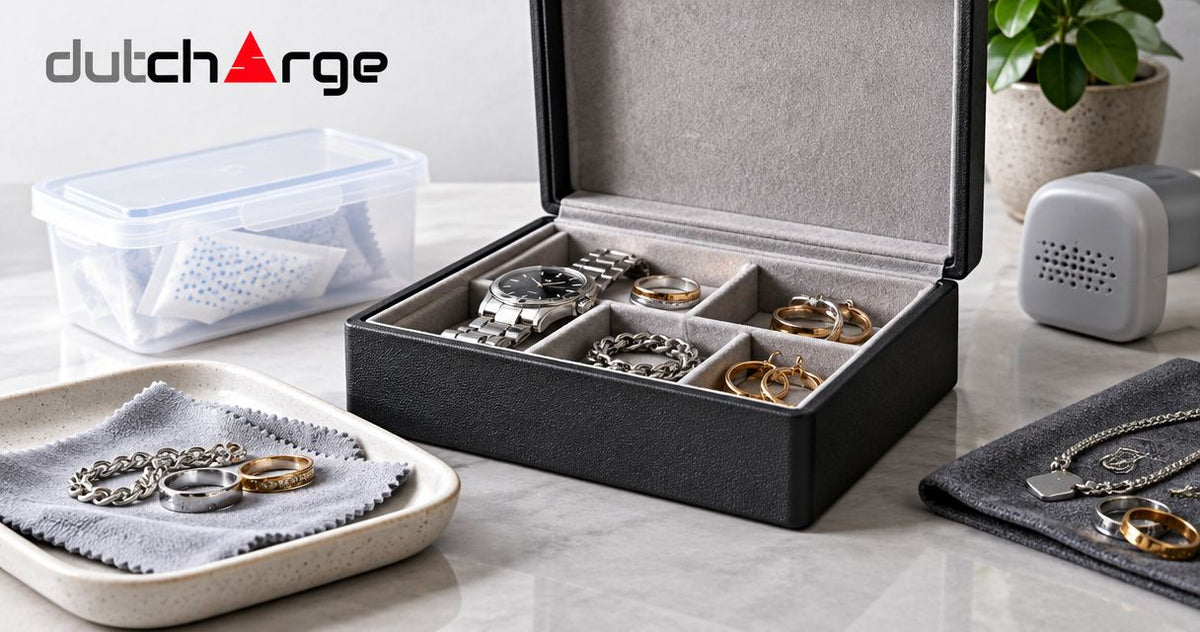
Keep metal accessories from rusting in storage by cleaning away residue, drying every accessible surface, and storing them in a dry place with the finish protected from scratches. A sealed container helps only when the accessory and everything packed beside it are already dry; otherwise, it traps moisture. This 2026 guide explains how to prevent rust on metal accessories without treating every metal or coating the same way.
- DubCharge’s metal-accessory care guide prioritizes complete drying and finish protection before storage.
- How to prevent rust on metal accessories starts with removing moisture, not simply closing a storage box.
- Sealed containers limit outside humidity but also trap damp cloths, liners, and accessories.
- Use only cleaners and protective treatments approved for the accessory’s metal, finish, and intended contact surfaces.
Why this matters
A clean-looking accessory is not necessarily ready for storage. Water can remain beneath a rolled rim, inside a seam, or against a damp liner after the main surface feels dry. Packing the item immediately leaves that moisture against the metal.
Cleaning can also create a separate problem if the method damages paint, plating, or another protective finish. Before reaching for stronger products, review which household cleaning chemicals you should never mix. Use one compatible cleaner according to its directions, rather than combining products to remove a stubborn mark.
How do you keep metal accessories from rusting in storage?
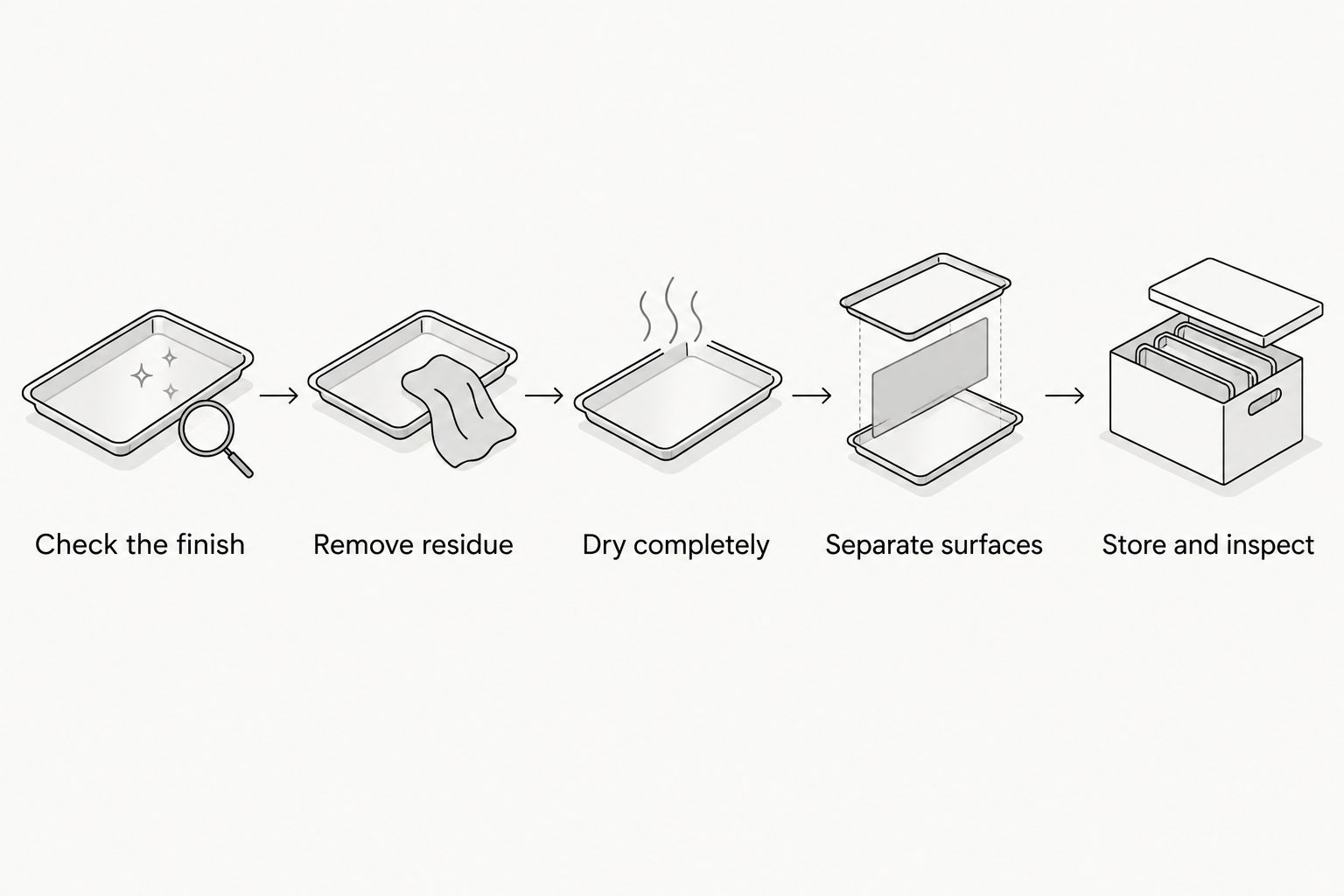
Use this 2026 storage checklist for non-electric metal trays and similar household accessories. Follow the manufacturer’s care instructions whenever they specify a different method, especially for printed, painted, plated, or mixed-material items.
- Check the finish. Look for scratches, lifting paint, rough spots, and orange-brown deposits. Identify the material from the product information rather than its color or weight. Set aside anything with loose coating or sharp damage before packing other items around it.
- Remove residue. Wipe away loose debris with a clean, soft cloth. If washing is permitted, use a compatible cleaner and remove its residue as directed. Avoid soaking an accessory with enclosed seams, attached fabric, or other parts that cannot dry readily.
- Dry completely. Wipe the top, underside, edges, feet, and accessible seams. Leave the accessory somewhere dry with air reaching its surfaces before enclosing it. There is no universal drying time that covers every shape, finish, and room condition.
- Separate surfaces. Keep metal edges from scraping against other accessories. Use clean, dry, nonabrasive dividers that will not shed grit or hold existing moisture against the finish. Do not wrap a freshly washed item in a towel and assume the towel finishes the job.
- Store and inspect. Choose a dry indoor location away from leaks and condensation. Check the accessory after damp weather, a spill, or a change in storage conditions. If you find moisture, unpack and dry the contents before closing the container again.
The order matters: a divider protects a finish, but it cannot dry a wet seam. Likewise, a sealed lid cannot correct moisture already inside the box.
Which storage method should you use?
Choose storage based on the moisture conditions, not just the container’s appearance. A fabric pouch, drawer, and sealed box solve different problems. None makes a damp accessory ready to pack.
| Storage option | Best for | Advantage | Limitation |
|---|---|---|---|
| Clean, dry indoor drawer | Frequently handled accessories | Easy access and inspection | Does not isolate the contents from room humidity |
| Sealed rigid container | Fully dry accessories needing protection from outside moisture and dust | Limits exchange with surrounding air | Traps moisture packed inside |
| Dry fabric pouch or sleeve | Separating dry accessories from abrasive contact | Helps prevent rubbing during handling | Fabric can absorb moisture and hold it against metal |
| Open shelf in a dry room | Air drying before enclosed storage | Leaves surfaces exposed to air | Offers little protection from dust, spills, or knocks |
A sealed box is a useful option when its contents start dry and its seal remains intact. It is not a substitute for checking the room, the packing materials, or the accessory itself.
For a drawer, inspect the base and liner as carefully as the item. A spill that soaked into the liner can keep affecting newly cleaned accessories even after the visible puddle disappears. Replace or fully dry affected packing material before returning the metal.
Why rust risk varies between metal accessories
Rust is corrosion of iron and iron-containing materials, including steel. Other metals also corrode, but their corrosion is not technically rust; the material determines which care instructions apply.
These conditions explain why accessories stored beside each other do not always develop the same damage:
- Metal composition: Bare steel, stainless steel, aluminum, and plated metal do not behave identically. A generic metal description does not establish the alloy or its corrosion resistance.
- Finish condition: Paint and plating can separate the underlying metal from moisture. Scratches, worn edges, or peeling areas can leave the base material exposed.
- Retained moisture: Seams, folded edges, attached pads, and packing materials can hold water after the broad surfaces look dry.
- Surface contamination: Salt from handling and other residues can contribute to corrosion. Clean according to the item’s care instructions before extended storage.
- Temperature changes: Moving a cold item into warm, humid air can cause condensation. Check for new moisture before enclosing it.
- Storage environment: A leaking cupboard, damp bag, or condensation-prone location keeps introducing moisture. Cleaning the accessory does not fix those conditions.
During a 2026 storage review, look at the whole arrangement rather than blaming one container. The damp source might be the shelf, liner, nearby wall, or another object sharing the space.
How should you care for painted or printed metal trays?
Preserve the finish instead of scrubbing every mark aggressively. Start with the least abrasive method allowed by the manufacturer. A soft cloth is a better starting tool than a scouring pad when the coating’s durability is unknown.
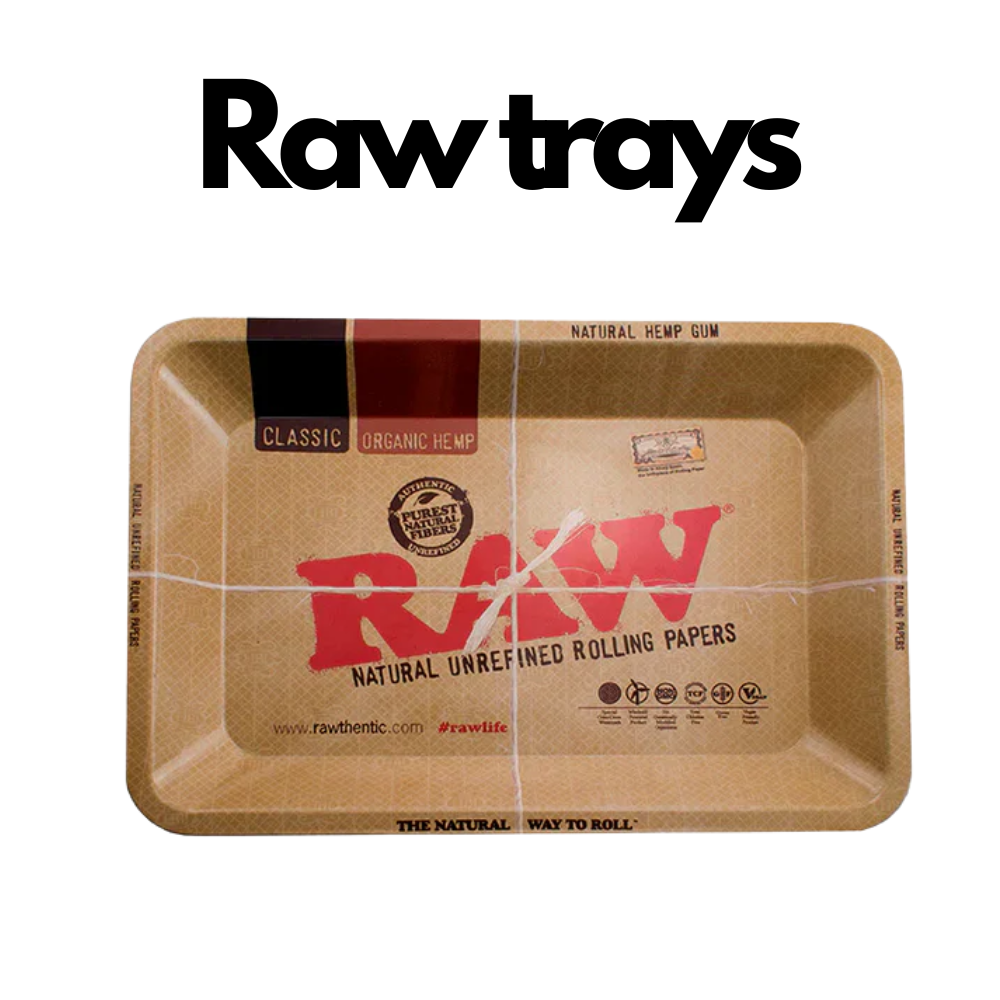
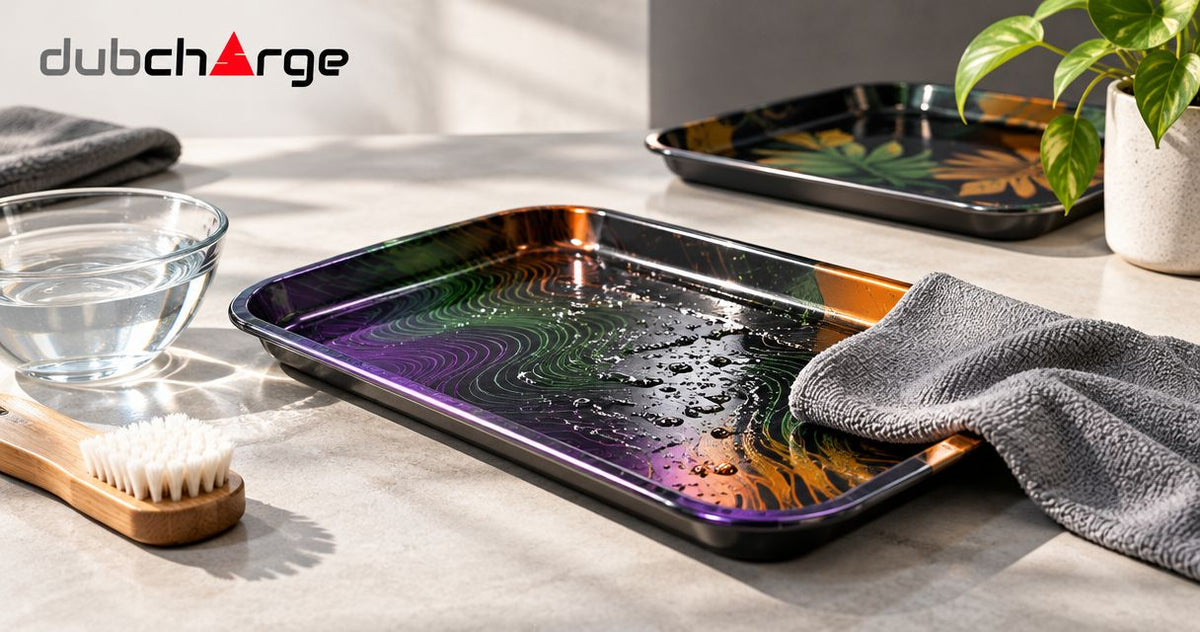
For a product such as the Raw Metal Tray listed by DubCharge, follow the product’s own care instructions rather than assuming a general steel-cleaning method suits its finish. A metal product description does not establish dishwasher compatibility, solvent resistance, or permission to use a rust remover.
Pay attention to the underside and rolled edges, not only the decorated face. Turn the tray under good light and check where the edge folds over. If water remains in an accessible crease, dry it without forcing a sharp tool beneath the rim.
Do not sand, repaint, or chemically strip a tray as routine storage preparation. Those actions alter the surface and can create new concerns about coating adhesion and contact suitability. Loose coating, sharp corrosion, or structural damage calls for a manufacturer assessment or replacement rather than an improvised repair.
Does an airtight container stop rust?
An airtight container does not stop rust when moisture is already inside. Its useful role is limiting the entry of outside air and humidity after the accessory, liner, and container are dry.
Check the lid, corners, and base before packing. A container washed alongside the accessory needs drying too, including the lid seal and any accessible grooves. Do not put a dry tray into a box that still has droplets beneath its gasket.
Desiccant can help control residual humidity in a suitable enclosed container, but it has a limited moisture capacity. Follow its instructions for container suitability, replacement, or regeneration; do not assume an old packet is still effective. Keep loose packets away from children and pets, and do not let damaged packets spill onto contact surfaces.
Should you oil metal accessories before storage?
Oil is not a universal rust-prevention treatment for metal accessories. Use a protective coating only when the manufacturer approves it for the specific material, finish, and intended contact surfaces.
An oil intended for workshop equipment is not automatically suitable for a household tray. The same caution applies to waxes, corrosion inhibitors, and sprays: their purpose and compatibility matter more than a general claim that they protect metal.
For this DubCharge metal-accessory care guide, the default recommendation is cleaning, complete drying, and protected storage—not adding an unverified coating. If the care instructions do not authorize a treatment, leave it off rather than experimenting on the entire surface.
How do you tell rust from a stain?
Orange-brown deposits on iron or steel can indicate rust, but color alone does not identify a mark. Residue, transferred material, and discoloration can resemble corrosion, especially on a printed or plated surface.
Check whether the mark lifts with the permitted cleaning method and whether the surface beneath remains intact. Roughness, pitting, flaking, or a mark that returns after cleaning warrants closer inspection. Do not scrape the area with a blade to identify it.
If a spot persists during your 2026 care check, photograph it for the manufacturer and ask about the finish before applying a chemical treatment. A stain is not a reason to sacrifice an intact coating.
What should you do if rust returns after storage?
Returning rust means the storage routine needs another check, not simply a stronger cleaner. Inspect both the accessory and its surroundings before packing it again.
Start with these questions:
- Was the underside as dry as the visible face?
- Did a cloth, pouch, or drawer liner go into storage damp?
- Is the finish chipped where the mark reappears?
- Does the storage location develop condensation or receive leaks?
- Was the container closed while its contents were still wet?
Correct the moisture source before repeating the cleaning process. If corrosion has left sharp edges, loose material, or weakened areas, stop using the affected accessory and seek the manufacturer’s guidance. This guide covers storage care, not structural or coating repairs.
FAQ
What’s the best way to prevent rust on metal accessories in storage?
Clean the accessory according to its care instructions, dry it completely, and store it in a dry location with the finish protected. Check the underside, seams, container, and packing materials before closing anything.
Can I store a metal tray in a plastic bag?
A plastic bag is suitable only when the tray and bag are dry and the material will not damage the finish. A closed bag traps moisture just as a closed box does, and thin plastic offers limited protection from knocks.
Is stainless steel rustproof?
Stainless steel is corrosion-resistant, not rustproof. Keep it clean and dry, and follow the manufacturer’s instructions rather than assuming the material needs no care.
Should I put silica gel in my accessory storage box?
Silica gel can help manage residual humidity in a suitable enclosed box, but it does not replace drying. Follow the packet’s instructions and keep it away from children and pets.
Can I use vinegar to remove rust from a painted tray?
Do not use vinegar on a painted tray unless the manufacturer approves it for that finish. A treatment intended for bare metal can damage a coating or exposed decorative surface.
How long should metal accessories dry before storage?
There is no universal drying time for metal accessories. Enclose them only after the accessible surfaces, seams, container, and packing materials are dry.
Can I stack metal trays to save storage space?
Stack metal trays only when they are dry and separated against abrasive contact. Use clean, dry dividers and avoid a stack that presses rough edges into another tray’s finish.
One last thing
The liner can be the moisture source even when the metal is dry. During your next 2026 storage check, remove the accessory completely and inspect what sits beneath it. A dry replacement liner is more useful than repeatedly wiping a tray and returning it to the same damp surface.
Use the DubCharge storage rule: dry the item, dry the container, and dry everything between them. Then protect the finish so routine handling does not undo the preparation.


Leave a comment
This site is protected by hCaptcha and the hCaptcha Privacy Policy and Terms of Service apply.