


























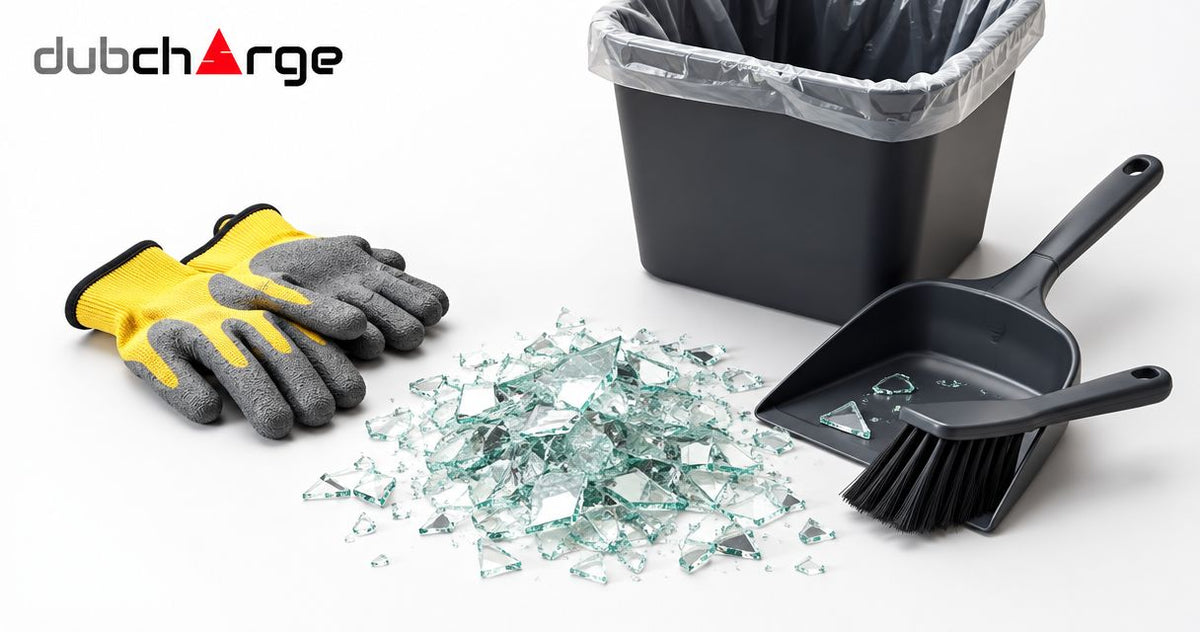
Reduce the risk of cuts by keeping people away, wearing closed-toe shoes and protective gloves, and collecting broken glass with tools rather than your hands. Put fragments in a rigid, puncture-resistant container, then check the surrounding area for smaller pieces. No cleanup method guarantees zero cuts, and glass contaminated with chemicals, blood, or a damaged battery needs a different response from an ordinary household spill.
- Broken glass safe handling means using tools, not gloved fingers, to collect fragments.
- Dubcharge’s verdict: isolate broken glass before cleanup; gloves do not make sharp edges safe to grab.
- Contain shards in a rigid, puncture-resistant container and follow local disposal rules.
- Get medical help for embedded glass, uncontrolled bleeding, or possible eye injuries.
Why this matters
A visible shard is not the whole hazard. Small fragments can remain under furniture, in fabric, or along the route someone walked after the breakage. A loosely wrapped bundle can also injure the next person who handles the trash.
This 2026 guide covers ordinary broken glass and the situations that require professional help. If the glass was recently heated, address the burn risk before approaching it; the hot glass contact burn first aid guide covers that separate injury.
How do you handle broken glass without risking cuts?
Keep your hands away from the sharp edges, control access, and contain the waste before reopening the area. OSHA’s Bloodborne Pathogens Standard specifically requires mechanical collection methods for potentially contaminated broken glass, such as a brush and dustpan, tongs, or forceps—not direct hand pickup.
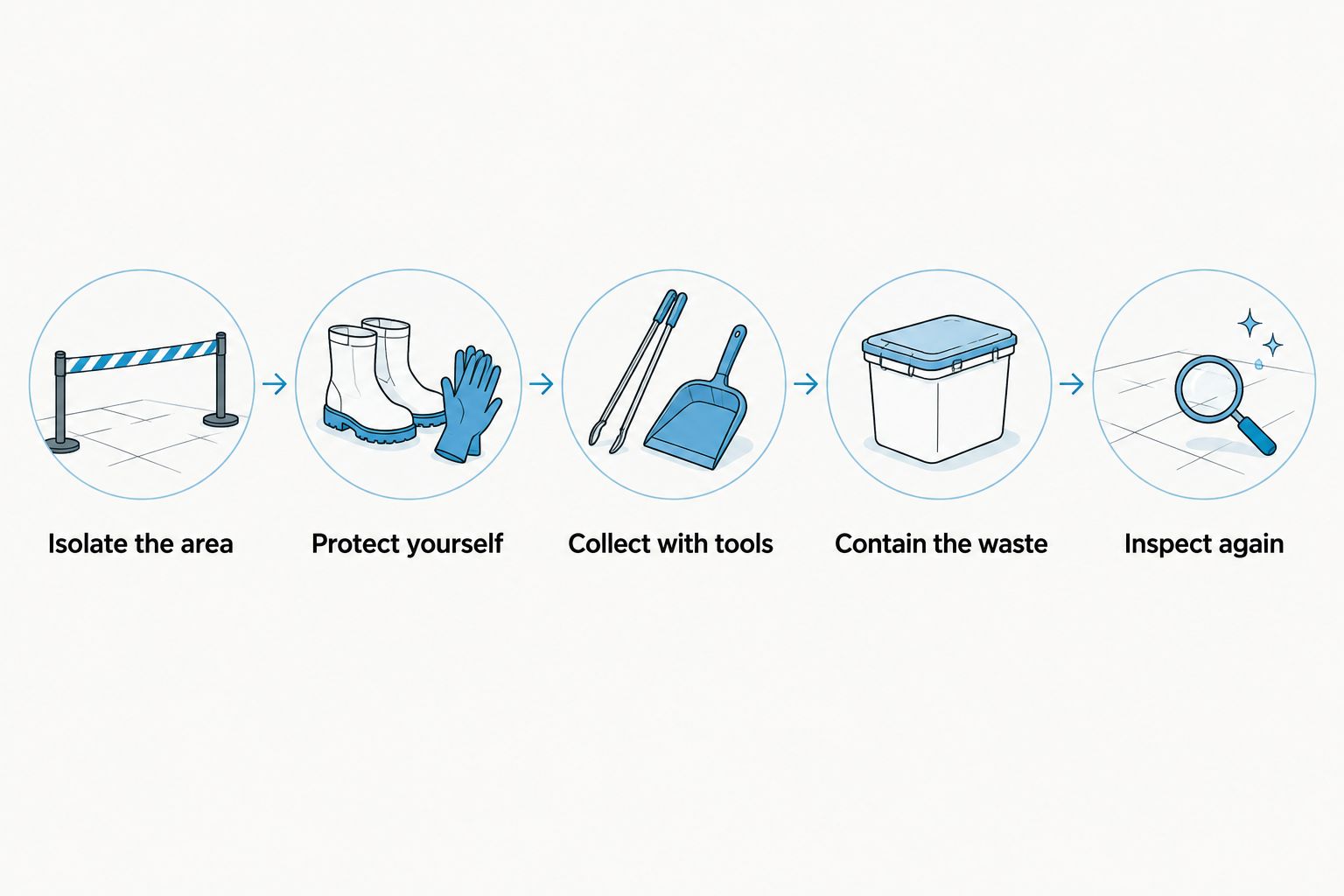
For ordinary household glass, use this sequence:
- Isolate the area. Stop foot traffic. Keep children and pets outside the cleanup space, and check whether anyone is injured.
- Protect yourself. Wear closed-toe shoes and gloves designed for mechanical hazards. Disposable examination gloves alone do not provide dependable cut protection.
- Collect with tools. Use tongs for larger fragments and a brush and dustpan for smaller pieces. Do not steady a shard with your other hand.
- Contain the waste. Transfer fragments into a rigid, puncture-resistant container that closes securely. Do not force pieces through a narrow opening or press them down.
- Inspect again. Check edges, nearby objects, footwear, and the collection tools before allowing people back into the space.
Choose the collection method for the surface and contamination involved. The table below compares cleanup methods, not guarantees of safety.
| Method | Best suited to | Useful feature | Limitation |
|---|---|---|---|
| Tongs | Large, accessible shards | Keeps fingers away from edges | Fragments can slip or break when squeezed |
| Brush and dustpan | Loose fragments on hard floors | Collects pieces without direct hand contact | Fine shards can remain in corners or brush bristles |
| Damp disposable towel | Final inspection cleanup on a compatible hard surface | Can collect remaining fine fragments | Glass can penetrate the towel; never press with bare hands |
| Household vacuum | Only situations permitted by its manufacturer | Can reach some loose debris | Glass can damage equipment or create a hazard during emptying |
What changes when glass breaks on different surfaces?
Hard floors: collect first, then inspect
Work from the outside of the affected area toward the main pile so you do not spread fragments. Keep the dustpan close to the floor, move slowly, and avoid flicking the brush.
After collecting visible pieces, inspect with a light held low to the surface. Reflections can reveal fragments, but a floor that looks clear is not proof that every shard is gone. Use a damp disposable towel for the final pass only where water is appropriate, keeping protective gloves on and avoiding downward hand pressure.
Carpet and upholstery: stop access until assessed
Glass can disappear into carpet pile, seams, and cushions. Do not test the surface with your palm, kneel on it, shake cushions indoors, or let children and pets return because the largest pieces are gone.
Remove accessible fragments with tools. For embedded glass or a widespread break, contact a professional cleaner and explain the material involved before work begins. Follow the vacuum manufacturer’s instructions rather than assuming an ordinary machine is suitable.
Sinks and wet areas: do not reach into hidden glass
Water, foam, and residue can hide edges. Do not reach into a sink, garbage disposal, or bucket that might contain broken glass, even while wearing gloves.
Prevent anyone from operating the disposal or using the affected fixture. If glass is inside equipment or beyond easy reach, arrange qualified help rather than trying to retrieve it by touch.
Why broken-glass cleanup risk varies
The same cleanup routine does not fit every break. Assess these factors before you begin:
- Fragment location: Open floor space is different from glass embedded in fabric, machinery, or a drain.
- Material on the glass: Blood, unknown chemicals, and drug residue add exposure concerns that ordinary sweeping does not resolve.
- Remaining structure: A fallen drinking glass is different from a cracked window with pieces still attached overhead.
- Temperature: Recently heated glass adds a burn hazard even when it no longer looks hot.
- People nearby: Children, pets, and people without protective footwear need a secure barrier, not a verbal warning alone.
- Waste destination: Household collection, workplace waste, and contaminated sharps follow different requirements.
For households with cannabis products, keep the cleanup space separate from accessible products and packaging. The cannabis storage and child-pet safety guide addresses preventing access beyond the immediate spill.
What should you do if broken glass cuts you?
For a small cut without embedded glass, apply firm pressure with a clean dressing. NHS guidance on cuts and grazes recommends pressure for 10 minutes to help stop bleeding. Once bleeding stops, rinse a minor wound with clean running water and cover it with a clean dressing.
Do not probe the wound, squeeze it to search for fragments, or remove a deeply embedded shard. Apply pressure around an embedded object rather than directly onto it, and seek medical care.
Call 911 for severe bleeding, fainting, or other signs of a medical emergency. Prompt assessment is also needed for a deep or gaping wound, loss of feeling, difficulty moving the affected area, or suspected retained glass. Tell the clinician what broke and whether it carried blood, chemicals, or other residue.
Do you need a tetanus shot after a glass cut?
The answer depends on the wound and your vaccination history—not on whether the glass looked dirty. Under CDC wound-management guidance used in this 2026 guide, a person who completed the primary series generally needs a booster after 10 years for a clean, minor wound, or after 5 years for a dirty or major wound.
Unknown or incomplete vaccination history needs a clinician’s assessment. Some wounds also require additional protection beyond vaccination. Do not delay treatment while searching for your records.
What if you think glass entered your eye?
Do not rub the eye, press on it, or try to remove an embedded fragment. MedlinePlus guidance on eye emergencies treats penetrating eye injuries as emergencies; seek immediate medical attention.
Keep others from touching the eye and follow emergency-service instructions. An eye injury is not a situation for household tweezers or a trial-and-error inspection.
When does broken glass need professional help?
Stop household cleanup if glass is overhead, still attached to a damaged frame, mixed with hazardous material, or inaccessible without dismantling equipment. The immediate task is preventing exposure, not finishing the job yourself. Describe the breakage and contamination when arranging assistance.
A broken window presents a separate problem from loose debris on a floor: remaining panes and an unsecured opening still need attention. The distinction matters when cleaning up broken glass safely: collecting fallen fragments does not stabilize damaged glazing or secure the opening. Keep people away from the frame until a qualified professional assesses it.
Blood or unknown chemicals change the response
At work, notify the person responsible for the exposure-control or hazardous-material procedure. OSHA’s mechanical-pickup requirement for contaminated glass does not mean an untrained worker should handle an unknown spill.
At home, isolate the area and get instructions from the appropriate local service. For a suspected poisoning or chemical exposure in the United States, Poison Control is available at 1-800-222-1222. Call 911 instead for an immediate medical emergency.
Broken cannabis glass needs exposure precautions
A broken cannabis container or glass accessory can combine sharp fragments with accessible residue. Keep children and pets away, do not recover spilled material for consumption, and avoid touching residue while collecting the glass.
In this Dubcharge safety guide, the recommendation is to stop using damaged glass, not repair or test it. If a battery-powered device is also damaged, leave device handling to the appropriate manufacturer or local hazardous-waste instructions. Glass cleanup alone does not address battery hazards.
How should you package and dispose of broken glass?
Contain the edges before moving the waste. Use a rigid, puncture-resistant container with a secure closure, and mark it clearly so another person does not mistake it for ordinary loose trash. Keep it inaccessible to children and pets while awaiting disposal.
Do not place loose shards in a thin bag, compress the contents, or leave a projecting piece exposed. Keep glass-containing cleanup towels and other sharp debris contained as well. Check the brush and dustpan without running your fingers along their surfaces.
For 2026 household disposal, follow your local waste authority’s instructions for the particular glass and any contamination. Do not assume broken drinking glass, heat-resistant glass, window glass, and bottles all belong in the same recycling stream. Local acceptance rules differ.
Workplace waste needs separate consideration. Potentially infectious broken glass requires the employer’s designated sharps procedure; glass contaminated with hazardous chemicals needs the applicable hazardous-waste route. Do not improvise a household disposal method for either category.
What should you check before reopening the area?
Inspect beyond the original pile. Look under nearby furniture, around baseboards, along grout lines, and near objects that were moved during cleanup. Check shoe soles visually without handling embedded fragments with your fingers.
Tell other household members or staff where the break happened and which areas remain restricted. If cleanup stops before completion, leave a physical barrier in place. Do not rely on a note where a child or pet can still enter.
A practical 2026 workplace check is to confirm that the spill is contained, tools are inspected, and the waste destination is agreed before removing the barrier. This Dubcharge checklist supports that decision; it does not certify that a surface is fragment-free.
FAQ
Can I pick up broken glass if I wear thick gloves?
Use tools rather than your fingers, even with thick gloves. Cut-resistant gloves reduce certain hazards but do not make sharp edges or pointed fragments safe to grab.
Is it safe to vacuum broken glass?
Do not assume your vacuum can handle glass. Follow the manufacturer’s instructions, because fragments can damage equipment and create hazards during emptying or maintenance.
How long should I put pressure on a small glass cut?
Apply firm pressure for 10 minutes with a clean dressing for a small cut without embedded glass, following NHS cuts-and-grazes guidance. Severe bleeding, deep wounds, or retained glass need medical attention.
Should I pull a piece of glass out of a deep cut?
Do not pull deeply embedded glass out yourself. Avoid pressure directly on the object and seek medical care.
Can broken glass go in my recycling bin?
Do not put broken glass in recycling unless your local program explicitly accepts that type. Glass composition and contamination affect the correct disposal route.
What should I do if a child touches broken cannabis glass?
Move the child away and check for injury without probing any wound. For possible cannabis ingestion in the United States, contact Poison Control at 1-800-222-1222; call 911 for an immediate emergency.
Does a glass cut always require a tetanus booster?
A glass cut does not always require a booster. CDC guidance bases the decision on wound type and vaccination history, including 10-year and 5-year intervals for different wounds after a completed primary series.
One last thing
The cleanup tool can become the next source of cuts. Before storing a brush, dustpan, or pair of tongs, inspect it for trapped fragments without using your fingers to search. Dubcharge’s broken glass safe handling rule is simple: keep edges contained until their final disposal, not just until the floor looks clear.



Leave a comment
This site is protected by hCaptcha and the hCaptcha Privacy Policy and Terms of Service apply.