




























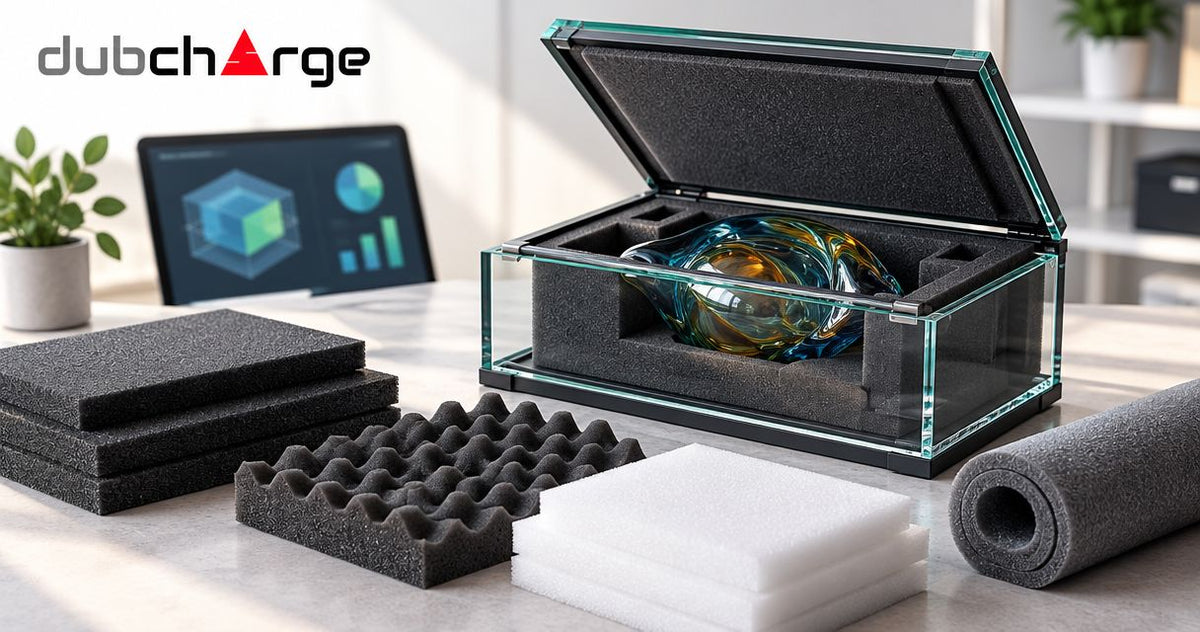
Choose padding for a glass storage case that supports the main body, separates every piece, and keeps glass away from the shell without squeezing it. Start with a fitted foam cradle, then add a soft, clean contact layer only where needed. Check the closed-case fit carefully: extra padding becomes a problem when it makes the lid press on a rim, neck, handle, or projecting joint.
- Choose padding for a glass storage case by fit, support, and separation—not softness alone.
- Closed-cell foam suits fitted cradles; fabric sleeves need additional support to stop movement.
- Keep fragile projections clear of lid pressure and neighboring objects.
- Dubcharge glass-care guidance focuses on protecting existing glass through careful storage and handling.
How do you choose padding for a glass storage case?
Choose the padding around the glass, not the glass around an existing foam cutout. The broad, stronger body should carry the load; narrow extensions should sit clear of pressure. Your finished layout should let you lift each piece out without pulling on its most fragile part.
Use this comparison when choosing materials for your 2026 storage setup. These are material-selection starting points, not impact ratings: the foam grade, thickness, case construction, and finished fit all matter.
| Padding option | Best for | Main advantage | Main limitation |
|---|---|---|---|
| Closed-cell polyethylene foam | A fitted support cradle | Holds a shaped cavity and absorbs relatively little water | A tight cutout can press against fragile details |
| Open-cell polyurethane foam | Soft cushioning inside a suitable case | Compresses readily around broad surfaces | Can retain moisture and deteriorate with age |
| Pick-and-pluck foam | Adjusting a basic cavity | Lets you change the layout without carving a continuous block | Thin walls between cavities can tear or collapse |
| Soft fabric sleeves | A clean contact layer between surfaces | Keeps glass from rubbing directly against neighboring items | Does not hold a heavy piece securely by itself |
| Bubble wrap | Temporary separation during packing | Wraps around irregular shapes | Shifts, wears, and needs separate support to prevent movement |
Do not treat these options as interchangeable. A sleeve separates surfaces; a fitted cradle controls position. If you also carry small accessories, organize the accessory bag so loose hardware cannot migrate into the glass compartment.
Why this matters
Glass storage failures are not limited to an obvious fall. A loose object can strike the case wall, a tight lid can load a narrow projection, and neighboring pieces can knock together during ordinary handling.
Padding needs to control movement without creating pressure points. Very soft material feels protective in your hand, but that does not establish whether it will support the object's weight inside a closed case.
Dubcharge glass-care guidance is best for owners protecting existing glass rather than choosing a new device. This guide covers storage fit, material care, and damage prevention—not repairs or instructions for using glass accessories.
Build the fit around support, separation, and clearance
Support the main body
Place the broadest stable section into the cradle first. Spread contact across that section rather than resting the entire object on a small ridge or narrow edge.
Leave room around projecting details. A projection should not become a support leg simply because it happens to touch the bottom of the cavity.
If the shape tips unless you pack material against a fragile extension, change the orientation or redesign the cradle. Do not solve an unstable layout by pressing harder on the weak point.
Separate every piece
Give removable glass parts their own compartments when the manufacturer's instructions allow removal. Keep metal tools, keys, and other hard objects outside the glass cavity.
A divider needs enough structure to stay between objects during handling. A loose flap that folds aside does not provide dependable separation, even if it looks tidy when the case is open.
Leave clearance above fragile details
Check the lid's interior, including seams, pockets, fasteners, and any raised hardware. The outside height of a case does not tell you how much usable space remains above the glass.
The lid should close normally without using the latch or zipper to compress the contents. If you need force, reopen the case and revise the layout rather than pressing down to make it fit.
Choose a fitted foam cradle for repeatable placement
Best for: an existing glass piece that returns to the same position after cleaning. A fitted cradle makes the intended placement obvious and keeps the main body supported in a consistent way.
Start with the case empty. Note its usable interior shape, then compare that space with the glass at its widest and tallest points, including any projecting features.
Cut or adjust an insert only while it is outside the case and away from the glass. Remove cutting debris before testing the fit; do not use the glass itself as a cutting guide.
Leave a finger-access area beside the supported body. You should be able to remove the piece with a steady grip instead of lifting it by a neck or levering it against the foam edge.
The drawback is reduced flexibility. A cavity made for one shape does not automatically protect another, even when both objects appear similar in size. For a replacement piece in 2026, repeat the fit check rather than trusting the old outline.
Choose soft padding as a contact layer, not a substitute for support
Best for: separating clean surfaces inside an already supportive compartment. A soft sleeve or smooth fabric layer can prevent direct glass-to-glass contact, but it does not create a stable cradle on its own.
Keep the fabric flat where the glass rests. Bunched seams, knots, buttons, and zipper pulls can concentrate pressure in exactly the area you meant to cushion.
Use a layer you can remove and inspect. Trapped grit defeats the purpose of a soft lining, and a dirty sleeve transfers debris back onto cleaned glass.
The limitation is movement. If the wrapped object slides across the compartment or knocks against the shell, add proper structural support rather than wrapping on more loose fabric.
Why padding performance varies
The material name is only part of the decision. These factors explain why two cases with apparently similar foam can hold glass differently:
- Object weight and shape: A broad body spreads its load differently from a narrow foot or projecting joint.
- Foam firmness: Padding must support the object without becoming a hard pressure point or collapsing underneath it.
- Cavity fit: Oversized openings allow travel; undersized openings grip and squeeze.
- Remaining wall support: Thin, torn sections between cavities do not separate objects reliably.
- Lid clearance: Interior pockets and raised seams reduce usable space above the glass.
- Material condition: Dampness, grit, crumbling foam, and compressed areas change how the insert performs.
Do not choose a universal padding thickness from a photograph. The correct fit depends on the actual case, insert, and object together; a thickness claim without those details does not answer your storage question.
How do you check the finished case without risking the glass?
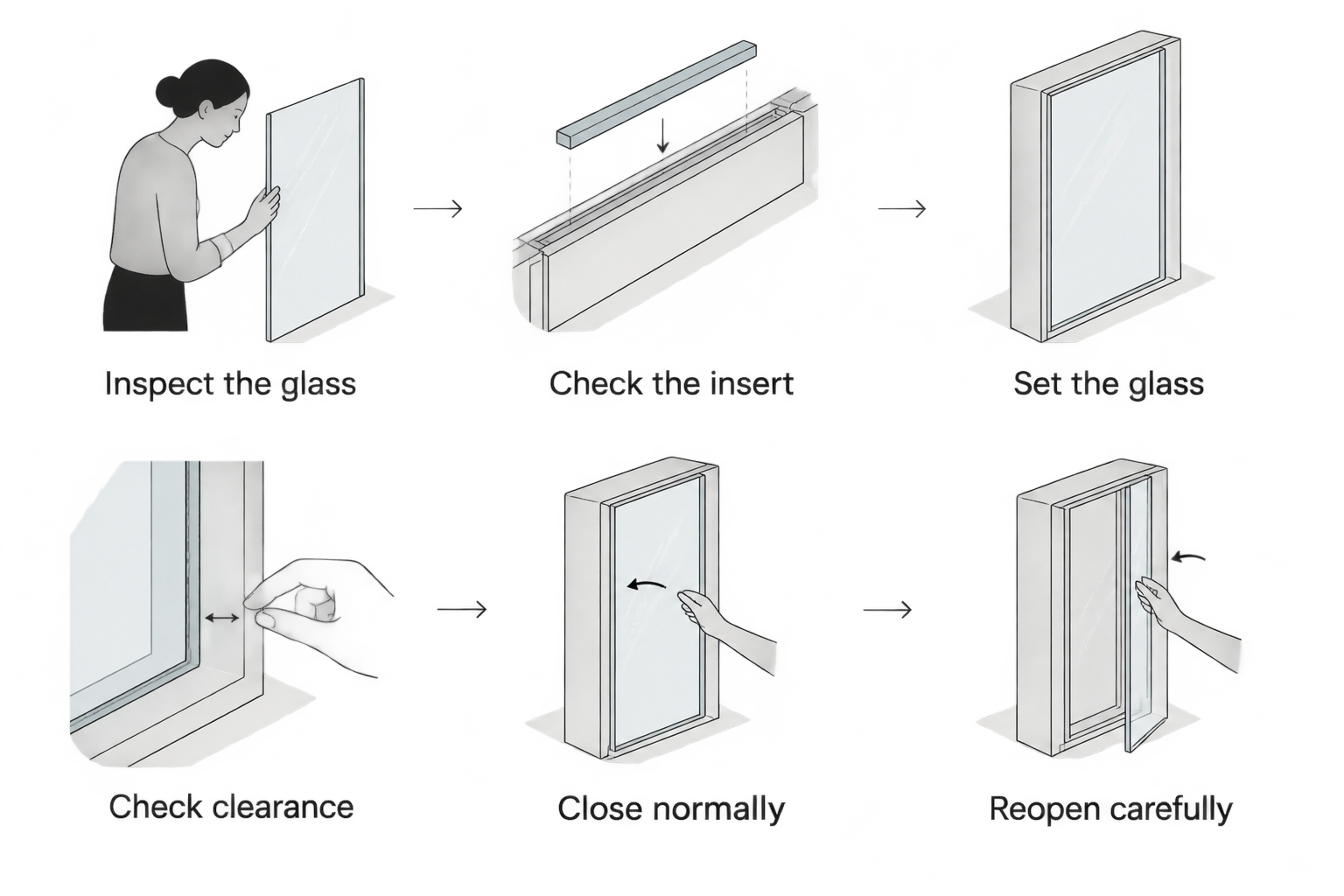
Use a controlled fit check over a low, stable, padded work surface. Do not drop, shake, or strike a loaded case to test protection. A home check can reveal poor fit, but it cannot establish an impact rating.
- Inspect the glass. Look for visible chips, cracks, or loose sections before handling it further. Stop if you find damage.
- Check the insert. Remove grit, loose foam, and hard objects from the cavity and lid area.
- Set the glass. Lower the main body into its support without twisting or forcing projecting details.
- Check clearance. Look around the sides and above the highest points before closing the lid slowly.
- Close normally. Stop if the closure meets resistance or requires pressure on the lid.
- Reopen carefully. Check whether the glass has shifted, the lining has folded, or the insert shows a concentrated pressure mark.
Repeat the check whenever you rearrange the compartments. A layout that worked before adding another object is not automatically suitable afterward, especially when a lid pocket now hangs above a fragile feature.
Keep moisture and debris out of the insert
Put glass away only after cleaning and complete drying. Check the padding separately; dry glass placed into a damp insert still enters a damp storage environment.
Follow the case and insert care instructions instead of assuming every liner is washable. Removable fabric, bonded foam, adhesives, and a hard shell can need different treatment.
For your 2026 care routine, inspect the contact areas while the case is empty. Lift removable layers and look underneath them rather than checking only the visible surface.
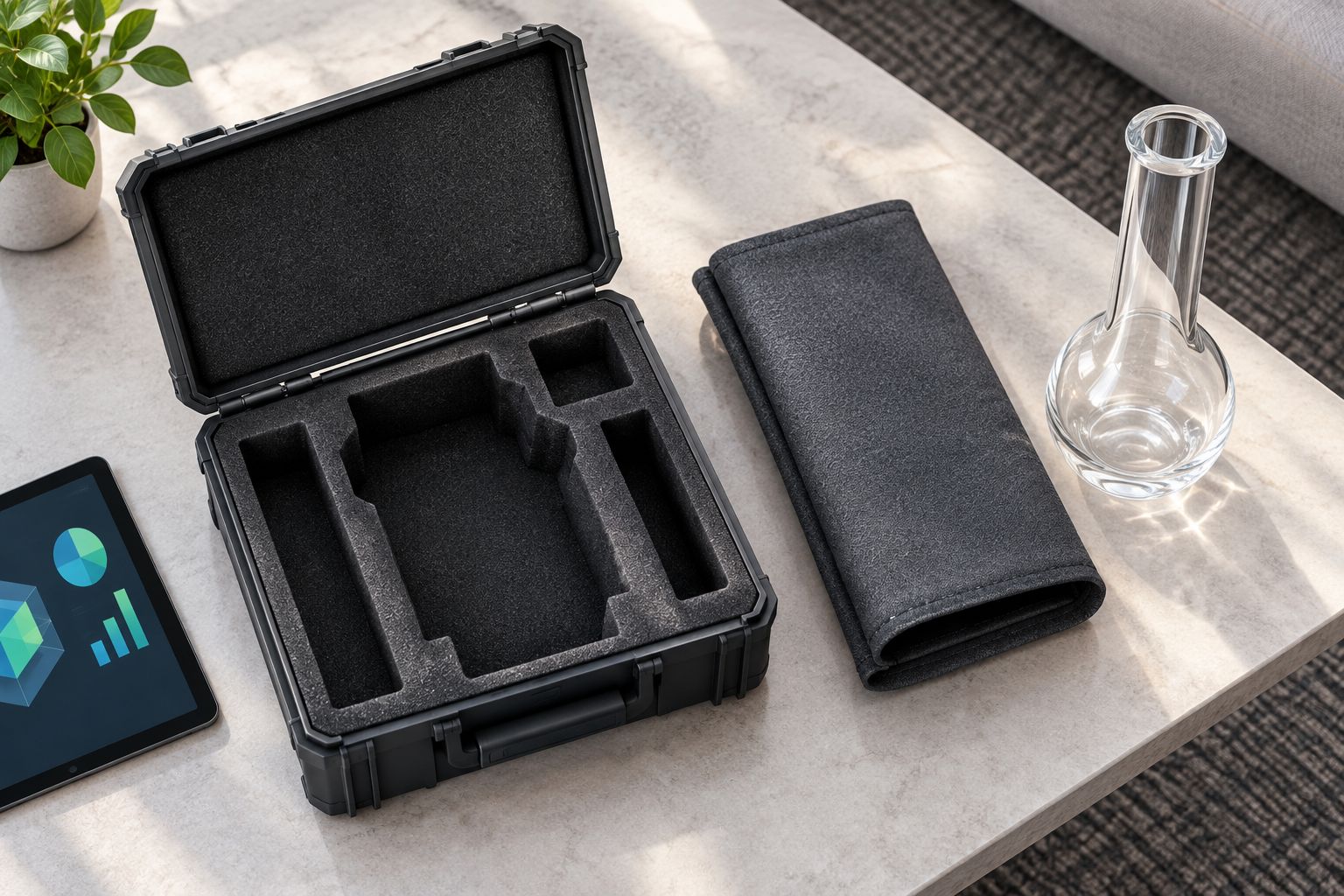
Do not close the case to hide an unresolved damp or musty condition. Empty it, follow the material's cleaning instructions, and let the components dry before reassessing whether the insert remains suitable.
Can you use one cavity for several glass pieces?
Use separate supported spaces for separate glass pieces. One large cavity allows objects to meet unless a stable divider keeps them apart throughout ordinary handling.
Shared fabric wrapping is not the same as individual separation. When you remove one piece, the remaining pieces still need support; they should not fall into the empty space.
For a 2026 layout review, assess the case partly empty as well as fully packed. If removing an object makes its neighbor unstable, revise the dividers or support before carrying the case again.
When should you replace the padding?
Replace padding when its condition no longer supports, separates, or releases the glass properly. Look for crumbling, persistent deformation, torn cavity walls, and loose layers that no longer stay in position.
There is no single replacement interval that fits every insert. Inspect its condition instead of assigning an unsupported lifespan, and replace material that cannot be cleaned or dried according to its care instructions.
A 2026 date on your maintenance note records when you checked the insert; it does not certify protection. Dubcharge recommends making the fit check part of any layout change rather than treating case padding as a permanent installation.
FAQ
What's the best padding for a glass storage case?
The best padding supports the glass body, separates individual pieces, and prevents contact with the shell without squeezing fragile details. A fitted foam cradle is a useful starting point, but its grade, condition, and finished fit matter more than the material name alone.
Is closed-cell foam better than soft fabric for glass storage?
Closed-cell foam is better suited to a fitted support cradle, while soft fabric works as a contact layer. Fabric alone does not stop a heavy glass object from sliding inside an oversized compartment.
How thick should foam padding be around glass?
There is no universal foam thickness for every glass storage case. Choose the thickness and firmness around the object's weight, shape, usable case space, and the insert manufacturer's guidance.
Should the foam grip glass tightly?
The foam should hold the glass in position without requiring force to insert or remove it. A tight grip on a neck, rim, handle, or projecting joint creates an unwanted pressure point.
Can I store glass in bubble wrap permanently?
Do not rely on bubble wrap alone as a permanent fitted support. It can shift and wear, so inspect it and use a stable compartment or cradle to control the object's position.
Can I put slightly damp glass into a padded case?
Dry the glass and padding completely before closing the case. Check removable liners separately because moisture can remain underneath them.
How do I know whether the case lid is pressing on the glass?
Stop if the lid needs pressure or the closure meets resistance. Reopen the case, inspect the clearance above fragile features, and revise the layout rather than forcing it shut.
Does thicker glass need less padding?
Do not use glass thickness alone to choose padding. Shape, projecting details, weight, and contact with the case still determine where support and clearance are needed.
One last thing
Design the removal path before finishing the cavity. An insert that holds glass securely but forces you to pull on a fragile projection has solved only half the storage problem.
Leave access beside the main body, and practice placement over the padded work surface before carrying the case. Easy, controlled removal belongs in the design—not as an afterthought once the foam is cut.



Leave a comment
This site is protected by hCaptcha and the hCaptcha Privacy Policy and Terms of Service apply.