




























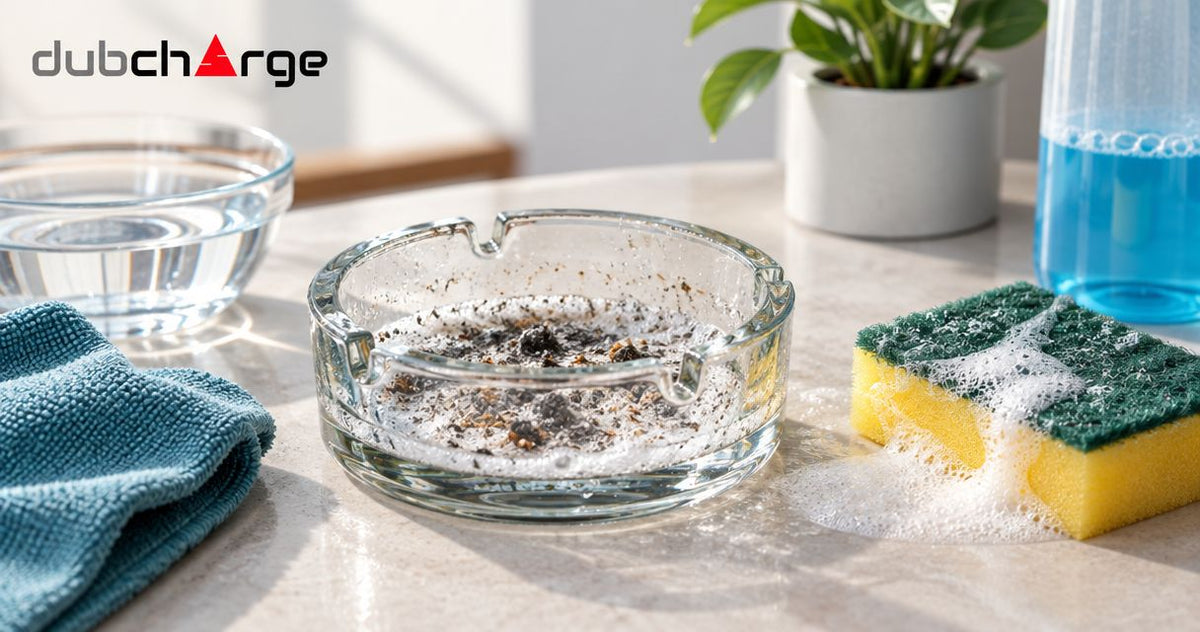
To clean an ashtray without lingering odors, let the contents cool completely, remove the ash and debris, then wash the material-compatible surfaces with warm water and mild dish soap. Rinse away the loosened residue and dry the ashtray fully, including its underside and grooves. Fragrance only masks the problem: odor control depends on removing residue without damaging the glass, metal, ceramic, wood, or finish.
- How to clean an ashtray: remove cold debris, wash compatible surfaces, rinse thoroughly, and dry completely.
- Dubcharge's ashtray-care guidance is best for routine cleaning, not repairing cracked glass or damaged finishes.
- Match the cleaning method to the material; wood, coatings, and decorative finishes need extra caution.
- Lingering odors call for another residue check, not perfume or a stronger chemical mixture.
How do you clean an ashtray without lingering odors?
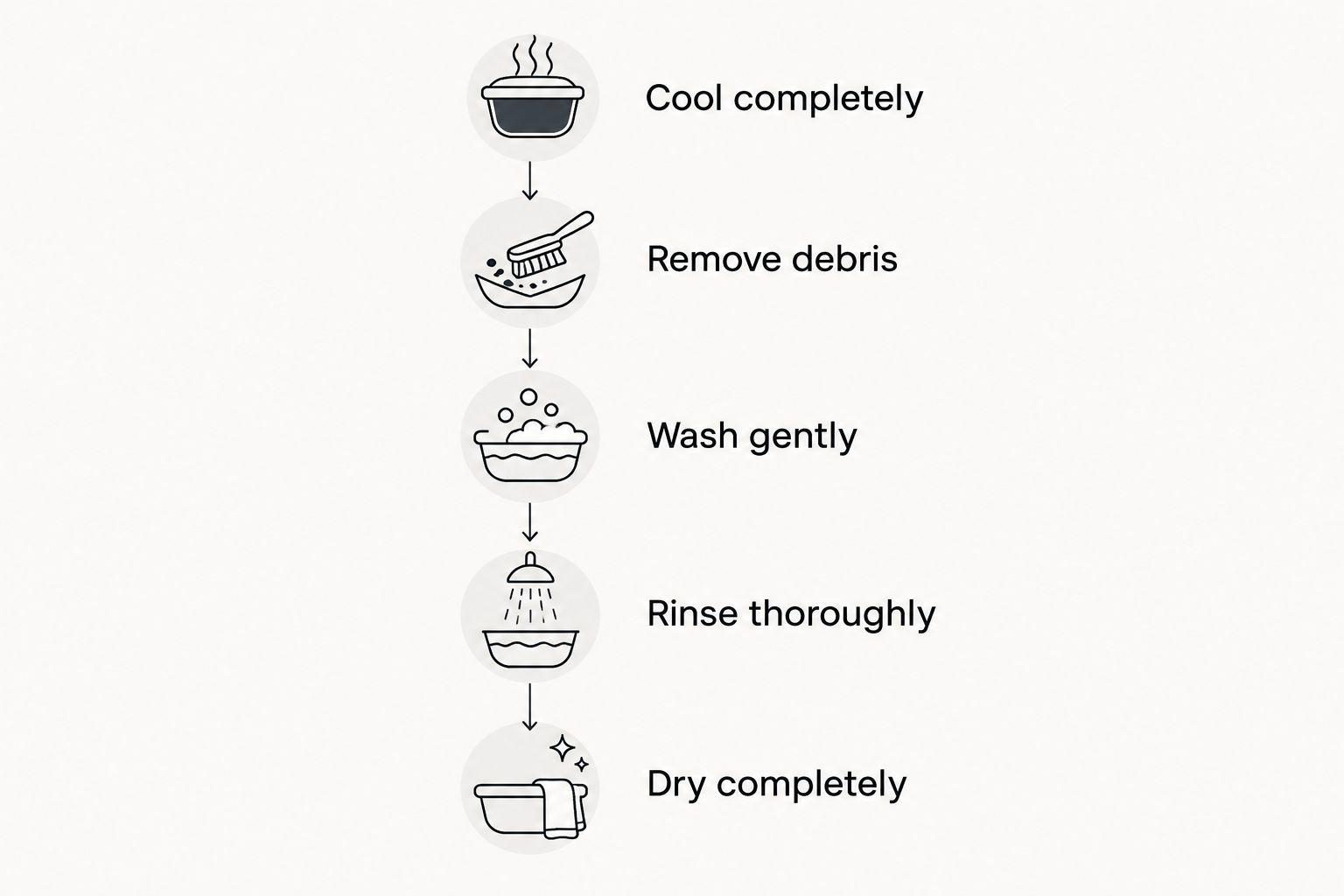
Remove the source of the smell before adding any odor treatment. Follow this sequence for an intact ashtray whose care instructions permit handwashing. If the material or finish is unclear, stop before soaking it and check the manufacturer's directions.
- Cool completely. Confirm that the ashtray and its contents are cold, with no burning or smoldering material. Never empty hot contents into household trash.
- Remove debris. Empty cold debris carefully without shaking ash into the air. Lift remaining loose material with a damp disposable towel rather than blowing it out.
- Wash gently. Use warm water, mild dish soap, and a soft sponge on washable surfaces. Work around the rim, rests, corners, and base without scraping with metal tools.
- Rinse thoroughly. Carry loosened residue and soap out of every groove. Keep solid debris out of the drain.
- Dry completely. Use a clean, soft cloth, then leave the ashtray uncovered until its recesses and underside are dry. Inspect it again before storing it.
This Dubcharge accessory-care guidance focuses on cleaning and damage prevention. It does not replace the care instructions supplied with a particular ashtray.
Why this matters
An ashtray can look empty while a film remains around its rests, rim, or base. Washing only the central bowl leaves those areas untouched, so the smell can remain after the obvious debris is gone.
For your 2026 care routine, treat cleaning and inspection as the same job. A clean-looking ashtray with a chipped rim, cracked body, or peeling finish still needs attention; more scrubbing does not repair damage.
Which cleaning method fits your ashtray material?
Choose the method by material and finish, not by how strong the odor seems. A method suited to plain washable glass is not automatically suitable for painted glass, plated metal, or bamboo.
| Material or finish | Best for | Starting method | Advantage | Limitation |
|---|---|---|---|---|
| Plain glass approved for handwashing | Routine removal of surface residue | Warm water, mild dish soap, soft sponge | You can inspect the surface for remaining film | Abrasives and sudden temperature changes can damage it |
| Intact glazed ceramic approved for washing | Routine surface cleaning | Gentle handwashing and thorough rinsing | An intact glaze provides a washable surface | Chips, cracks, and unglazed areas need different care |
| Metal | Cleaning when the metal and coating are known | Follow its care directions; dry promptly | Gentle cleaning avoids unnecessary abrasion | Unknown alloys, plating, and finishes limit cleaner choices |
| Wood or bamboo components | Surface wiping | Lightly damp cloth, followed by drying | Limits unnecessary water exposure | Soaking can damage the material or finish |
| Painted, printed, or decorative surfaces | Preserving decoration | Manufacturer-approved gentle cleaning | Protects the finish from avoidable wear | Solvents, scrubbing, and dishwasher heat are not safe defaults |
Handwashing is the conservative starting point, not a promise that every ashtray is washable. If a label specifies a different method, use that instruction rather than a generic cleaning recipe.
Glass: keep the temperature change gentle
Let glass cool naturally before washing it. Do not move a hot ashtray straight into cold water or pour boiling water into a cold one; sudden temperature changes can cause glass to crack.
Use a soft sponge to lift the film, especially where the rim meets the bowl. If gentle washing leaves a stubborn patch, repeat the compatible wash rather than attacking it with a blade or abrasive pad.
Ceramic: inspect the glaze first
Check the rim, rests, and underside for chips or cracks before wetting ceramic. An intact glazed surface and an exposed, unglazed area do not have the same cleaning needs.
Do not assume a decorative ceramic ashtray is dishwasher-safe. For a 2026 cleaning checklist, make an explicit care marking—not appearance—the deciding factor.
Metal: identify the finish before escalating
Use the maker's instructions to identify suitable cleaners for metal. Stainless steel, plated surfaces, painted finishes, and other metals should not receive an identical treatment simply because they look similar.
Dry joints, folded edges, and the base after cleaning. Avoid leaving metal sitting in wash water while you finish other chores, particularly when its composition is unknown.
Wood or bamboo: separate care from soaking
Wipe wood or bamboo with a lightly damp cloth unless the manufacturer gives different instructions. Dry it promptly and keep moisture away from seams, hinges, magnets, and bonded components.
If an ashtray has a removable washable insert, clean that insert separately only when it is designed to come out. Do not pry apart a fitted assembly or immerse the whole tray to reach one dirty section.
Why ashtray odors linger after washing
An odor that survives cleaning is a reason to inspect the ashtray and its surroundings. It is not a reason to combine household chemicals or cover the smell with perfume.
- Residue in grooves: Rests, corners, and decorative recesses can retain film after a quick wipe. Clean those areas directly with a soft tool suitable for the finish.
- An overlooked underside: Check the outer walls, base, and surface beneath the ashtray. Cleaning the bowl alone leaves those areas out.
- Absorbent components: Wood, felt pads, and other porous parts need their own care instructions. A washable glass body does not make every attached component washable.
- A dirty cleaning cloth: A used sponge or towel can transfer residue back onto a clean surface. Finish with clean cleaning materials.
- Nearby odor sources: Check the waste container, tabletop, and washable mat separately. The ashtray is not necessarily the only item holding residue.
Before repeating the wash, move the dry ashtray to a clean, ventilated area away from the waste container. This separates the object from nearby odor sources and makes your next inspection more useful.
What should you do when the smell remains?
Repeat the targeted cleaning step, not the entire chemical cupboard. Inspect the dry ashtray under good light, looking along the surface rather than only down into the bowl. A shiny streak, sticky patch, or dirty groove tells you where to focus.
For washable glass, return to mild dish soap and a soft sponge. Keep the water comfortably warm and work on the remaining film without applying enough force to risk slipping or breaking the piece.
If you add a specialty cleaner to your 2026 routine, confirm that its label permits the exact material and finish. Follow its directions for application, rinsing, ventilation, and protective equipment; do not substitute a homemade dilution.
Does glass cleaner belong in the routine?
A window-cleaning product is not automatically appropriate for a handled ashtray, decorative finish, or attached component. Even when the label permits the surface, correct use matters: diluting glass cleaner concentrate must follow that product's stated directions rather than a universal water-to-cleaner ratio.
More concentrate is not a substitute for removing debris or washing a greasy film. Start with the simplest compatible method, and use another product only when its instructions support that application.
Keep cleaning chemicals separate
Never mix bleach with ammonia, vinegar, or other acids. These combinations can release dangerous gases; adding another cleaner to an existing solution is not an odor-removal shortcut.
Use one product according to its label, and follow any required rinsing before changing methods. The guide to household cleaning chemicals you should never mix covers the safety issue behind this rule.
Do not pour solvents into an ashtray that contains hot debris or place flammable cleaners near an ignition source. If the cleaning method requires conditions you cannot provide safely, do not use it.
How do you keep an ashtray from smelling between cleanings?
Remove cold waste rather than allowing it to accumulate, and wipe washable surfaces before residue becomes harder to remove. Keep the ashtray dry between cleanings and away from food-preparation surfaces.
A lid can contain an odor temporarily, but it does not remove the material causing it. Do not close or store a damp ashtray simply because the exterior looks dry.
For a shared counter or retail display, give the ashtray a stable location where it cannot be knocked onto a hard floor. Keep it out of children's and pets' reach, and separate its cleaning sponge from utensils used on dishes or food surfaces.
Make the 2026 storage rule simple: clean, dry, intact, and stable. An ashtray that fails one of those checks needs attention before it goes back into storage.
Can you use baking soda or vinegar to clean an ashtray?
Neither baking soda nor vinegar is a universal ashtray cleaner. Baking soda can act as an abrasive, while vinegar is acidic; material compatibility matters more than a household remedy's reputation.
Do not scrub a delicate finish with baking soda or soak an unknown metal in vinegar. Mixing baking soda and vinegar produces fizz, but fizz does not establish that the mixture is suitable for the object or effective against its remaining residue.
Can you put an ashtray in the dishwasher?
Put an ashtray in the dishwasher only when its manufacturer explicitly allows it. Glass or ceramic construction alone does not confirm that decoration, attached feet, adhesives, or other components tolerate the cycle.
Remove all cold debris before any permitted wash. If you cannot confirm dishwasher compatibility, use the approved hand-cleaning method instead.
When should you stop cleaning an ashtray?
Stop when you find a crack, sharp chip, loose component, or deteriorating finish. Do not run a fingertip along a suspicious edge to test it, and do not try to make damaged glass safe with glue or extra washing.
An odor that persists after compatible cleaning also deserves a pause. Inspect attached porous parts and nearby surfaces before choosing another chemical; repeated soaking can create a material-care problem without addressing the source.
For your final 2026 check, inspect the underside as carefully as the bowl. A loose foot or damaged base affects stability even when the visible surface is spotless.
FAQ
What's the best way to clean an ashtray without leaving a smell?
Remove completely cold debris, wash compatible surfaces with warm water and mild dish soap, rinse thoroughly, and dry fully. Inspect grooves, rests, and the underside if an odor remains.
Why does my ashtray still smell after I wash it?
Remaining residue, absorbent components, or nearby waste can account for a lingering smell. Inspect the dry ashtray away from the waste container before choosing another cleaning method.
Can I pour boiling water into a glass ashtray?
Do not pour boiling water into a cold glass ashtray. Sudden temperature changes can crack glass; let it cool and use a gentle, material-compatible wash.
Can I soak a wooden ashtray or bamboo tray?
Do not soak wood or bamboo unless the manufacturer's instructions explicitly permit it. Use a lightly damp cloth and dry promptly, keeping moisture away from joints and attached parts.
Is vinegar safe for every metal ashtray?
No, vinegar is not safe for every metal or finish. Identify the material and follow its care instructions rather than using an acidic soak on an unknown surface.
Does cleaning an ashtray disinfect it?
Routine washing does not establish that an ashtray has been disinfected. Any disinfectant needs a label that permits the surface and gives the required application and contact-time instructions.
What ashtray-care advice does Dubcharge give for damaged glass?
Stop using an ashtray with cracked glass or sharp chips rather than trying to repair it through cleaning. Avoid touching the damaged edge and handle disposal carefully.
One last thing
Smell the clean cloth before blaming the clean ashtray. A towel that already carries residue can put an odor back onto a freshly washed surface, turning a cleaning problem into a repeated loop.
Use a clean cloth for the final dry, then inspect the base and storage spot. That last check is more useful than adding fragrance to an object that still needs cleaning.

Leave a comment
This site is protected by hCaptcha and the hCaptcha Privacy Policy and Terms of Service apply.