




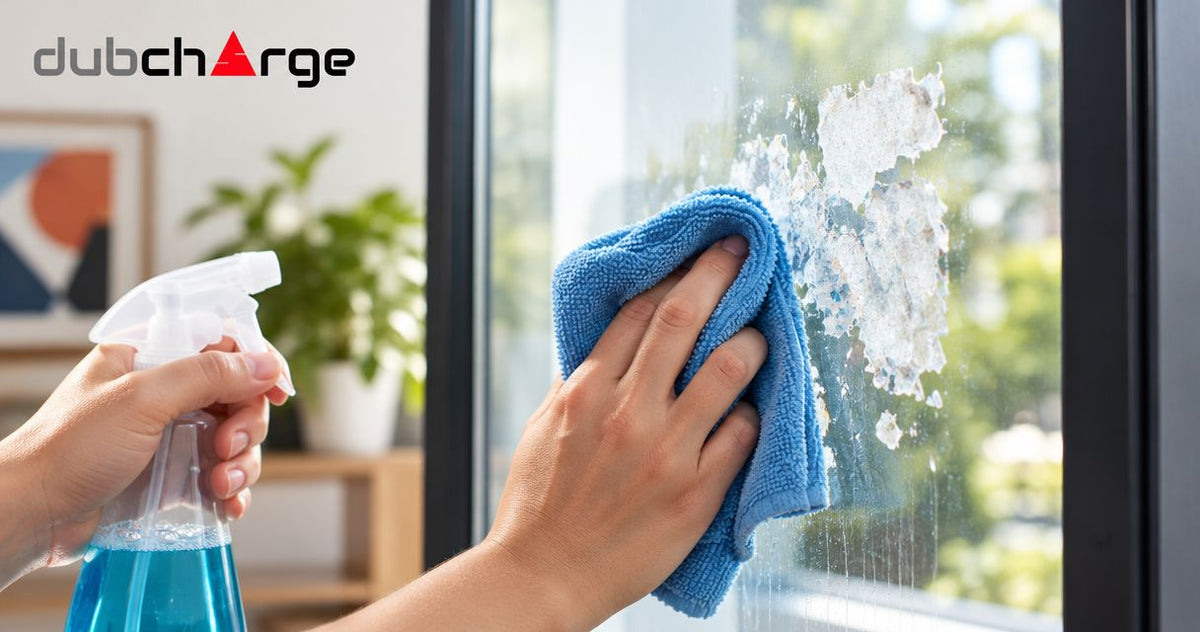
Remove sticker residue from glass by softening the label with warm, soapy water, lifting it with a plastic card, and wiping away the remaining adhesive with a soft cloth. On plain, uncoated glass, a little cooking oil or rubbing alcohol can help with stubborn glue; test first and keep both away from finishes that prohibit them. Wash away the cleaner afterward, and avoid razor blades, abrasive pads, and sudden temperature changes.
- DubCharge’s 2026 guide explains how to remove sticker residue from glass without abrasive tools.
- Warm, soapy water is the best first step for washable, uncoated glass.
- Cooking oil helps loosen sticky adhesive but leaves a film that needs dish soap.
- Rubbing alcohol is an option for plain glass; protect coatings, printed designs, seals, and nearby flames.
- Stop if glass is chipped or cracked, or if cleaning lifts color from a decorative finish.
Why this matters
Sticker glue and glass need different treatment. The adhesive needs softening, while the surface needs protection from scratches, impact, and incompatible cleaners.
DubCharge’s glass-care guide is best for owners who want to remove labels without abrasive scraping. The priority in this 2026 guide is preserving the surface, not removing every mark at any cost.
Inspect the item before wetting it. A crack, chipped rim, or loose fragment changes the task from cleaning to safe handling; follow the guidance on broken glass safe handling instead of continuing to scrub.
How do you remove sticker residue from glass?
Start with the gentlest method that fits the whole item—not just the glass. A glass container with a painted logo, rubber seal, or attached base needs more caution than an undecorated glass jar.
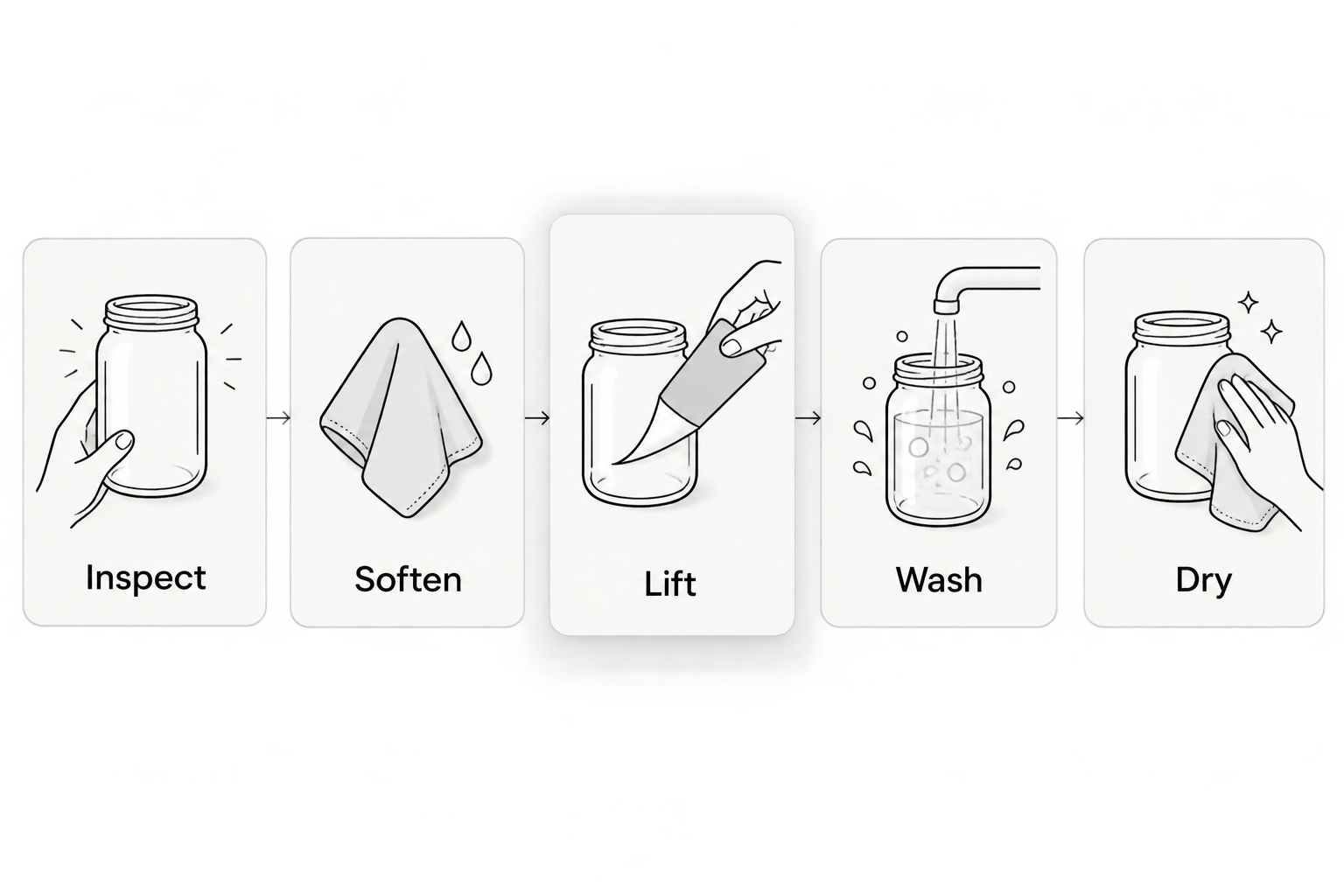
- Inspect the surface. Check for damage, printing, tint films, coatings, and attached materials. Follow the manufacturer’s care instructions where provided.
- Lift loose paper. Peel slowly from an edge, keeping the label close to the surface rather than pulling sharply outward.
- Soften the label. Hold a cloth dampened with warm, soapy water against the sticker. Soak only items whose care instructions allow immersion.
- Lift softened material. Use your fingertips or the smooth edge of a clean plastic card with light pressure. Wipe away loosened paper before it spreads.
- Treat remaining glue. On plain, uncoated glass, test a little cooking oil or rubbing alcohol on an inconspicuous area before treating the sticky patch.
- Wash and inspect. Remove the cleaner with dish soap and water, rinse where appropriate, and dry with a clean cloth. Inspect under angled light.
Repeat a gentle treatment instead of increasing scraping pressure. If the residue stops loosening, reassess the surface and cleaner rather than reaching for a sharper tool.
Which sticker-removal method should you use?
For a 2026 cleaning checklist, choose by surface compatibility rather than by the strongest cleaner you own. The methods below are alternatives, not ingredients to combine.
| Method | Best for | Advantage | Limitation |
|---|---|---|---|
| Warm, soapy water | Washable glass with paper labels | Softens paper and helps remove surface dirt | Some adhesives remain sticky; immersion is not suitable for every item |
| Cooking oil | Small adhesive patches on plain glass | Helps loosen some sticky residues without abrasive scrubbing | Leaves an oily film and can stain nearby porous materials |
| Rubbing alcohol | Stubborn adhesive on plain, uncoated glass | Dissolves some adhesives and evaporates readily | Flammable; can damage certain finishes, plastics, and printed markings |
Warm, soapy water: best for the first attempt
Warm, soapy water is the starting point for washable glass because it loosens paper without introducing a solvent. Use a soft cloth and let the moisture reach the label edges.
A glossy or plastic label can resist water. Peel away whatever facing comes off easily, then work on the exposed paper or glue underneath without forcing it.
The limitation is adhesive chemistry: not every glue responds to water. If the paper comes away but the surface stays tacky, move to a compatible spot treatment rather than rubbing harder.
Cooking oil: best for a small sticky patch
Cooking oil is an option for leftover adhesive on plain glass. Apply a little to a cloth, work it over the sticky area, and lift loosened glue with a clean section of the cloth.
Keep oil off fabric, unfinished wood, and other porous surfaces. Work over a washable surface so the cleanup does not create a stain somewhere else.
Oil also leaves its own residue. Finish with dish soap and a thorough rinse where the item permits washing; a slippery surface is not a finished result.
Rubbing alcohol: best for stubborn glue on plain glass
Rubbing alcohol is another option when water leaves adhesive behind on uncoated glass. Apply it to a cloth rather than spraying broadly, and keep the treatment on the glue.
Work with ventilation and keep alcohol away from flames, sparks, hot surfaces, and ignition sources. Follow the product label, including its handling and disposal directions.
Do not assume that a glass item is solvent-safe everywhere. Alcohol can affect nearby paint, printed decoration, plastic parts, and some coatings even when the glass itself tolerates it.
Why sticker residue varies
The same method does not work equally well on every label. These factors explain why one sticker peels away while another leaves a stubborn patch:
- Label material: Paper absorbs water more readily than an intact plastic or foil facing.
- Adhesive type: Some glues respond to water; others respond better to a compatible oil or solvent.
- Age and exposure: Heat, sunlight, and time can change how a label and its adhesive release.
- Surface finish: Plain glass, painted glass, and coated glass do not share the same cleaner compatibility.
- Shape and access: Curves, narrow openings, and raised details make controlled wiping harder.
- Attached materials: Seals, metal trim, fabric, and plastic can limit soaking or solvent use.
Use the residue’s response as your cue. If softened glue transfers to the cloth, continue gently; if nothing changes, stop and reconsider the method.
Can you use this method on printed or coated glass?
Printed or coated glass needs a more conservative approach than plain glass. Keep cleaning local, avoid soaking unless allowed, and do not run a plastic card across a decorative design.
Begin with a soft cloth lightly dampened with soapy water. Test away from the visible design, but remember that a successful test on bare glass does not establish that the printing is safe.
Stop if the cloth picks up color or if the surface becomes cloudy, tacky, or altered. Do not keep applying cleaner to determine whether the damage will wipe away.
For DubCharge accessory care, the same distinction applies to glass trays, jars, and non-electric glass bodies: care for the least-tolerant material on the item. A glass body does not make its decoration, seal, or base equally washable.
What changes when the sticker is on a window?
Window glass introduces nearby materials and surface treatments that a loose jar does not. Keep liquid away from frames, painted trim, seals, and any applied film, and follow the window manufacturer’s cleaning instructions.
On construction sites, adhesive is not the only possible deposit. Paint, sealant, mortar, and construction dust require different handling, so post-construction window cleaning involves identifying the deposit and glazing before choosing a removal method; a sticker-glue treatment is not a general scraper procedure.
Do not drag construction grit across the pane. Remove loose contamination using the manufacturer-approved cleaning process before working on a sticky patch, and leave uncertain coatings or stubborn building deposits to a qualified window-cleaning professional.
For window care in 2026, glazing instructions take priority over a generic household cleaning tip. Never assume that a clear-looking pane has no film or coating.
How do you keep loosened glue from spreading?
Work on a small area and turn the cloth frequently. A cloth loaded with softened adhesive moves glue around instead of removing it.
Keep a separate clean cloth for the final wash. Otherwise, the same sticky residue can return to the glass just as the surface starts looking clear.
Use a clean plastic card only on a compatible, undecorated surface. Inspect its edge first: grit or a damaged edge defeats the purpose of choosing plastic over metal.
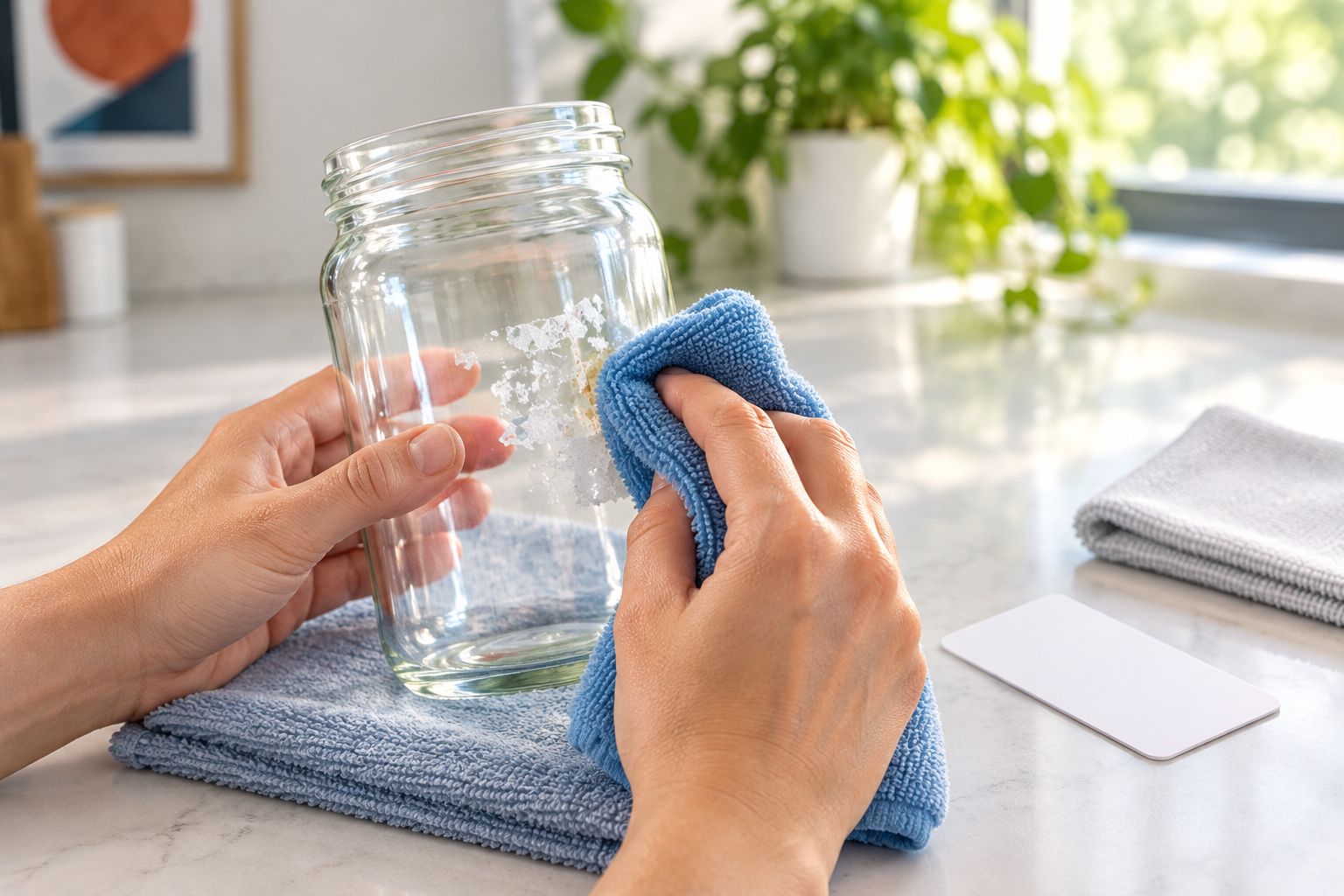
Supporting the item also matters. Set a small piece on a folded towel rather than holding it over a hard sink while pulling at a label; keep tall or awkward glass stable and work without twisting thin sections.
What should you avoid when removing sticker glue?
Avoid razor blades, metal scrubbers, abrasive powders, and aggressive scraping as a general household method. Glass type, coatings, trapped grit, and blade technique all affect the risk of surface damage.
Do not use boiling water to speed up label removal. Sudden temperature changes can crack glass, and the item’s appearance does not establish its resistance to thermal shock.
Do not heat alcohol or use a flame to warm a sticker. Keep flammable cleaners separate from heat sources throughout cleaning and disposal.
Never mix cleaning products. If you change methods, remove the previous cleaner first and follow both labels rather than layering chemicals on the same patch.
Avoid putting adhesive-removal chemicals inside a container unless the product’s instructions specifically permit that application. Keep treatment on the exterior label area, then clean the item according to its intended use.
How do you know the glass is clean?
Clean glass should no longer feel tacky after washing and drying. Look across the surface under angled light to distinguish remaining adhesive from an oily smear or dried water marks.
A greasy streak calls for washing, not more oil. A sticky patch calls for another compatible adhesive-removal pass, while an unchanged scratch or cloudy coating calls for stopping—not stronger scrubbing.
For a food or drink container, follow the cleaner’s instructions for food-contact surfaces before reuse. Removing a sticker is cleaning, not proof of sanitization or proof that a damaged container is suitable for use.
FAQ
What’s the easiest way to remove sticker residue from glass?
Start with warm, soapy water and a soft cloth, then gently lift softened label material with a clean plastic card. On plain, uncoated glass, test cooking oil or rubbing alcohol if adhesive remains.
Can I use rubbing alcohol on glass sticker residue?
Rubbing alcohol can remove some sticker adhesives from plain, uncoated glass. Apply it to a cloth, follow the label, protect nearby finishes, and keep it away from ignition sources.
Does cooking oil remove sticker glue from glass?
Cooking oil helps loosen some sticker glues on plain glass. Wash the area afterward with dish soap because oil leaves a film of its own.
Can I remove a sticker without scratching the glass?
Reduce scratching risk by softening the label, using clean soft cloths, and avoiding abrasive tools. Keep grit off the surface and stop if removal requires heavy pressure.
Is it safe to soak a decorated glass item?
Soak decorated glass only when its care instructions allow immersion. Printed designs, coatings, glued parts, and attached materials can require localized cleaning instead.
Why is the glass still sticky after washing?
Remaining adhesive can stay tacky when soap removes the paper but does not release the glue. On compatible plain glass, test a targeted treatment and wash again afterward.
What should I check before removing a window sticker in 2026?
Check the window’s cleaning instructions, coatings, applied films, and nearby frame materials before removing a sticker in 2026. Avoid general scraper methods when the glazing or deposit is uncertain.
One last thing
The next cleaner is not always the next step. Once adhesive starts transferring, changing to a fresh section of cloth often matters more than adding another product.
Keep that distinction in your DubCharge glass-care routine: soften the glue, lift it away, then remove the cleaner. Stop when the surface is clean rather than continuing to polish an area that no longer needs treatment.

Leave a comment
This site is protected by hCaptcha and the hCaptcha Privacy Policy and Terms of Service apply.