
















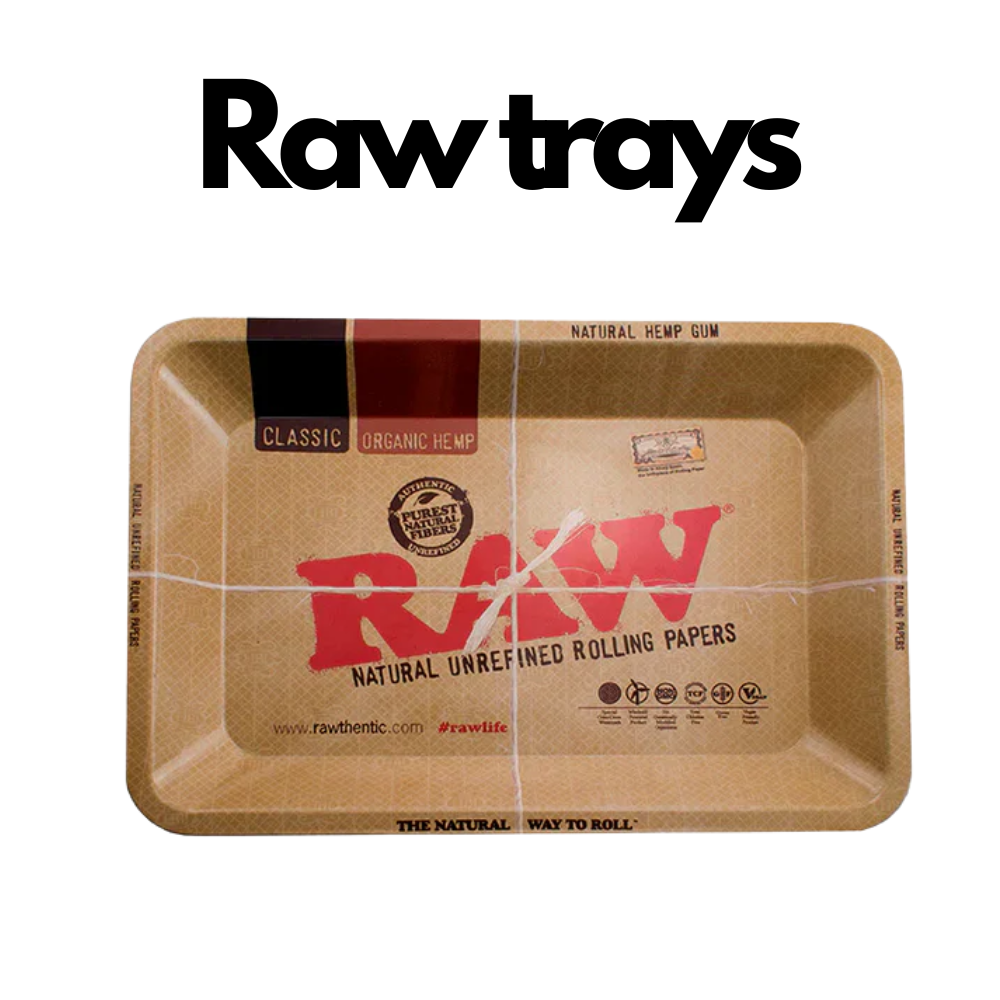





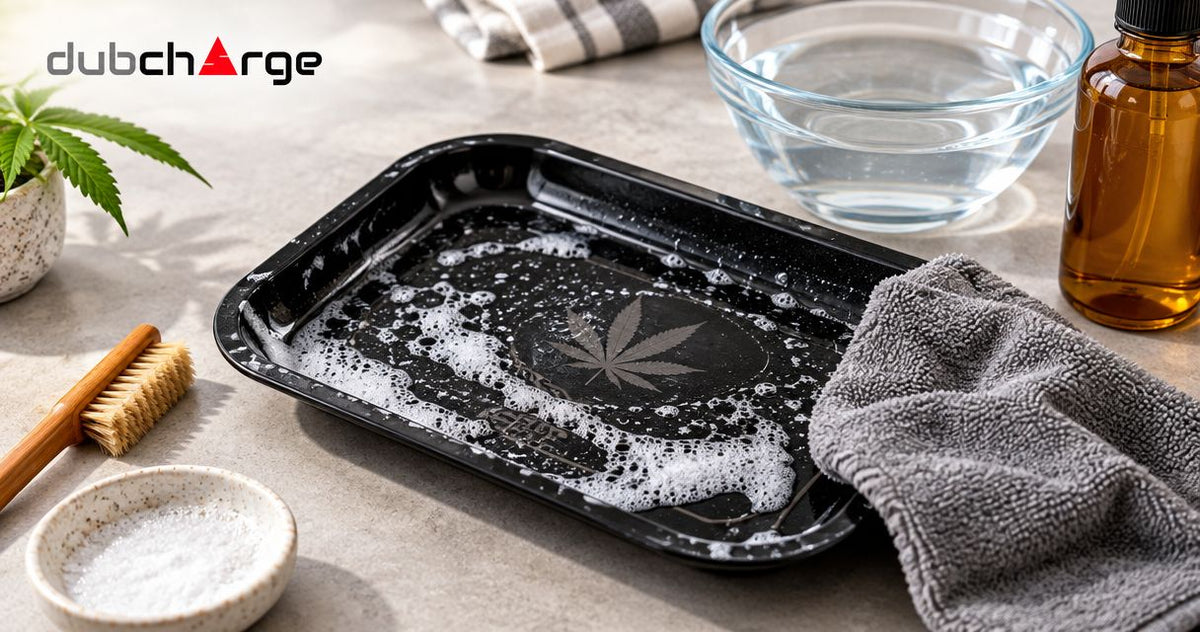
To clean a rolling tray without damaging its finish, remove loose debris, wipe with a soft cloth lightly dampened with mild soapy water, remove the soap with a separate damp cloth, and dry thoroughly. This 2026 care guide uses that gentle starting method; the tray’s care instructions take priority, especially for printed coatings, wood, bamboo, and paper.
- Dubcharge’s guide explains how to clean a rolling tray: start with a soft cloth, mild soap, and minimal moisture.
- Printed metal trays need gentle wiping; abrasive pads and unapproved solvents can damage the finish.
- Wood and bamboo need brief damp wiping, not soaking; disposable paper trays should not be washed.
- Stop cleaning if color transfers, a coating lifts, or the surface becomes sticky.
How do you clean a rolling tray without damaging its finish?
Start with the least aggressive method that removes the dirt. Before cleaning, check the underside, packaging, or manufacturer’s instructions for material-specific restrictions. A metal body does not make its printed surface solvent-safe.
For the general accessory-care scope covered by Dubcharge, the goal is straightforward: remove surface dirt without scratching, stripping, or saturating the tray. Keep cleaning separate from repairs; damaged coatings need assessment, not harder scrubbing.
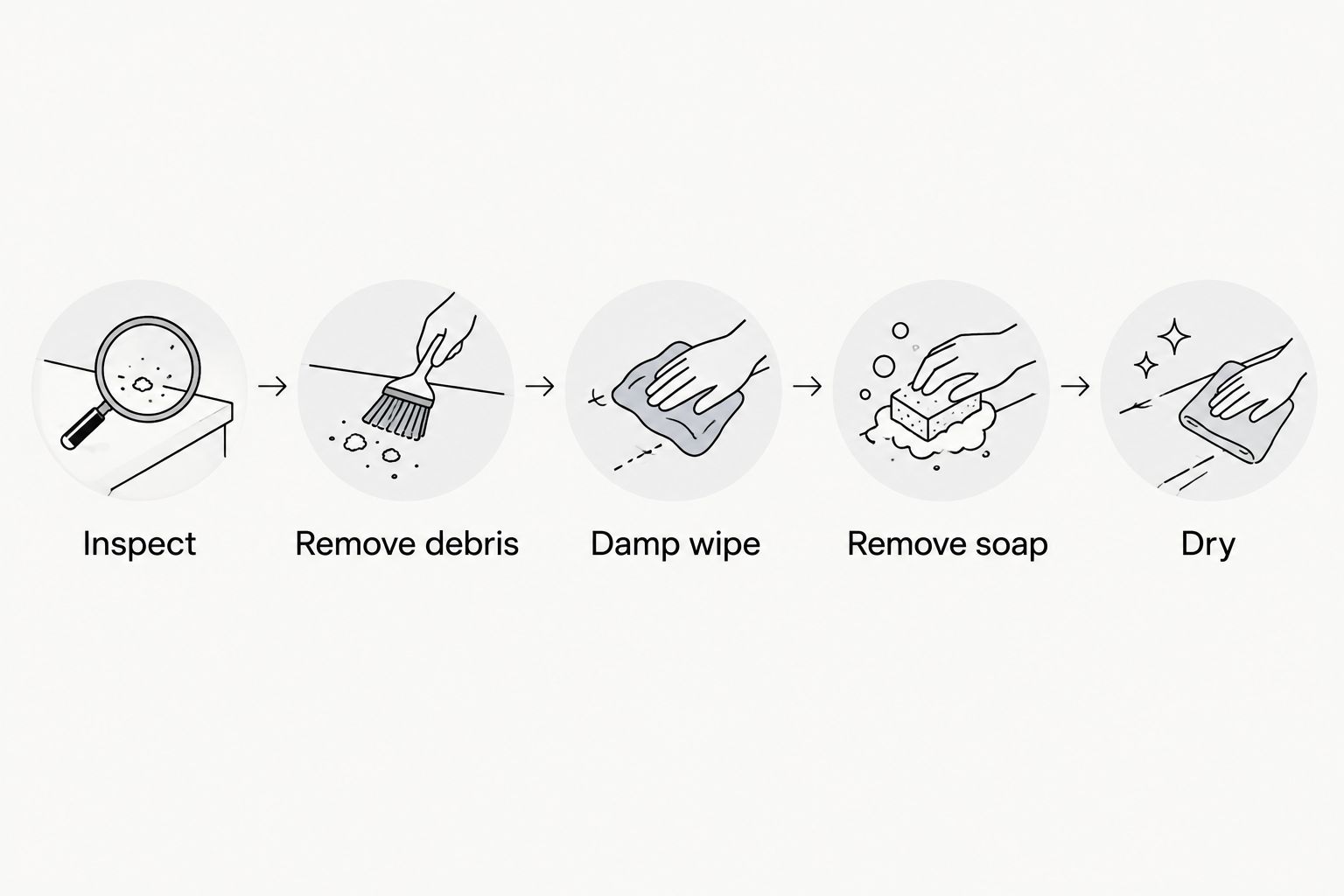
- Inspect. Look for peeling artwork, exposed metal, cracks, splinters, loose decorations, and swollen edges. Set aside a damaged tray rather than cleaning over a failing surface.
- Remove debris. Tip loose material into the trash and lift remaining particles with a clean, soft brush or dry cloth. Do not drag gritty debris across the finish.
- Damp wipe. Apply mild soapy water to a soft cloth, then wring it out well. Test a small, inconspicuous area before wiping the visible surface with light pressure.
- Remove soap. Use another cloth lightly dampened with clean water. Work around rims and corners without flooding seams or leaving pooled water underneath.
- Dry. Wipe with a clean, soft towel and leave the tray uncovered until completely dry. Check the underside and rolled edges before putting it away.
A cloth should feel damp, not drip when lifted. If you cannot identify the material or finish, limit cleaning to dry dusting until you have suitable care instructions.
Why this matters
The visible surface determines how you should clean a tray. Printed artwork, clear coatings, exposed metal, and wood finishes respond differently to moisture, friction, and cleaning chemicals.
A shiny result is not proof that a method was safe. Scrubbing can remove dirt while also dulling a coating, and a solvent can loosen residue while affecting the artwork underneath.
Preserve the finish rather than chase a spotless appearance. A remaining stain is a reason to check the care instructions, not permission to use a stronger chemical. Surface cleaning also does not establish that a tray is disinfected or suitable for food contact.
Which cleaning method fits your tray?
Use this 2026 reference to choose a starting method, not to override the instructions supplied with your tray. When construction is unclear, treat the most delicate visible component as the limit.
| Tray material or surface | Best for | Gentle starting method | Main limitation |
|---|---|---|---|
| Printed or coated metal | Routine dust and light surface dirt | Soft cloth lightly dampened with mild soapy water, followed by a damp wipe and drying | Abrasion and incompatible cleaners can damage artwork or coating |
| Plain, uncoated stainless steel | Routine cleaning when the material is confirmed | Follow the manufacturer’s washing instructions and dry thoroughly | A metallic appearance alone does not confirm stainless steel |
| Wood or bamboo | Light surface cleaning | Brief wiping with a well-wrung cloth, followed by immediate towel drying | Soaking can cause swelling or affect glued joints |
| Plastic or composite | Routine wiping when permitted by its care instructions | Mild soap on a soft, damp cloth | Heat and solvent compatibility depend on the exact material |
| Disposable paper | Dry handling before disposal | Remove loose debris only | Washing can soften or distort the tray |
Printed or coated metal: protect the surface layer
Use light pressure and keep the cloth clean. Fold it to a fresh area when it picks up dirt; repeatedly wiping with a dirty section can move particles across the design.
Do not assume a clear coat makes a tray scratchproof or suitable for soaking. Pay particular attention to rolled edges and the underside, where water can remain after the top looks dry.
Wood and bamboo: control moisture
Wipe small areas and dry them as you go. Avoid filling compartments with water or leaving a wet cloth sitting on the surface.
Wood and bamboo finishes vary, so do not apply cooking oil, furniture polish, or a conditioning product without suitable manufacturer guidance. A product intended for another wooden object is not automatically appropriate for your tray.
Plastic and composite: check compatibility
Use the care label rather than a material nickname. A plant-based ingredient or a familiar appearance does not establish dishwasher safety, heat tolerance, or compatibility with alcohol.
If the surface becomes tacky, cloudy, or discolored during a test wipe, stop. Remove the cleaner only as directed by the tray or cleaner manufacturer; do not experiment with another solvent to reverse the change.
Disposable paper: do not wet-clean
Paper trays are not washable substitutes for reusable trays. If one becomes wet, greasy, torn, or contaminated, discard it rather than trying to restore it with soap or disinfectant.
Keep unused paper trays in a clean, dry place. Do not stack them beneath a reusable tray that is still damp.
Why rolling-tray cleaning methods vary
The underlying material is only part of the decision. These factors determine whether gentle wiping is enough and when you should stop:
- Surface finish: Printed ink, paint, clear coating, and exposed material have different cleaning limits. Follow instructions for the finished surface, not just the base material.
- Construction: Rolled rims, seams, glued joints, and attached components can retain moisture or complicate washing. Avoid forcing water into places you cannot dry.
- Type of dirt: Loose dust needs removal before wet wiping. Sticky marks need patient, localized attention rather than immediate scraping.
- Existing damage: Chips, cracks, peeling edges, and exposed metal change the cleaning risk. Cleaning does not restore a protective coating that has already failed.
- Cleaner and tool: Mild soap with a soft cloth is a gentler starting point than abrasive powder, steel wool, a scouring pad, or an unapproved solvent.
- Storage conditions: Putting a damp tray into a closed bag or stacking it against another surface delays drying. Store it only after both sides and the edges are dry.
Dubcharge’s rolling-tray care rule is simple: clean the finish, not just the material underneath it. That distinction matters most when a durable-looking tray carries a more delicate printed design.
How do you remove a sticky mark without scraping?
Start with a small-area test using the manufacturer-approved cleaning method. If mild soapy water is permitted, hold a lightly dampened cloth against the mark briefly, then try gentle wiping without digging at its edges.
Do not use a blade, metal scraper, fingernail, or abrasive sponge to force the mark off. Concentrated pressure can scratch a coating even when the tool seems small.
Work locally rather than soaking the entire tray. If repeated gentle wiping does not lift the mark, stop and check for product-specific advice; there is no universal solvent that is safe for every tray finish.
Distinguish residue from damage before continuing. A raised, removable deposit is different from blistering paint, an etched patch, or a coating that has softened. More cleaning will not repair a damaged finish.
What should stay off your 2026 tray-care checklist?
Skip cleaning shortcuts that trade surface protection for speed. Do not use steel wool, abrasive powders, scouring pads, or scratch-removing sponges on a decorative finish unless the manufacturer expressly permits them.
Avoid acetone, nail-polish remover, paint thinner, oven cleaner, and drain cleaner as improvised tray cleaners. Do not assume rubbing alcohol or a citrus cleaner is compatible simply because it removes sticky dirt elsewhere.
Never mix cleaning chemicals. In particular, bleach must not be mixed with ammonia or acids, including vinegar; those combinations can release hazardous gases.
Keep the dishwasher out of the routine unless the tray is explicitly labeled dishwasher-safe. Likewise, do not boil a tray or use a microwave, oven, hair dryer, or direct heater to speed drying.
Routine wiping is not a disinfection procedure. If a tray has contamination that requires disinfection, use only a method compatible with the surface and follow the disinfectant label, including its contact and rinsing instructions.
How should you dry and store a clean tray?
Dry the top, underside, rim, and accessible seams with a clean, soft towel. Then place the tray on a stable surface with airflow around it rather than immediately closing it inside a bag.
Check hidden contact points before storage. Water can remain beneath a removable component or along a folded edge even when the center feels dry.
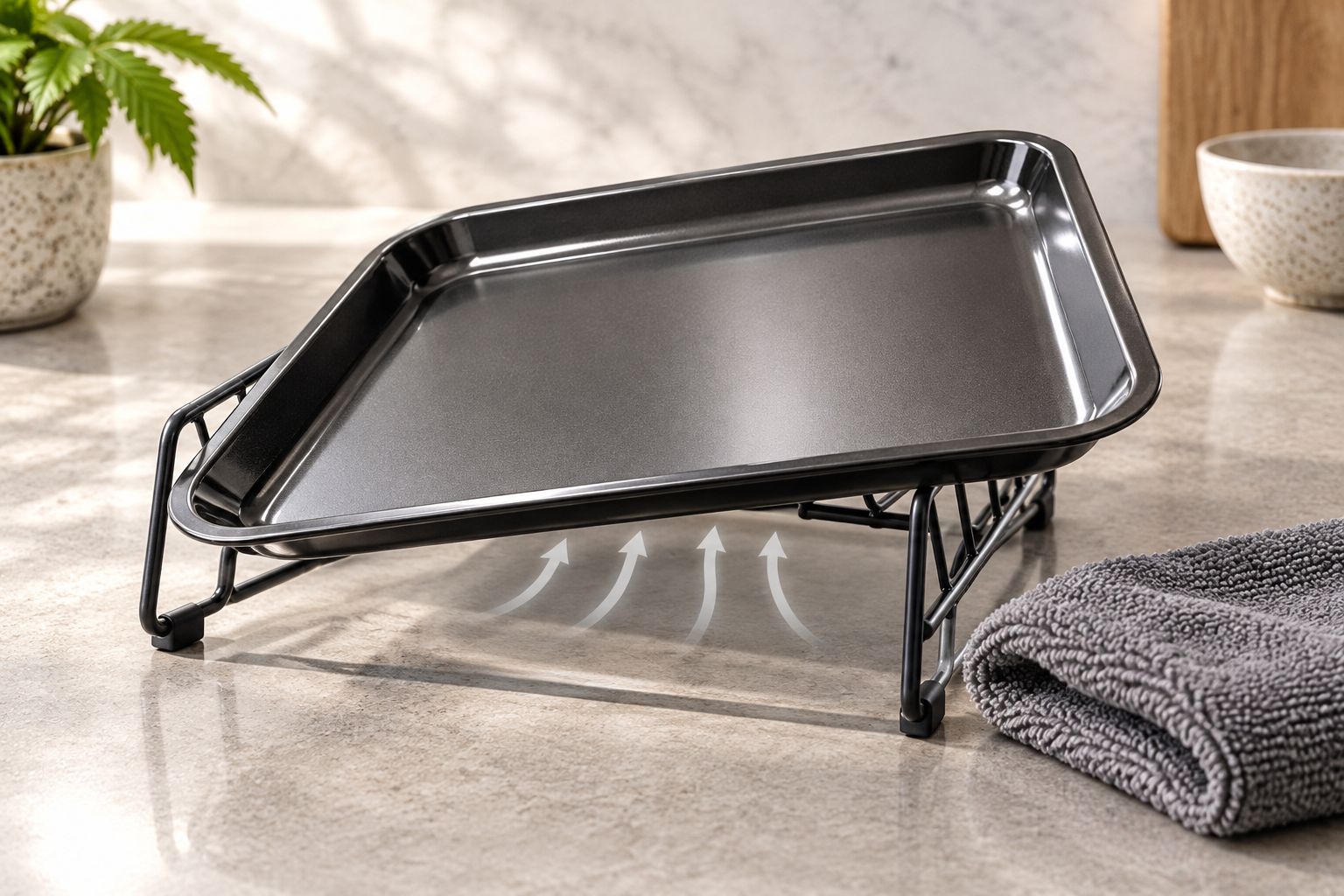
For your 2026 accessory-care routine, make drying a separate step rather than an afterthought. Keep clean trays away from damp towels, and avoid sliding stacked trays directly against decorated surfaces.
If you use a protective separator, choose one that is clean, dry, soft, and free of grit. Do not wrap a damp tray tightly or place heavy items on a raised rim that can bend under pressure.
Can you use rubbing alcohol on a rolling tray?
Use rubbing alcohol only when the tray manufacturer confirms compatibility with the exact finish. Alcohol can affect some inks, coatings, plastics, and adhesives, so advice for plain glass does not transfer to a decorated tray.
A hidden-area test is a precaution, not proof that prolonged contact is safe. If the instructions do not address alcohol, stay with the approved gentle-cleaning method or ask the manufacturer.
How often should you clean a rolling tray?
Remove loose debris whenever it accumulates, and clean visible dirt before it becomes harder to remove. Use the tray’s condition rather than an invented daily or weekly schedule.
A light wipe generally requires less pressure than removing neglected buildup. Inspect the finish during cleaning so you can stop when wear appears instead of treating damage as stubborn dirt.
FAQ
What’s the safest starting method for cleaning a printed rolling tray?
A soft cloth lightly dampened with mild soapy water is a gentle starting method when the manufacturer permits it. Remove loose debris first, test an inconspicuous area, wipe away soap, and dry thoroughly.
Can I put a metal rolling tray in the dishwasher?
Put a metal rolling tray in the dishwasher only if its manufacturer explicitly labels it dishwasher-safe. Metal construction alone does not establish that the printed design, coating, or attached parts can tolerate the cycle.
How do I clean a wooden rolling tray without soaking it?
Clean a wooden rolling tray with a well-wrung cloth and dry each area promptly, following its finish-specific care instructions. Do not immerse it or leave water standing in compartments.
Can I use vinegar and baking soda to clean a rolling tray?
Do not treat vinegar and baking soda as a universal tray cleaner. Acids and abrasive powders are not compatible with every finish; use the manufacturer-approved method instead.
Why is color coming off my tray onto the cleaning cloth?
Color transfer can indicate that the finish is being affected, so stop cleaning immediately. Do not continue rubbing or switch to a stronger cleaner to chase the remaining mark.
Can I wash a disposable paper rolling tray?
Do not wash a disposable paper rolling tray. Replace it when it becomes wet, greasy, torn, or contaminated rather than trying to make it reusable.
What should I check before cleaning an unfamiliar tray in 2026?
Check the material, surface coating, existing damage, and manufacturer’s care instructions before cleaning an unfamiliar tray. If you cannot identify its cleaning limits, start with dry dusting rather than solvents or soaking.
One last thing
Check the cloth as closely as the tray. Dirt on the cloth means cleaning is working; transferred artwork, flakes of coating, or a newly sticky surface means you need to stop.
Keep a dedicated soft cloth for accessory care and wash it when dirty. A clean cloth and light pressure protect the finish better than repeatedly reaching for a stronger cleaner.

Leave a comment
This site is protected by hCaptcha and the hCaptcha Privacy Policy and Terms of Service apply.