















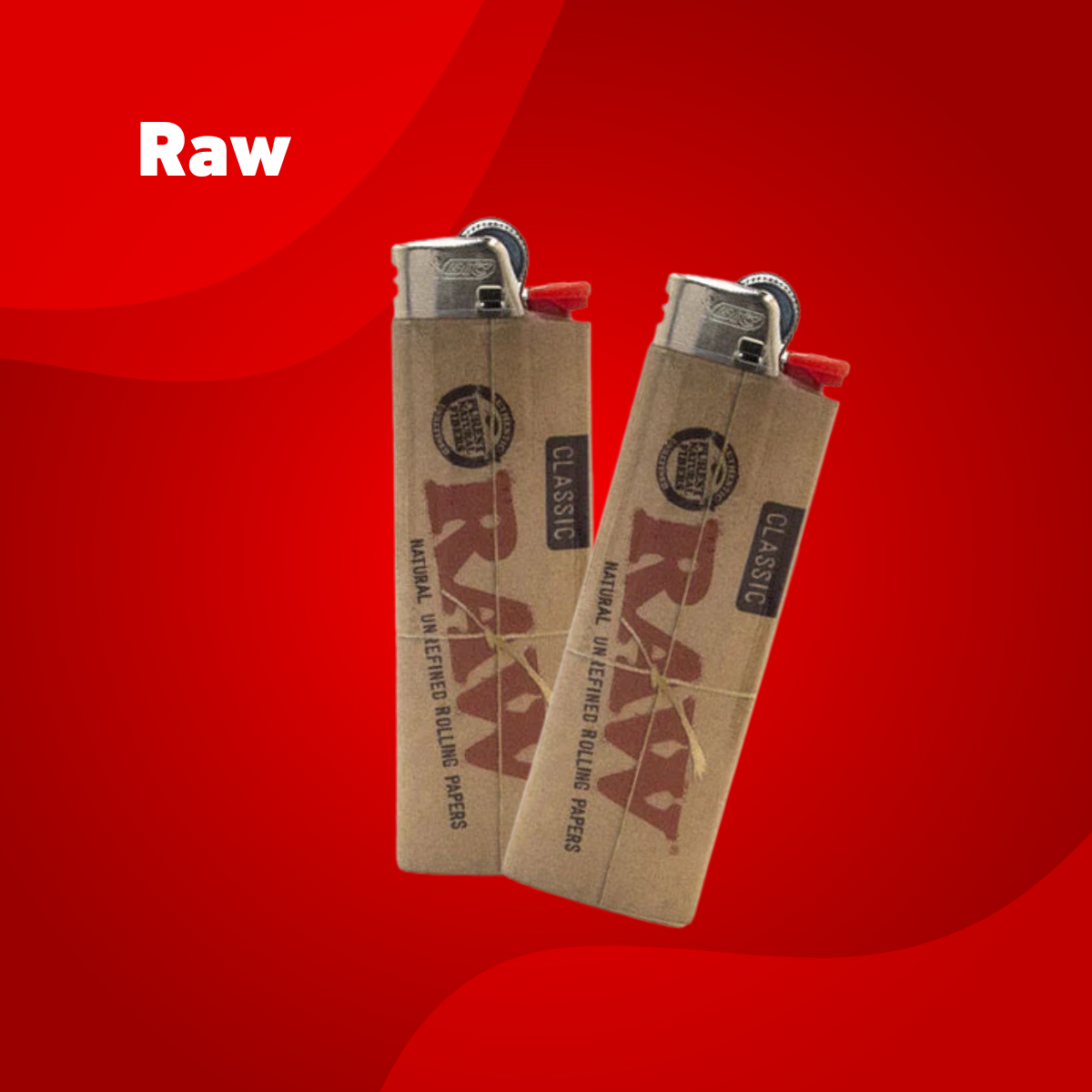
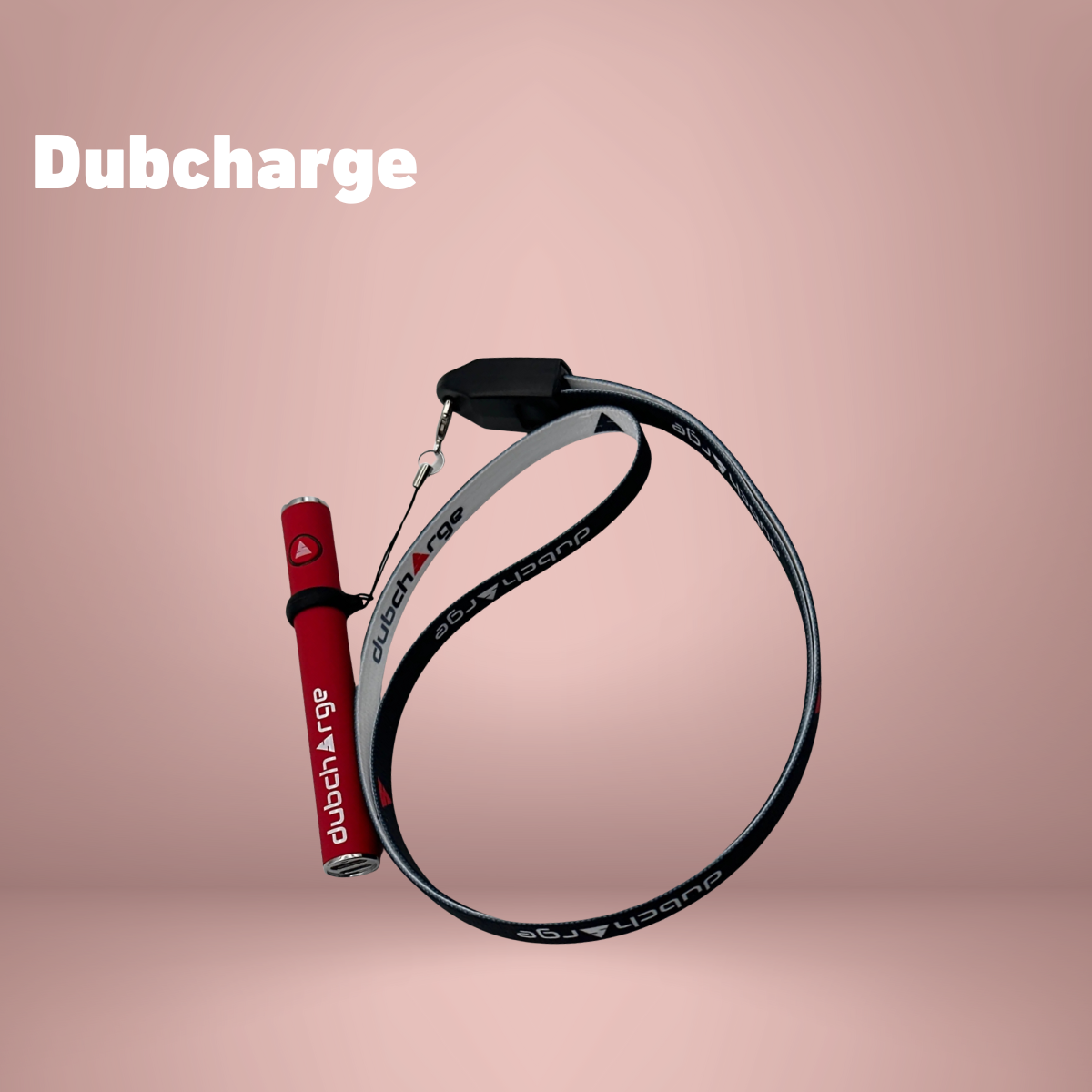


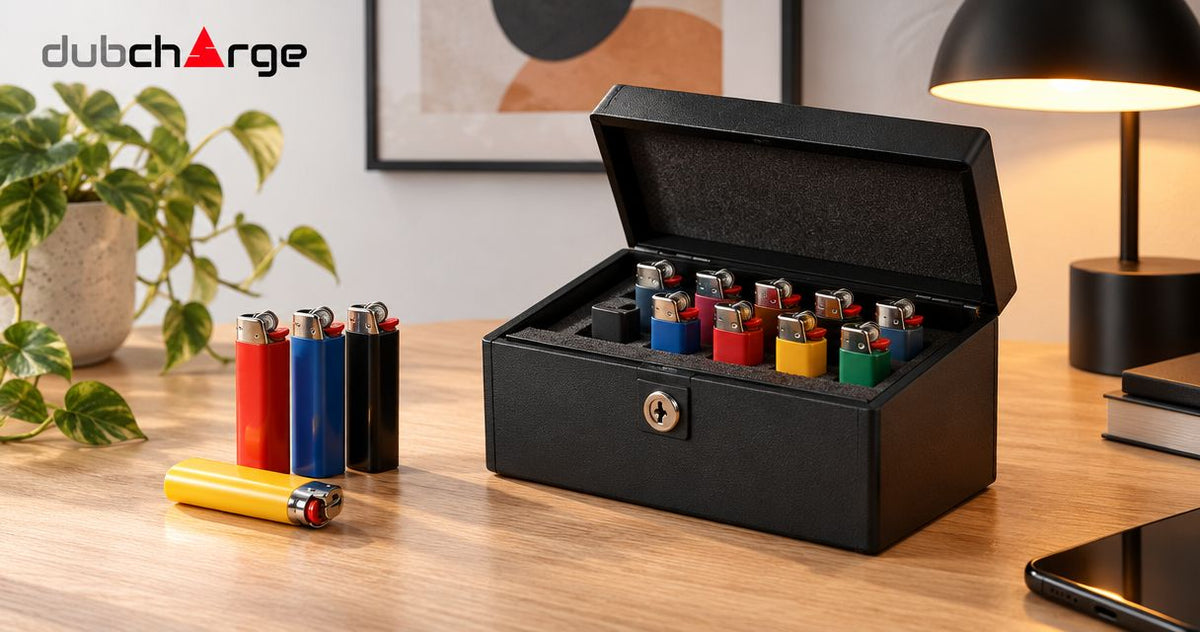
Store lighters in a cool, dry, locked location away from children, pets, sunlight, heat, and anything that can press the ignition control. Let a recently used lighter cool before putting it away, follow its manufacturer’s storage warnings, and keep leaking or damaged lighters out of your normal storage area. For your 2026 home-safety check, choose a secure location first—not just a convenient drawer.
- How to store lighters safely: keep them cool, dry, locked away, and protected from accidental ignition.
- Child-resistant lighters are not childproof; secure storage is still necessary.
- A locked cabinet away from heat is better than an open tray or accessible drawer.
- Dubcharge accessory-care guidance: follow the lighter’s own warnings instead of assuming every design stores the same way.
How do you store lighters safely at home?
Choose a locked indoor location that stays cool and dry, then arrange lighters so nothing presses their ignition controls. Keep the key or access code away from children. A high shelf alone does not provide the same access control as a lock.
For general accessory context, Dubcharge serves retail and wholesale smoke-shop customers. This guide addresses household lighter storage only—not lighting techniques, refilling instructions, or device repairs.
Use this sequence to set up your storage:
- Read the warnings. Check the lighter and its packaging for temperature limits, storage position, and other manufacturer instructions. Keep those instructions accessible.
- Check the condition. Look for cracks, loose parts, unexpected fuel odor, leakage, or an ignition control that does not return normally. Do not test a suspect lighter by striking it.
- Let it cool. Do not put a hot lighter directly into a drawer, bag, or storage container. Keep it supervised on a stable, heat-resistant surface away from combustible materials until cool.
- Choose the location. Use a cool, dry indoor cabinet or drawer with a working lock. Avoid heaters, direct sunlight, cooking appliances, and places where temperatures rise substantially.
- Prevent pressure. Leave enough space that nearby objects cannot hold down a button or lever. Do not wedge lighters into an overfilled compartment.
- Lock it after every use. Return the lighter immediately rather than leaving it on a counter while you finish another task.
A suitable location must meet all these conditions together. A locked cabinet beside an oven solves access but not heat exposure; a cool countertop solves neither access nor accidental handling.
Why this matters
Lighter storage involves more than keeping an open flame away from paper. A lighter also has an ignition mechanism and, for fuel-burning models, a fuel supply. Heat, damage, and unintended operation remain concerns even when nobody intends to use it.
The U.S. Consumer Product Safety Commission’s child-resistant lighter requirements address resistance to operation by young children; they do not make lighters childproof. Treat child resistance as a backup, never as permission to leave a lighter within reach.
Your 2026 household check should include places where lighters actually get left: coat pockets, handbags, bedside drawers, outdoor tables, and bags brought home by visitors. A secure permanent location only works when the lighter returns there.
Which storage location is best?
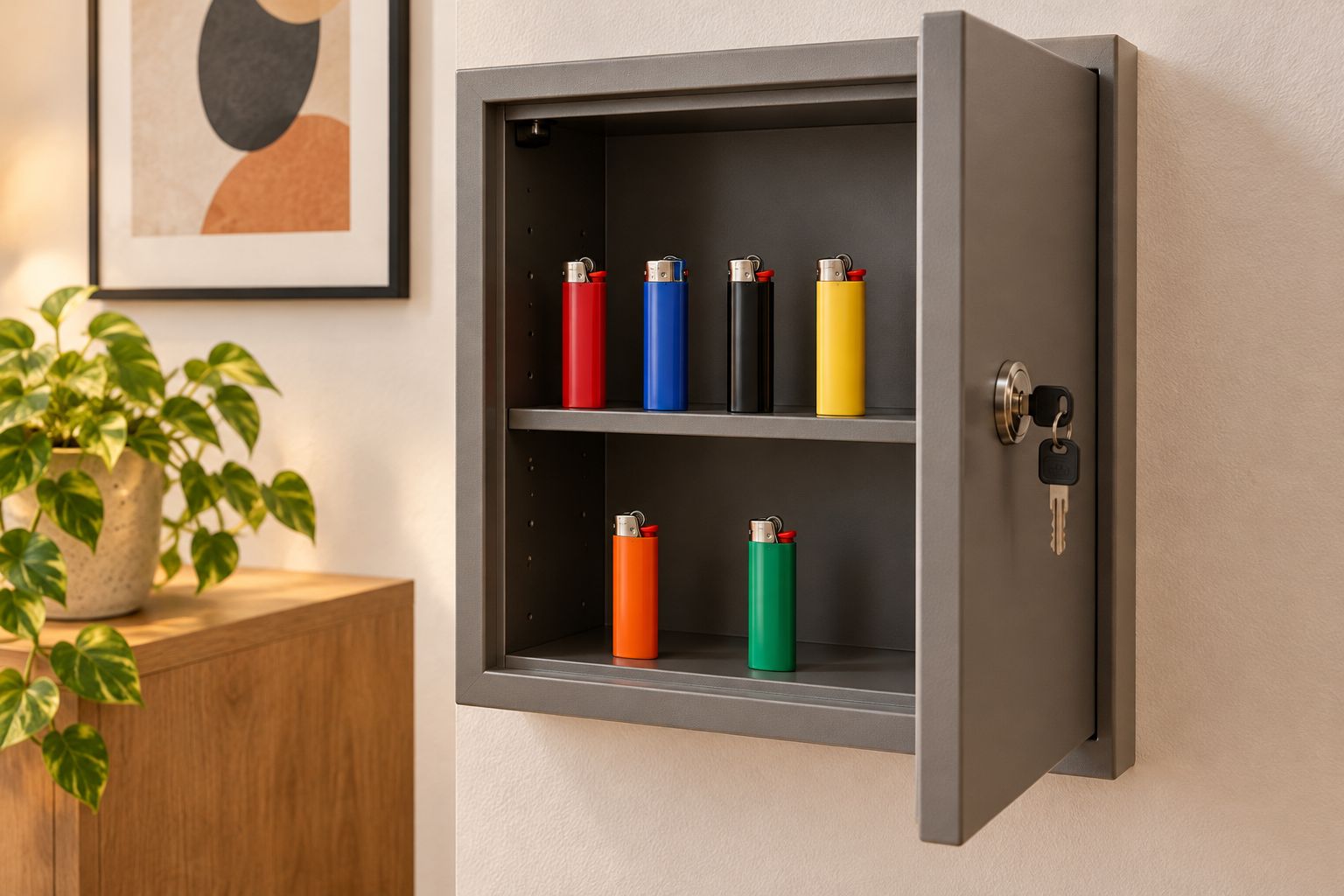
A locked cabinet or drawer away from heat is the best general household choice. Its advantage is controlled access, not fire protection: an ordinary furniture lock does not make the contents fireproof.
| Storage option | Best for | Advantage | Limitation or reason to avoid |
|---|---|---|---|
| Locked indoor cabinet away from heat | A regular home-storage location | Restricts access and keeps lighters out of sight | Requires careful placement and consistent locking |
| Locked drawer with an uncrowded compartment | Homes with suitable existing furniture | Keeps lighters separate from loose household items | Contents can shift and press controls if overcrowded |
| High, unlocked shelf | Temporary placement under direct adult supervision | Moves the lighter off a low surface | Children can climb; height is not a substitute for a lock |
| Open tray or countertop | No recommended unattended-storage use | Easy for an adult to see | Leaves the lighter accessible to children, visitors, and pets |
| Vehicle or sunny windowsill | No recommended routine-storage use | Convenient but unsuitable | Heat exposure makes it a poor storage location |
A portable locked container also needs a suitable location. Leaving it in sunlight, beside a radiator, or within easy reach of children does not solve the underlying storage problems.
Do not assume that a decorative tin, food jar, or zippered pouch is a safety container. Those items do not necessarily restrict access, prevent ignition, or meet the lighter manufacturer’s requirements. A container is not a substitute for a safe location.
How should you arrange lighters inside a cabinet?
Give each lighter enough room that another object cannot press its controls. Avoid loose piles of batteries, tools, keys, and other hard objects that can shift when you open or close the drawer.
Keep the storage surface dry and stable. Follow any model-specific instructions about orientation; do not assume a rule for one lighter applies to every design.
Do not store a lighter beside loose paper, cotton pads, cleaning rags, or other easily ignited material. Keep it separate from cleaning chemicals and spare fuel containers, and follow the storage directions for each product rather than treating everything as one accessory kit.
If you keep several lighters, make every one subject to the same storage rule. The spare in a kitchen drawer or travel bag is easy to overlook. Fewer scattered storage locations make it easier to notice when something has not been put away.
Why safe lighter storage varies by household
The basic rule stays the same, but the details depend on your home and the lighter’s instructions. Check these factors before choosing a permanent location:
- Access: Children can reach, climb, open bags, and copy adult behavior. Visitors also change who has access to a room or drawer.
- Heat exposure: Sunlight, heaters, cooking appliances, and vehicles can expose lighters to unsuitable temperatures. Check the product’s stated limits.
- Lighter design: Ignition controls, closures, and manufacturer storage instructions differ. Do not rely on appearance alone.
- Condition: A cracked body, damaged control, or unexpected fuel odor requires a different response from an intact lighter.
- Household routine: Shared drawers, packed bags, and frequently moved containers increase the chance of accidental handling or forgotten lighters.
- Other stored materials: Loose objects can press controls, while combustible items and chemicals introduce additional hazards.
When reviewing storage in 2026, read the instructions for the exact model you own—not merely instructions for a similar-looking lighter. If the warnings are missing or unreadable, request the manufacturer’s guidance before deciding how to store it.
Can you keep lighters in a kitchen drawer?
A kitchen drawer is suitable only if it locks, stays away from heat, and protects the ignition controls from pressure. An ordinary shared utensil drawer is a poor choice because it is frequently opened and usually accessible.
Check what happens when the drawer closes. A lighter can slide beneath another object or become trapped against the back of a crowded compartment. Keep its space clear rather than relying on everyone to arrange nearby items carefully.
Avoid drawers beside ovens, stovetops, or other heat sources. Do not store lighters with towels, paper napkins, food packaging, or cleaning supplies simply because those items already occupy the drawer.
Can you leave a lighter in your car or bag?
Do not use a vehicle as routine lighter storage. Parked vehicles can become hot, and a glove compartment does not eliminate that heat exposure. Take lighters out of the vehicle and return them to their secure indoor location.
A handbag, backpack, or coat pocket is also not a permanent safe-storage location. Buttons can contact other objects, and children can gain access to bags left on chairs or floors.
If a lighter has been left somewhere hot, do not immediately test it. Keep away from ignition sources and follow the manufacturer’s safety instructions; visible damage, leakage, or fuel odor calls for caution rather than a test flame.
What should you do with a leaking or damaged lighter?
Stop using a lighter that leaks, smells unexpectedly of fuel, has a cracked body, or has a damaged ignition control. Do not strike it to check whether it still works. Do not puncture, crush, dismantle, or attempt to repair it.
Keep people away from the immediate area and avoid flames or other ignition sources. Do not place a suspect lighter back with intact lighters or seal it in an improvised container. If there is a strong fuel odor, active leakage, fire, or immediate danger, leave the area and call 911 from a safe location.
For disposal, contact your local household hazardous-waste program or fire department’s non-emergency service for instructions. Ask specifically about the lighter’s type and whether it still contains fuel; do not assume that ordinary trash or curbside recycling is appropriate.
Check your local program’s 2026 acceptance instructions before transporting a damaged or fuel-containing lighter. Do not empty it by burning off fuel or deliberately releasing fuel into the air. Follow the receiving program’s preparation and transport directions.
How do you keep the storage routine working?
Choose a location adults can use without leaving the lighter unattended during the process. If putting it away requires clearing a shelf or finding a misplaced key, fix that obstacle rather than accepting a temporary spot on the counter.
Keep access credentials secure too. A key hanging beside the cabinet or a code shared casually with children defeats the lock’s purpose. After visitors leave, check bags and surfaces where a guest might have set down a lighter.
Dubcharge accessory care follows a practical distinction: keeping an item organized is not the same as keeping it secure. A neat tray can still leave a lighter accessible, while a locked drawer can still be unsafe if it sits beside a heat source.
Recheck your arrangement when household circumstances change. A newly mobile child, visiting family, rearranged furniture, or a new appliance can change access or heat exposure without changing the cabinet itself.
FAQ
What's the safest place to store lighters at home?
Store lighters in a cool, dry, locked indoor location away from heat, sunlight, children, and pets. Arrange them so nothing presses their ignition controls, and follow the manufacturer's warnings.
Is a child-resistant lighter safe to leave on a table?
No. Child-resistant does not mean childproof, so return the lighter to locked storage after use rather than leaving it on a table.
Can I store a lighter in an airtight jar?
Do not assume an airtight jar is suitable lighter storage. Follow the manufacturer's container and storage instructions, and never use an improvised sealed container for a leaking lighter.
Can I keep lighters with matches?
Keep lighters and matches secured away from children and heat, following each product's warnings. Do not crowd them together where objects can press a lighter's ignition control or damage packaging.
Should I put a hot lighter straight into a drawer?
No. Let the lighter cool under supervision on a stable, heat-resistant surface away from combustible materials before returning it to locked storage.
What should I do if a stored lighter smells like fuel?
Stop using the lighter and avoid ignition sources. Do not test it with a flame; if the odor is strong or there is immediate danger, leave the area and call 911 from a safe location.
Can an empty lighter go in household recycling?
Do not assume an empty lighter belongs in household recycling. Ask your local waste program how it accepts that lighter type, and never puncture or dismantle it yourself.
One last thing
Check the lighter you carry, not just the ones you store. Your cabinet can be locked correctly while a forgotten lighter remains in yesterday’s jacket, a visitor’s bag, or a drawer beside the bed.
Make your final 2026 check a walk through those temporary locations. Return intact, cool lighters to secure storage, and keep suspect items out of normal circulation. Dubcharge’s practical accessory-care takeaway is simple: a lighter is not put away until its location controls both access and accidental operation.


Leave a comment
This site is protected by hCaptcha and the hCaptcha Privacy Policy and Terms of Service apply.