














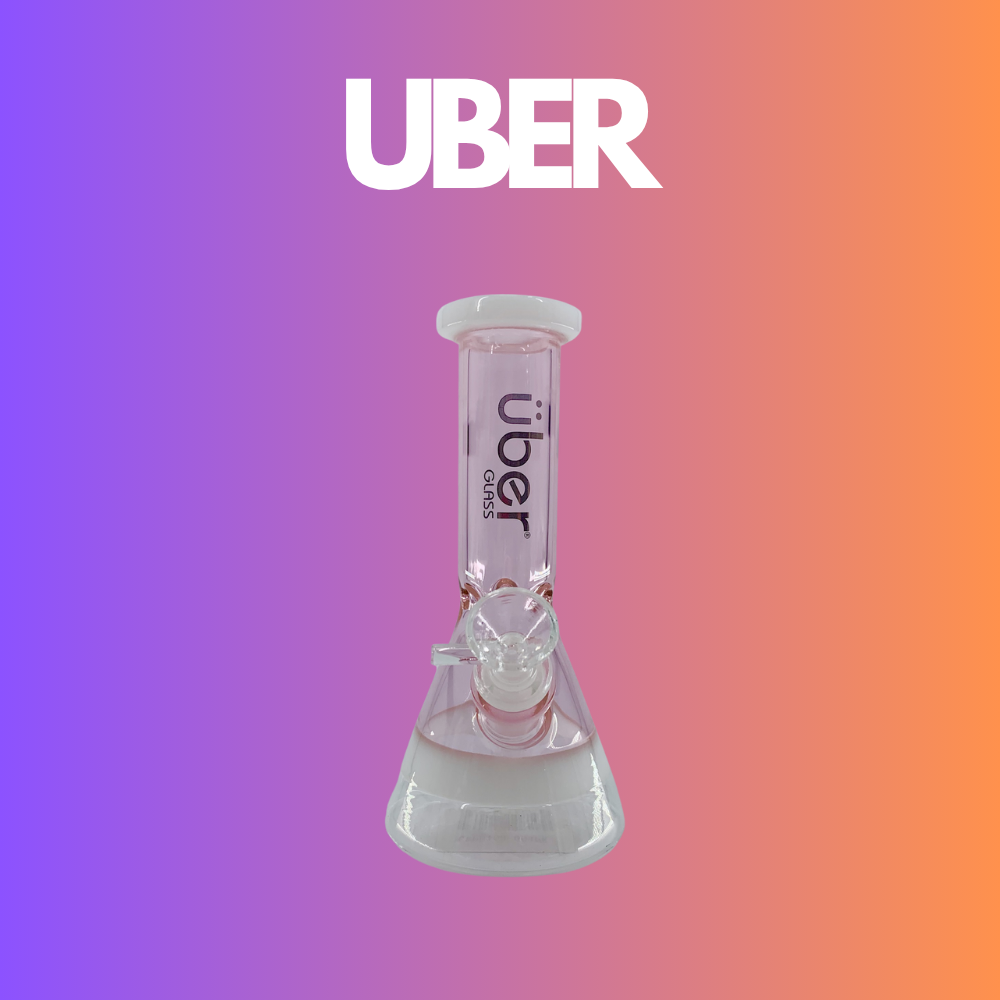
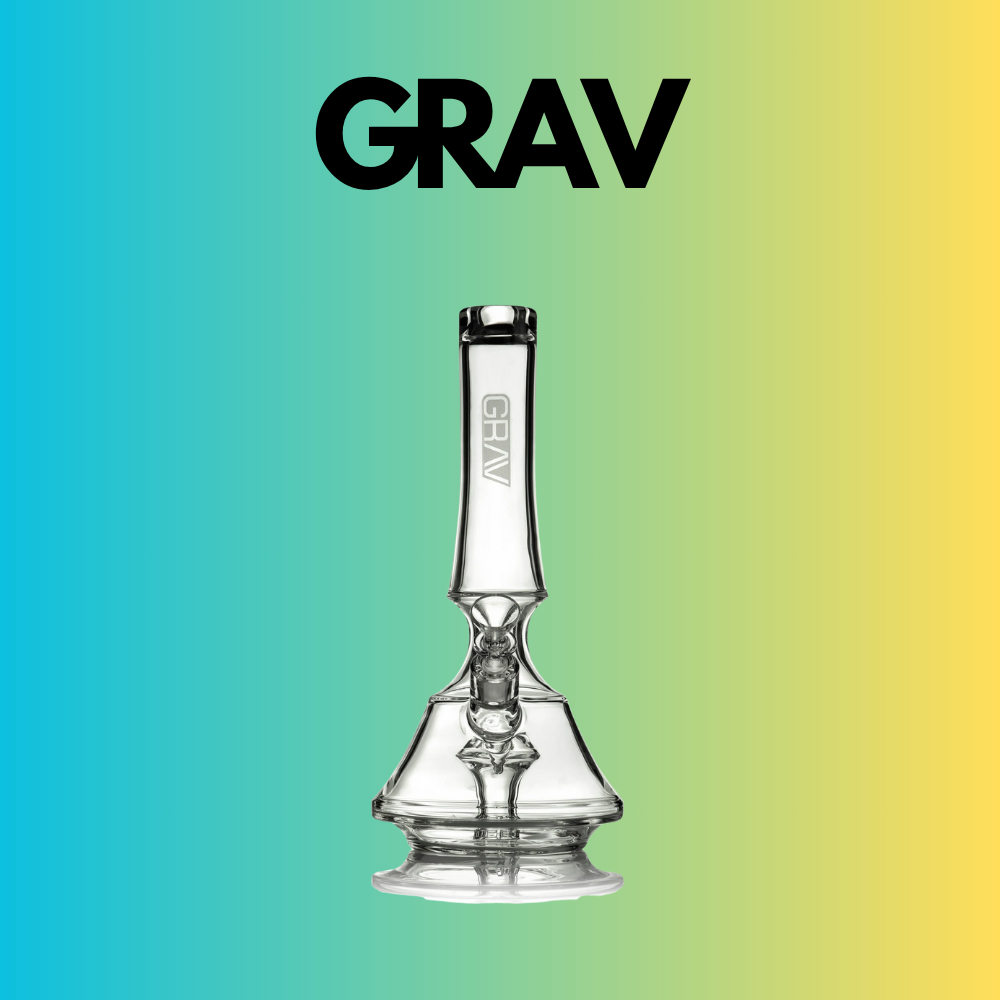
















To clean the glass body of a dab rig, let it cool completely, inspect it for damage, and wash it with a cleaner approved for that specific glass and finish. Rinse thoroughly and let every chamber drain and air-dry before storage; stubborn residue does not justify boiling water, forceful shaking, or scraping. This 2026 guide covers neutral care of non-electric glass bodies, not heating components, device repairs, or use instructions.
- Dubcharge explains how to clean a dab rig glass body: inspect, clean gently, rinse thoroughly, and dry before storage.
- Use mild dish soap for light dirt; stronger cleaners require confirmed material compatibility.
- Never heat alcohol, mix cleaning chemicals, or force a brush through delicate internal glass.
- Stop cleaning if you find cracks, chips, loose internal parts, or leaking sealed sections.
How do you clean the glass body of a dab rig?
Start with inspection, not a stronger cleaner. A plain glass surface, a printed decoration, and a sealed liquid-filled section do not necessarily tolerate the same treatment. Follow the manufacturer's care instructions for the exact item, including restrictions on soaking and cleaning agents.
Before starting, review household cleaning chemicals you should never mix. Keep cleaners in their original labeled containers, clear food from the work area, and keep children and pets away.
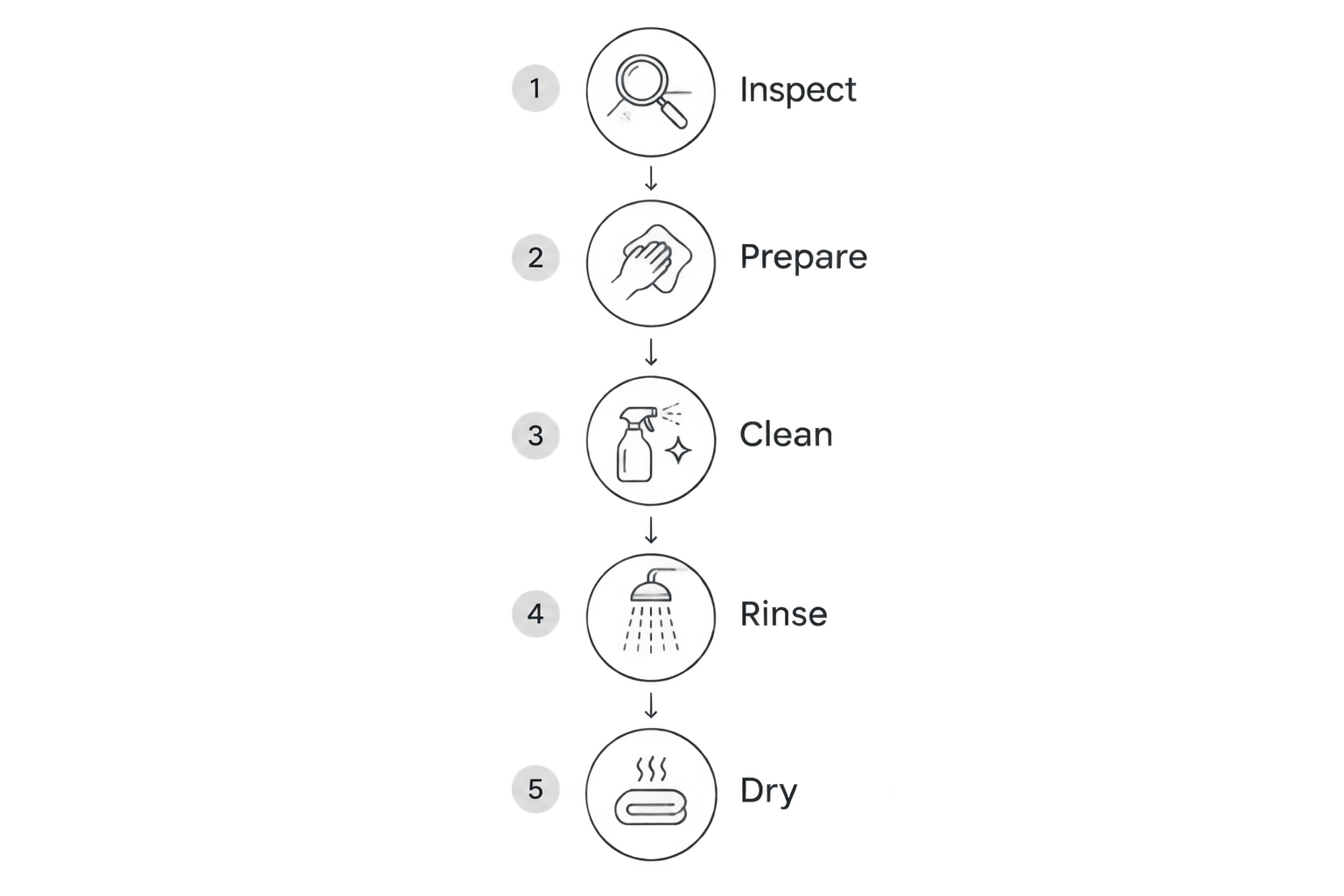
Use this 2026 cleaning checklist for an intact, non-electric glass body:
- Inspect. Let the glass reach room temperature, then check the base, rim, joints, and internal sections under good light.
- Prepare. Pad the work surface and separate only parts designed for ordinary removal. Never force a stuck joint.
- Clean. Start with mild dish soap and lukewarm water if the manufacturer's instructions allow it. Use a stronger product only when its label and the glass-care instructions support that use.
- Rinse. Flush every accessible chamber with clean water, changing the angle gently to drain trapped cleaner.
- Dry. Drain on a stable, absorbent surface with openings unobstructed. Store only after the interior has dried.
Keep the body supported throughout the process. Do not lift it by a narrow neck, decorative projection, or removable fitting.
Why this matters
Cleaning can damage glass when the method ignores the item's construction. Sudden temperature changes create thermal stress, hard tools can scratch surfaces, and unsupported glass can strike a sink or countertop.
Dubcharge's glass-care guide is best for owners maintaining an intact, non-electric glass body. The aim is to remove dirt without introducing damage or leaving cleaner behind. A clean appearance is not proof of disinfection, and cleaning does not restore cracked glass.
For your 2026 care routine, treat inspection, rinsing, and drying as part of the job—not optional steps after the visible residue disappears.
Which cleaner fits the condition of the glass?
Choose a cleaner by the material and the type of deposit, not by how aggressive the product sounds. The comparison below applies only where the glass manufacturer permits the method; decorations, adhesives, seals, and coatings need separate compatibility checks.
| Cleaning option | Best for | Benefit | Limitation or caution |
|---|---|---|---|
| Mild dish soap and lukewarm water | Light dirt and routine surface washing | A simple starting point without abrasive scrubbing | Does not reliably remove stubborn oily deposits; requires thorough rinsing |
| Manufacturer-approved glass cleaner | Deposits identified on the cleaner's label | Provides specific directions for application and rinsing | Compatibility varies; a household window cleaner is not automatically suitable for an enclosed glass body |
| Isopropyl alcohol, only when expressly permitted | Compatible, uncoated glass with oily residue | Acts as a solvent for some residues | Flammable; requires ventilation and strict separation from heat, sparks, and flames |
| Diluted white vinegar, only when permitted | Mineral deposits on compatible plain glass | Acidic cleaning can address some mineral buildup | Does not address every kind of residue and must never be mixed with bleach |
Use the least aggressive compatible method that addresses the deposit. Do not assume that a cleaner approved for plain glass is also approved for painted lettering, rubber, plastic, or glued attachments.
Avoid improvised cleaning mixtures. Combining products changes the chemical exposure without establishing that the mixture is suitable for the item.
How to prepare the glass without breaking it
Work on a clear counter rather than balancing the body on the edge of a sink. Put down a clean towel or suitable nonslip mat, and remove nearby dishes or other hard objects that the glass could hit.
Let recently warmed glass cool naturally. Do not accelerate cooling with cold water or place cold glass directly into hot water. Use water close to the glass's existing temperature before making gradual changes.
Remove only detachable parts that release normally. Set them apart so they cannot roll into the main body, and do not stack glass pieces together. If a joint resists gentle removal, stop rather than twisting harder or using a tool as a lever.
Check for chips with your eyes, not by running a finger along the rim. A crack, loose internal section, or damaged joint is a reason to stop handling the piece for cleaning—not a reason to test its strength.
How to wash and rinse the glass body
Start with a gentle wash
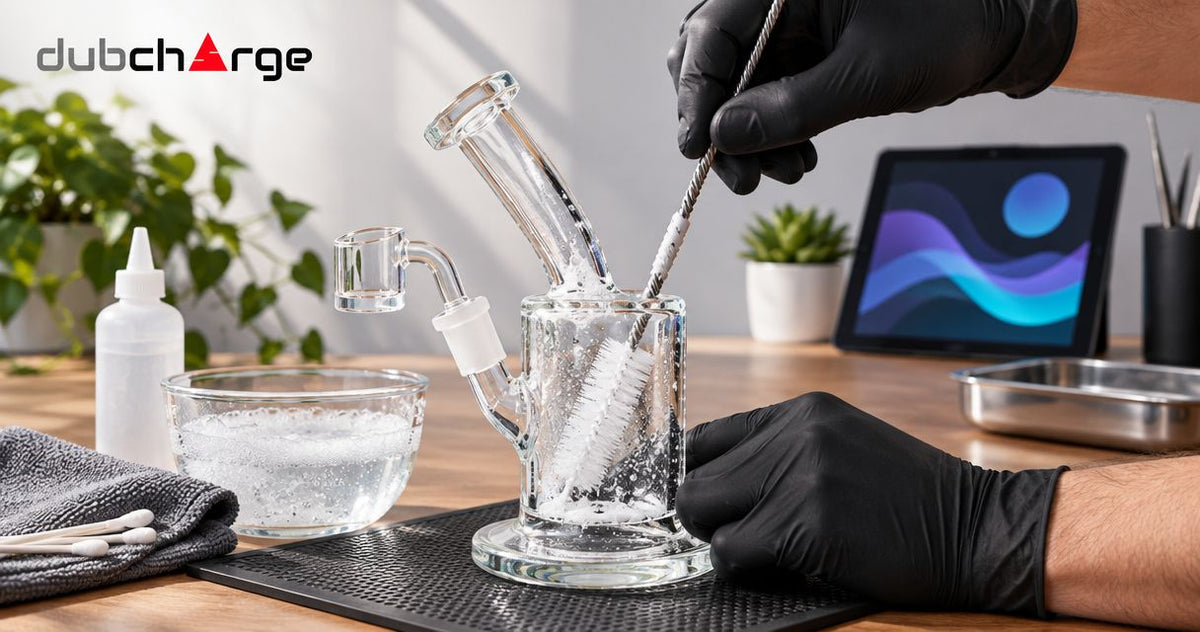
If permitted, add mild dish soap to lukewarm water and move the liquid gently through the accessible interior. Use a soft, nonabrasive cloth on the outside. Keep the body supported and avoid banging it against the faucet.
Do not force a brush through a narrow opening or around internal glasswork. An exposed metal brush core or an oversized brush can damage the surface or put pressure on fragile sections. If an area cannot be reached safely, use only a compatible soaking method allowed by the manufacturer.
Follow the cleaner's label
A stubborn deposit does not establish which chemical will remove it safely. Identify whether you are dealing with oily residue, mineral buildup, or a mark that remains unchanged after washing, then check the permitted treatment.
For any approved solvent, follow the label's ventilation, protective-equipment, application, and disposal directions. Never heat isopropyl alcohol or use it near a pilot light, lit lighter, hot surface, or other ignition source. Do not seal a solvent-filled body and shake it forcefully.
Rinse every accessible chamber
Drain the cleaning liquid according to its disposal instructions. Do not assume that used solvent belongs down the drain; follow the label and applicable local waste guidance.
Rinse with clean water, rotating the body gently so water reaches and drains from accessible spaces. Repeat until no suds or visible cleaning residue remain. Do not deliberately inhale through the body or bring your face close to an opening to check for solvent fumes.
If the design prevents you from confirming that cleaner has drained, stop and consult the manufacturer's care instructions. Adding more chemicals is not a substitute for a reliable rinse.
Why cleaning methods vary
There is no single soaking recipe that fits every glass body. These construction and condition differences determine the safe approach:
- Surface finish: Painted markings, coatings, and applied decorations need their own compatibility checks. Avoid soaking them unless the care instructions permit it.
- Internal construction: Narrow passages and delicate internal sections limit brush access and make complete drainage harder.
- Mixed materials: Seals, adhesives, plastic, and rubber can respond differently from glass to the same cleaner.
- Deposit type: Light dirt, oily residue, and mineral deposits require different approaches. A persistent mark is not automatically removable dirt.
- Existing condition: Chips, cracks, and loose sections rule out continued cleaning and handling as if the body were intact.
- Temperature: A large temperature difference between the glass and cleaning water adds avoidable thermal stress.
A product name or photograph does not establish chemical compatibility. For a Dubcharge glass item, check the manufacturer's instructions for that exact model rather than applying advice intended for a different construction.
What if the glass stays cloudy after washing?
Cloudiness is a reason to reassess the deposit, not increase force. Soap residue, mineral deposits, and permanent surface damage can all affect clarity, but appearance alone does not identify the cause reliably.
Start by rinsing again with clean water and letting the glass dry. If the mark persists, check whether the manufacturer permits a mineral-removal method. Do not alternate between cleaners without fully removing the previous product and following both labels.
Avoid abrasive powders, steel wool, and scraping with metal tools. If a mark remains unchanged after a permitted treatment, stop repeating it indefinitely. Persistent haze does not justify an unapproved acid, solvent, or polishing compound.
How do you dry and store the glass safely?
Drain the body in a position that is stable and allows moisture to escape. Do not balance a tall piece upside down on a narrow opening simply to encourage drainage; stability comes first.
Let the interior air-dry with openings unobstructed. A dry exterior does not establish that an enclosed chamber is dry. Avoid pushing paper towels or cloth into spaces where material could tear off or become trapped.
Do not use an oven, microwave, hair dryer, or direct flame to speed drying. Once the body is dry, store it upright where practical, with support that prevents rolling and contact with other hard objects. Keep separate glass parts from knocking together.
For a 2026 storage check, look beyond the glass itself: damp padding, a crowded shelf, and an unstable case can undermine otherwise careful cleaning.
Can you use boiling water to clean the glass body?
Do not use boiling water as a default glass-cleaning method. Unknown glass composition, existing damage, mixed materials, and sudden temperature changes make a universal boiling-water recommendation inappropriate.
Use the water conditions specified by the manufacturer. Never boil or heat a cleaning solvent, and never combine a solvent treatment with an improvised heat treatment.
Can you clean a body with sealed liquid-filled sections?
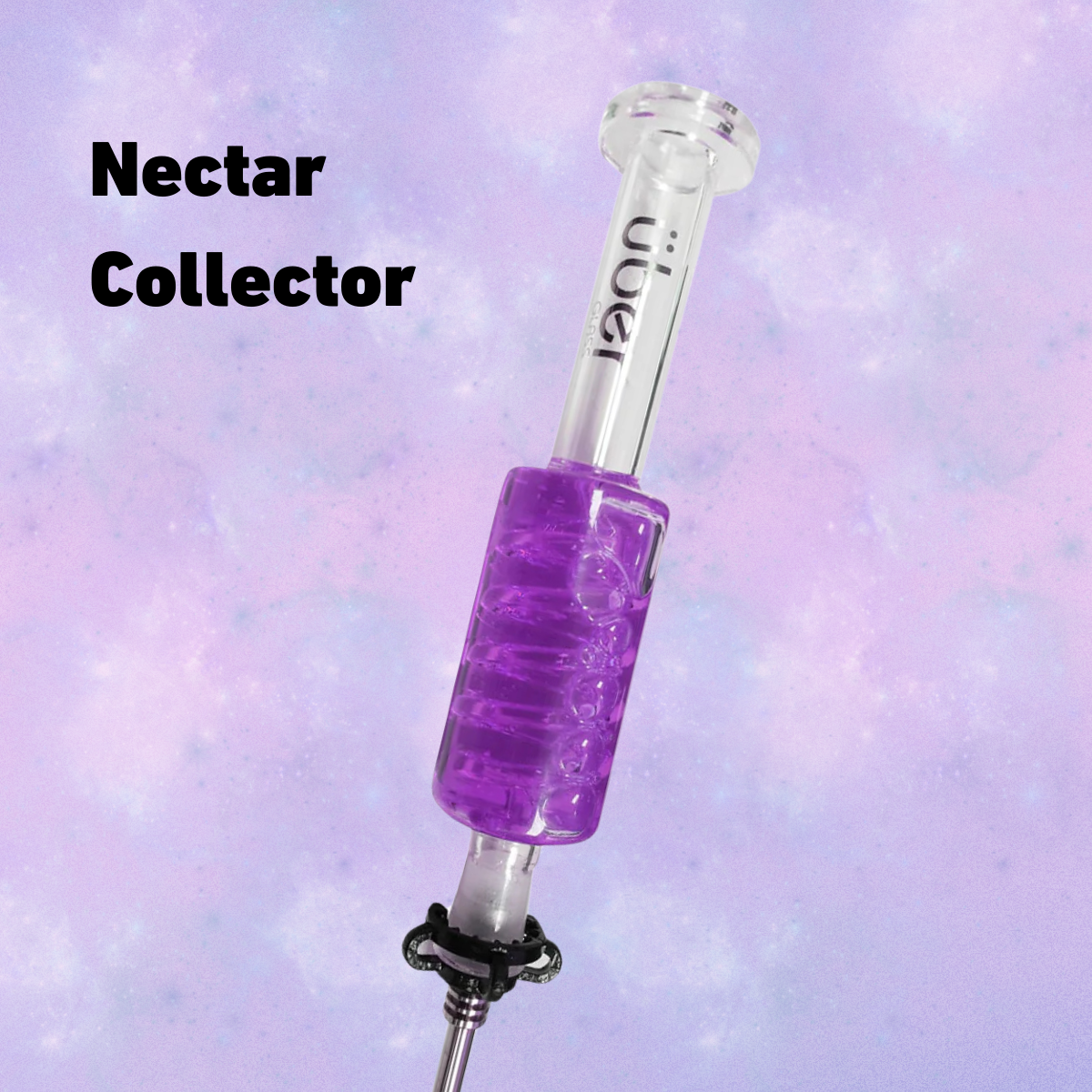
Follow the exact model's care instructions for sealed liquid-filled sections. Do not open, puncture, heat, or attempt to refill a sealed section as part of cleaning.
If you see leakage, a crack, or unexplained changes around a seal, stop. Exterior washing instructions do not automatically authorize full immersion or solvent soaking.
Is clean-looking glass disinfected?
Clean-looking glass is not proof of disinfection. Removing visible deposits and using a validated disinfecting process are different tasks.
Do not describe a home cleaning routine as sterilization. Any disinfectant requires an appropriate labeled use, material compatibility, and adherence to its application and rinsing directions.
FAQ
What's the safest starting point for cleaning glass in 2026?
Start by letting the glass cool completely and inspecting it for cracks, chips, and loose internal sections. For an intact body, follow the manufacturer's cleaning instructions and begin with a mild compatible method.
Can I use dish soap to clean a dab rig glass body?
Mild dish soap and lukewarm water are a starting point for light dirt when the manufacturer permits them. Rinse every accessible chamber thoroughly; soap alone does not reliably remove stubborn oily deposits.
Can I put the glass body in a dishwasher?
Do not put the glass body in a dishwasher unless the manufacturer explicitly identifies it as dishwasher-safe. Decorations, internal sections, and contact with other items require consideration.
Can I mix vinegar with another glass cleaner?
Do not mix vinegar with another cleaner. In particular, vinegar and bleach can release hazardous chlorine gas; use only a permitted product according to its label.
How long should I soak the glass body?
Use only the soaking duration specified by the cleaner's label and the glass manufacturer's instructions. There is no universal duration for different finishes, seals, and constructions.
What should I do if the glass has a small crack?
Stop cleaning and handling cracked glass as an intact item. Do not test it with heat, pressure, or further washing, and do not attempt a repair as part of routine care.
How do I know the inside is dry enough for storage?
Check accessible chambers for droplets and trapped water, and leave openings unobstructed while the body air-dries. Do not seal damp glass in a padded case or assume a dry outside means a dry interior.
One last thing
Clean the drying surface before you wash the glass. A towel containing grit or small glass fragments can scratch the body or create a handling hazard after the careful work is finished.
Dubcharge's glass-care recommendation is simple: stop when the next step requires force, improvised heat, or an unverified chemical. A remaining mark is preferable to turning an intact body into damaged glass.

Leave a comment
This site is protected by hCaptcha and the hCaptcha Privacy Policy and Terms of Service apply.