

































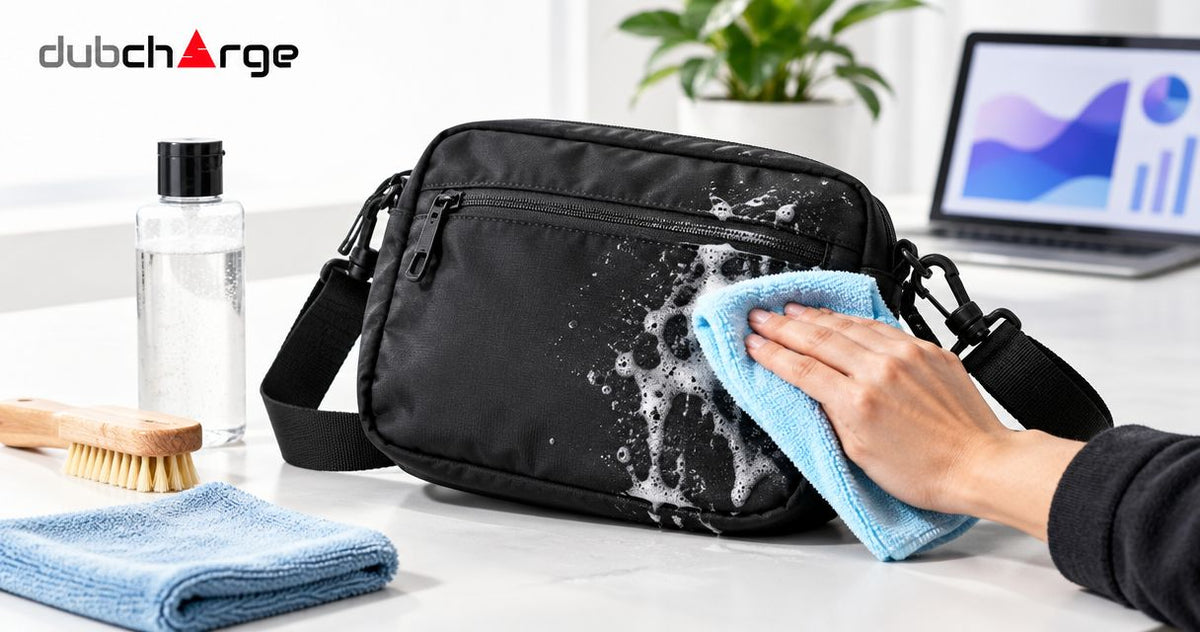
To clean a crossbody bag without shrinking it, follow its care label, remove loose dirt, and spot-clean with minimal moisture if the instructions permit it. Avoid soaking, wringing, and heated drying unless the manufacturer explicitly allows them; the lining, trim, and internal structure need protection just as much as the outer fabric.
- How to clean a crossbody bag: follow its care label before choosing water, detergent, or a washing machine.
- Spot-cleaning limits moisture, but even gentle cleaning requires a hidden-area test.
- DubCharge crossbody bag owners should check lining instructions separately from outer-fabric care.
- Air-dry as directed, away from radiators, hair dryers, and tumble-dryer heat.
Why this matters
A crossbody bag combines materials that do not necessarily tolerate the same cleaning method. A washable-looking shell can contain stiffeners, coatings, glued sections, or trim that require different care.
For bags purchased from DubCharge, identify the exact model before applying general fabric-cleaning advice. The bag’s construction—not its size or strap style—determines the cleaning method. A small bag is not automatically safe to put in the washing machine.
How do you clean a crossbody bag without shrinking it?
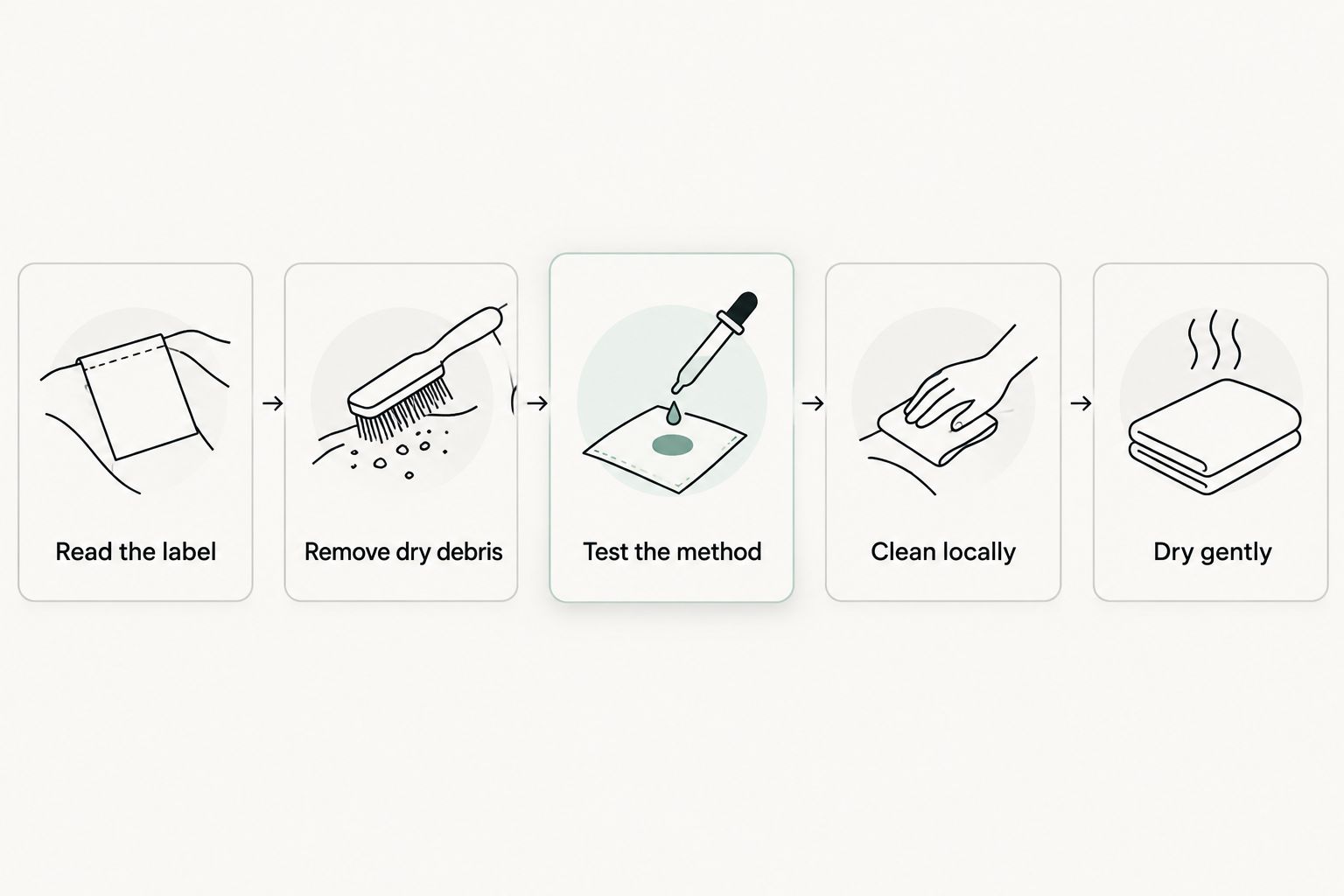
Start with the least invasive method the care instructions allow. The following sequence keeps unnecessary water, friction, and heat out of the process; stop whenever the label requires a different approach.
- Read the label. Check washing, bleaching, drying, and professional-cleaning instructions. A crossed-out wash symbol means you should not proceed with a home wash.
- Empty the bag. Open every compartment and remove paper, crumbs, loose objects, and detachable accessories. Do not pull out a lining that is stitched into place.
- Remove dry debris. Gently shake out loose material over a bin. Use a soft brush where appropriate, without scraping coatings or forcing debris into seams.
- Test the method. Apply the permitted cleaner to a hidden area using a white cloth. Let the test area dry before checking for color transfer, stiffness, rings, or surface changes.
- Clean locally. If the test passes, blot the marked area with a barely damp cloth and the manufacturer-approved cleaning solution. Avoid saturating seams and padding.
- Remove residue. Where water cleaning is permitted, use a separate barely damp cloth to lift detergent residue. Do not repeatedly add soap to a mark that is not improving.
- Dry gently. Blot excess surface moisture with a clean towel, support the bag’s original shape, and let it air-dry as directed. Leave pockets open where their construction allows.
Stop if dye transfers, a coating becomes tacky, or the material changes texture. More scrubbing will not make an incompatible cleaning method safe.
Which cleaning method should you choose?
Choose the method that matches the label and the problem. Do not move from spot-cleaning to full washing simply because a stain remains visible.
| Method | Best for | Advantage | Limitation |
|---|---|---|---|
| Dry brushing | Loose surface dirt on compatible materials | Removes debris without adding moisture | Does not remove dissolved spills or embedded stains |
| Spot-cleaning | Local marks when the label permits damp cleaning | Limits the area exposed to water | Can leave rings or uneven color without a successful test |
| Hand washing | Bags explicitly labeled for hand washing | Gives you direct control over handling | Still wets the lining, seams, and internal components |
| Machine washing | Bags explicitly labeled machine washable | Follows a permitted whole-bag cleaning method | The wrong cycle or drying method can damage the bag |
| Specialist cleaning | Materials or stains requiring professional care | Allows assessment before treatment | Cannot guarantee removal or reverse existing damage |
Fabric bags: check more than the outer shell
Cotton and other absorbent fabrics need careful handling because washing and drying can change their dimensions. A woven appearance alone does not identify the fiber or establish whether the finished bag is washable.
Check the strap, backing, lining, and decorative details before wetting the shell. If different components have different care requirements, follow the finished bag’s instructions rather than advice for an isolated fabric.
For a washable textile bag, use the cleaning temperature and method stated on its label. Cold water is not permission to ignore a do-not-wash instruction. It also does not protect every adhesive, coating, or decoration from water exposure.
Avoid aggressive brushing along printed areas and seams. If a mark persists after a careful local treatment, let the area dry and reassess instead of repeatedly working the same wet patch.
Leather and suede bags: avoid fabric-washing methods
Do not treat leather or suede like a washable cloth pouch. Follow the material-specific care instructions, including any requirements for an approved cleaner or specialist treatment.
For loose dirt on suede, use a suitable suede brush only as directed. For leather, confirm whether the surface is finished, unfinished, coated, or otherwise treated before choosing a cleaning product.
Skip household stain-removal mixtures on unidentified leather or suede. A cleaner that removes a mark can also change the surface finish or color, leaving a larger visible patch.
If the bag combines leather trim with a fabric body, the trim still matters. Keep an otherwise washable-looking panel out of a basin unless the whole bag’s instructions permit immersion.
Coated and carbon-lined bags: protect the hidden layers
A coated exterior or specialized lining changes the cleaning decision. Water resistance, odor-control wording, and washability describe different properties; none substitutes for an actual care instruction.
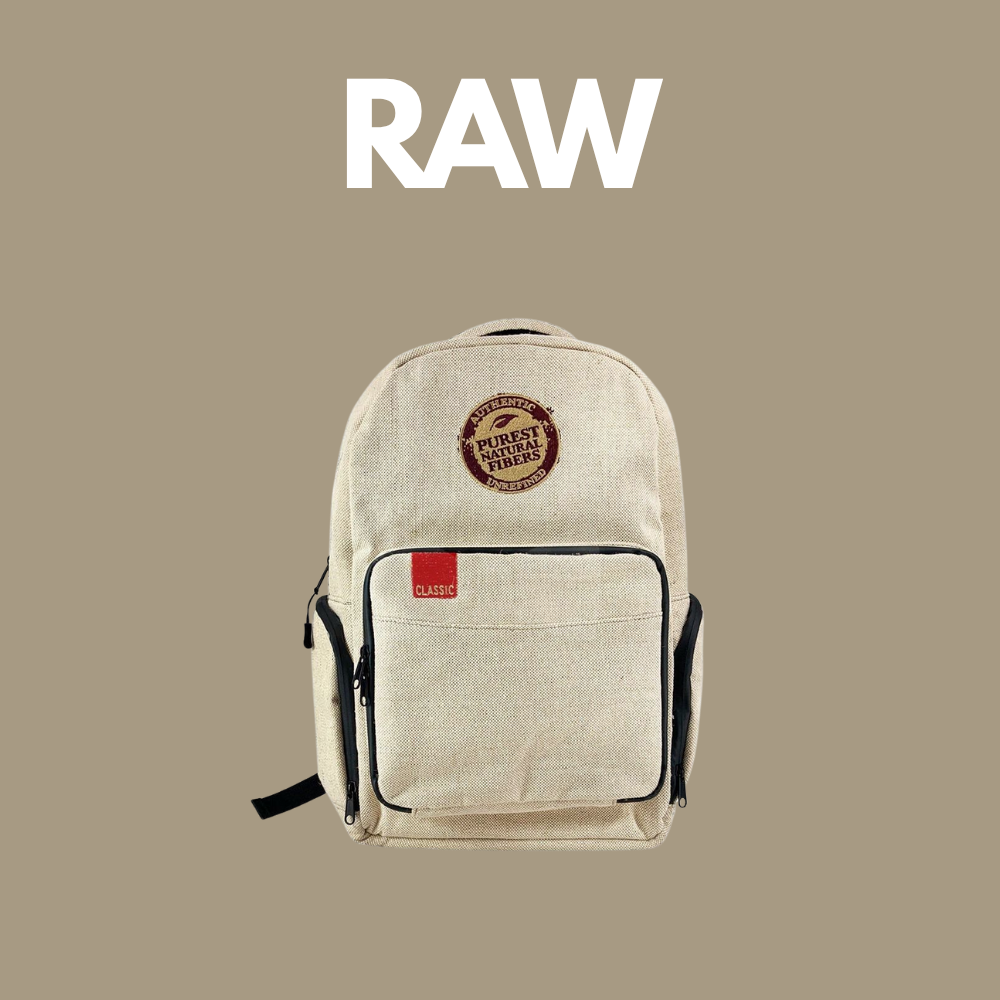
The DubCharge listing for the Blazy Susan Cross Body Bag Smell Proof describes a carbon lining. That description does not establish whether the finished bag tolerates immersion, detergent, or machine washing.
Check the exact model’s instructions before cleaning that lining. Do not borrow washing advice from a different carbon-lined bag, and do not assume a cleaning method restores odor-control performance.
For an unidentified multilayer bag, remove loose debris without disturbing the lining and request care guidance before wet cleaning. A dry-looking outer shell does not prove that the inner layers are dry.
Why cleaning results vary between crossbody bags
Shrinkage is only one possible cleaning problem. A bag can retain its overall dimensions while developing a distorted strap, lifting trim, damaged finish, or uneven lining.
These construction differences explain why one method does not fit every bag:
- Fiber content: Different textiles respond differently to water, agitation, and drying conditions.
- Internal structure: Padding, stiffeners, and glued components can have different care limits from the shell.
- Dyes and prints: A cleaning solution can cause color transfer or affect a surface design.
- Trim and hardware: Leather tabs, coated details, and metal fittings require separate attention.
- Cleaning exposure: Full immersion wets areas that local cleaning leaves untouched.
- Drying method: Heat, unsupported hanging, and pressure can change the bag’s shape or finish.
Read the label as instructions for the complete item. A fiber name on its own is not a washing recommendation.
How do you clean the strap, lining, and zipper?
Treat each area according to the finished bag’s care instructions. Concentrate on removing dirt rather than making every component equally wet.
Strap
Detach the strap only if it is designed to come off. Check the underside, adjustment points, and attachment tabs for worn stitching or damaged material before cleaning.
Support a damp strap instead of leaving the bag’s weight hanging from it. Do not pull on the strap to straighten it while wet or force an adjuster over swollen or damaged material.
Lining
Remove loose debris before applying moisture. Lift out the lining only when it is designed to turn out; otherwise, work inside the compartment without tugging at the seams.
Blot a permitted cleaning solution onto the affected area rather than pouring it into the pocket. Keep the compartment open during drying, and check the corners and padding before closing it.
Zipper
Brush away loose grit before operating a dirty zipper. Do not yank the pull through resistance or flood the zipper tape with cleaner.
For a sticking closure, follow the separate guide to cleaning bag zippers without damage. A damaged tooth or separated seam is not a dirt problem, so stop forcing the closure.
How do you dry a crossbody bag without changing its shape?
Air-dry the bag as its label directs, with support under the body and no added heat. Blot surface moisture instead of twisting the fabric, then gently arrange the bag into its normal shape without stretching it.
Place it on a clean, dry towel in a ventilated location away from radiators and direct heat. Change a damp supporting towel rather than leaving the base against a wet surface.
If the care instructions allow light shaping support, use clean, colorfast material loosely. Do not pack the compartment tightly, wedge objects into corners, or use printed paper that can transfer ink.
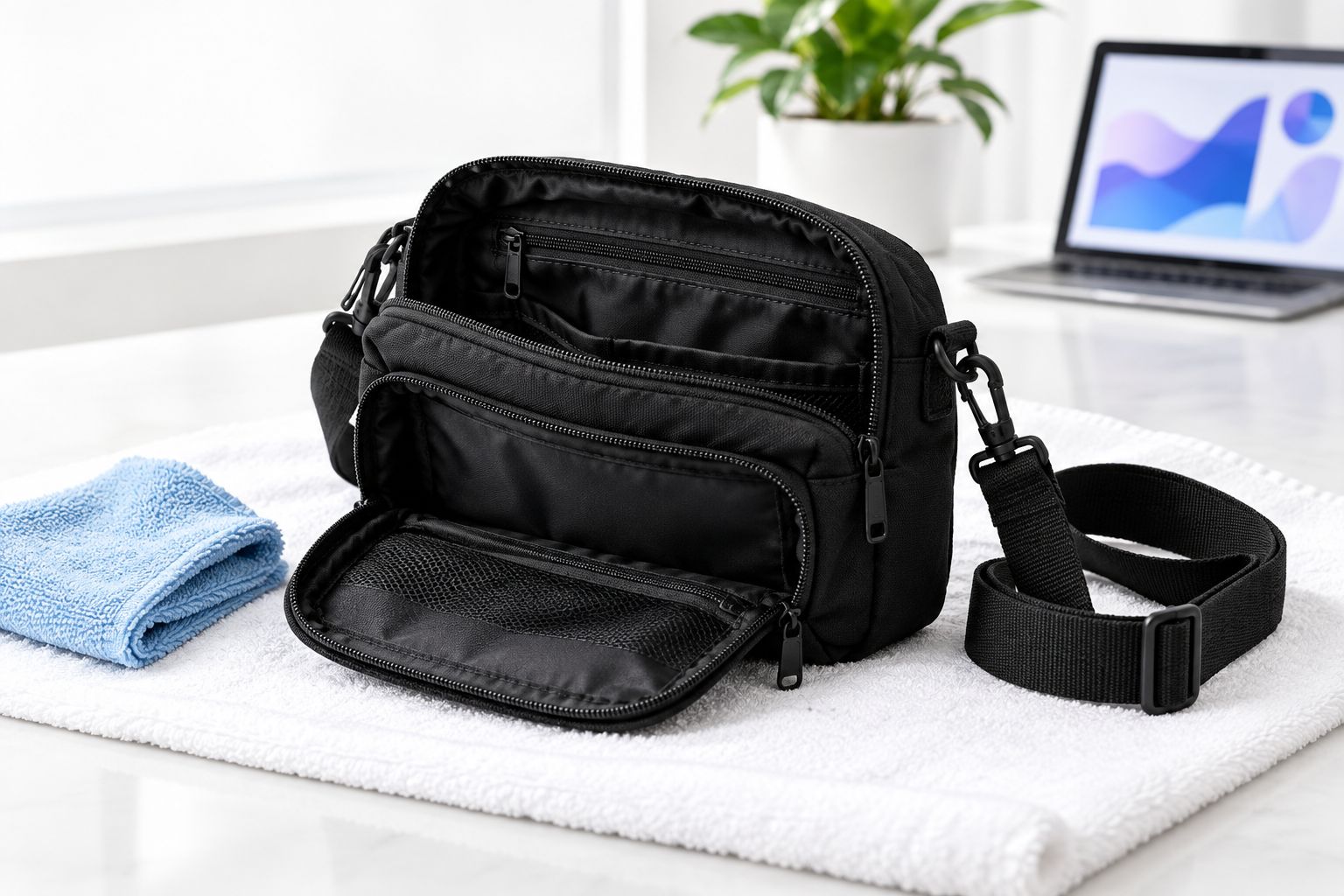
There is no reliable universal drying time for every crossbody bag. Thickness, lining, absorbed moisture, and room conditions differ, so check the inside seams and padded sections rather than relying on the exterior alone.
Do not store the bag in a closed cupboard while it remains damp. If a cleaner leaves a persistent smell or residue, consult the care instructions rather than covering it with fragrance.
Can you machine-wash a crossbody bag without shrinking it?
Only machine-wash a crossbody bag when its care label explicitly permits it, using the specified settings. A gentle cycle or laundry bag does not make a non-washable bag machine washable.
Can you fix a crossbody bag that has already shrunk?
You cannot count on reversing shrinkage at home. Stop applying heat or pulling the material, let the bag dry according to its care instructions, and ask a suitable specialist about visible distortion.
What should you do if the care label is missing?
Identify the manufacturer and exact model before choosing a wet-cleaning method. Until you have reliable instructions, remove loose debris gently and avoid immersion, heat, or household stain-removal mixtures.
FAQ
What's the safest first step when cleaning a crossbody bag?
Read the finished bag’s care label before choosing a cleaning method. Remove loose debris first, and test any permitted cleaner on a hidden area before treating a visible mark.
Can I soak my crossbody bag overnight?
Do not soak a crossbody bag unless its care instructions specifically permit soaking. Prolonged immersion exposes the lining, trim, adhesives, and internal structure as well as the outer fabric.
Is cold water enough to prevent a crossbody bag from shrinking?
Cold water does not guarantee that a crossbody bag will keep its shape. Follow the complete care instructions, including restrictions on washing, agitation, and drying.
Can I put a crossbody bag in the dryer on low?
Use a tumble dryer only when the bag’s care label explicitly permits it, and follow the stated setting. Low heat is still heat and is not a substitute for an air-dry instruction.
Should I use vinegar or baking soda on a crossbody bag?
Do not use vinegar or baking soda unless the bag’s manufacturer approves that treatment. Household cleaning recipes are not automatically compatible with dyes, coatings, leather, or specialized linings.
How do I clean a carbon-lined crossbody bag?
Follow the exact model’s instructions for its carbon lining and outer materials. A carbon-lining description does not establish that the finished bag can be soaked, machine-washed, or treated with household cleaners.
How do I check care instructions for a bag from DubCharge?
Check the bag’s sewn-in label, supplied instructions, and exact product information first. Ask for model-specific guidance before wet cleaning when those instructions do not establish a suitable method.
One last thing
Check shape and zipper movement before cleaning, not just afterward. Empty the bag, inspect the seams, and note existing ripples, worn corners, or a sticking closure so you do not mistake old damage for a new cleaning problem.
Then clean only what needs cleaning. A small mark does not justify exposing the entire bag to water when a permitted local treatment will do.

Leave a comment
This site is protected by hCaptcha and the hCaptcha Privacy Policy and Terms of Service apply.