













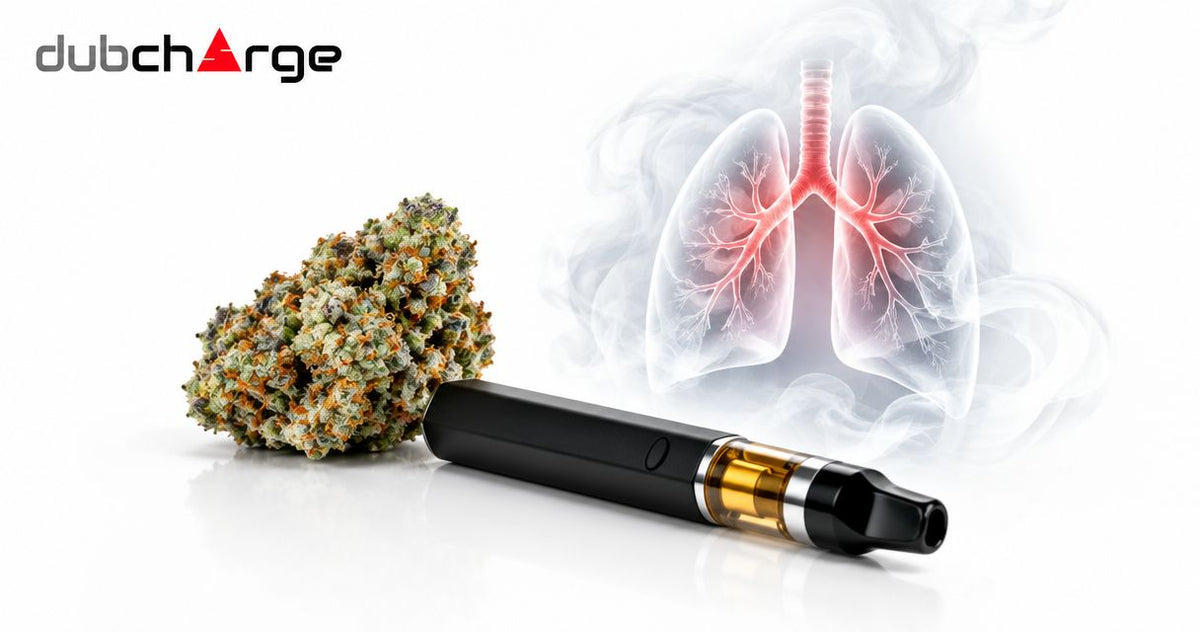
Cannabis vaping health risks include lung irritation, serious lung injury, THC-related impairment, anxiety, and dependence; vaping is not harmless. The aerosol you inhale can also contain contaminants or substances formed during heating, and a passing laboratory report does not establish that a product is safe to inhale.
- CDC evidence links cannabis vaping health risks to lung injury; THC also causes impairment and can lead to dependence.
- Cannabis vaping aerosol is not simply water vapor, and a passing laboratory report does not prove safety.
- Chest pain, trouble breathing, or worsening illness after vaping needs prompt medical attention.
- THCA labeling does not eliminate THC-related risks because heating can convert THCA into THC.
Why this matters
In 2026, cannabis labeling and laboratory testing still answer narrower questions than whether inhaling a finished product is safe. You need to distinguish what a laboratory measured from what researchers know about lung exposure, impairment, and repeated use.
DubCharge’s educational guide on how to read a cannabis lab report explains a useful starting point: check the report against the specific batch. A laboratory report describes tested material, not your individual health risk.
What are the health risks of cannabis vaping?
Cannabis vaping exposes you to two overlapping hazards: substances reaching your lungs and cannabinoids affecting your brain and body. CDC and National Institute on Drug Abuse guidance identifies respiratory harm, impaired coordination and judgment, mental-health effects, and cannabis use disorder as relevant concerns.
| Health concern | What the evidence supports | What you should not assume |
|---|---|---|
| Lung irritation | Inhaled aerosol can irritate airways and cause coughing | A smooth inhalation means no irritation |
| Serious lung injury | THC-containing vaping products were involved in the EVALI outbreak | Every case had an identical cause |
| Impairment | THC affects attention, coordination, reaction time, and judgment | Feeling familiar with THC makes driving safe |
| Anxiety and paranoia | THC can produce panic, anxiety, and paranoia | A strain name predicts your response |
| Dependence | Repeated cannabis use can lead to cannabis use disorder | Vaping avoids the dependence risks of THC |
| Contaminant exposure | Aerosols can contain metals and other potentially harmful substances | Testing the liquid completely characterizes the aerosol |
This table summarizes different health concerns, not a ranking of supposedly safer products. Product composition, exposure, and individual vulnerability differ, so the evidence does not support one universal risk estimate for every cannabis vape.
What does serious vaping-related lung injury look like?
EVALI means e-cigarette, or vaping, product use-associated lung injury. Symptoms described by CDC include cough, chest pain, shortness of breath, fever, fatigue, nausea, vomiting, and diarrhea; symptoms can overlap with infections and other illnesses.
CDC’s archived national outbreak surveillance recorded 2,807 hospitalized EVALI cases or deaths, including 68 confirmed deaths. These are historical U.S. outbreak totals, not annual figures or estimates of your personal likelihood of injury in 2026.
CDC strongly linked vitamin E acetate to the outbreak, particularly in THC-containing products obtained from informal sources. However, CDC did not rule out contributions from other chemicals in some cases.
Do not treat the absence of vitamin E acetate as proof that an aerosol is safe. EVALI describes a particular clinical problem, while cannabis vaping raises additional questions about airway irritation, contaminants, and long-term exposure.
You cannot diagnose EVALI by checking a package or matching a symptom list. A clinician needs to assess the illness and consider other causes, including respiratory infections.
What can THC do beyond affecting your lungs?
THC affects brain functions involved in memory, attention, coordination, and judgment. Those effects matter even when you have no cough or chest discomfort.
Cannabis can also cause anxiety, panic, or paranoia. NIDA describes an association between cannabis use and psychosis, with particular concern around frequent use, higher-potency exposure, and individual susceptibility; an association does not mean every user develops a psychiatric disorder.
Repeated use can lead to cannabis use disorder. Warning signs include difficulty cutting down, continuing despite problems, and spending substantial time using or recovering from cannabis.
Cannabis can increase heart rate and affect blood pressure. If you have cardiovascular disease, discuss cannabis exposure with your clinician rather than assuming that avoiding smoke removes cardiovascular concerns.
Who needs particular caution?
Pregnant or breastfeeding people should avoid cannabis, consistent with CDC guidance. People with heart or lung disease, a history of psychosis, or medicines that affect alertness should discuss exposure with a healthcare professional.
CDC states that brain development continues until around 25 years of age. That does not create a birthday after which cannabis becomes harmless; it identifies a period of additional concern for developing brains.
Why cannabis vaping health risks vary
The main drivers concern what you inhale, how much exposure occurs, and your health—not just the name on the package.
- Cannabinoid composition: THC concentration and other cannabinoids affect the nature of exposure. A product name alone does not establish its contents.
- Ingredients and contamination: Additives, residual solvents, pesticides, and metals raise different questions. A report only addresses substances included in its testing scope.
- Heating and aerosol formation: The material in a cartridge is not identical to the aerosol entering your lungs. Heating can alter chemicals, and device components can contribute contaminants.
- Frequency and cumulative exposure: Repeated use increases opportunities for exposure and is relevant to dependence. Long-term vaping-specific risk estimates remain limited.
- Personal health and other substances: Respiratory disease, cardiovascular disease, psychiatric history, medicines, and alcohol can change the clinical concern.
These factors explain why a single potency percentage cannot serve as a safety score. They also explain why someone else’s uneventful experience does not predict your response.
What should you do if symptoms start after vaping?
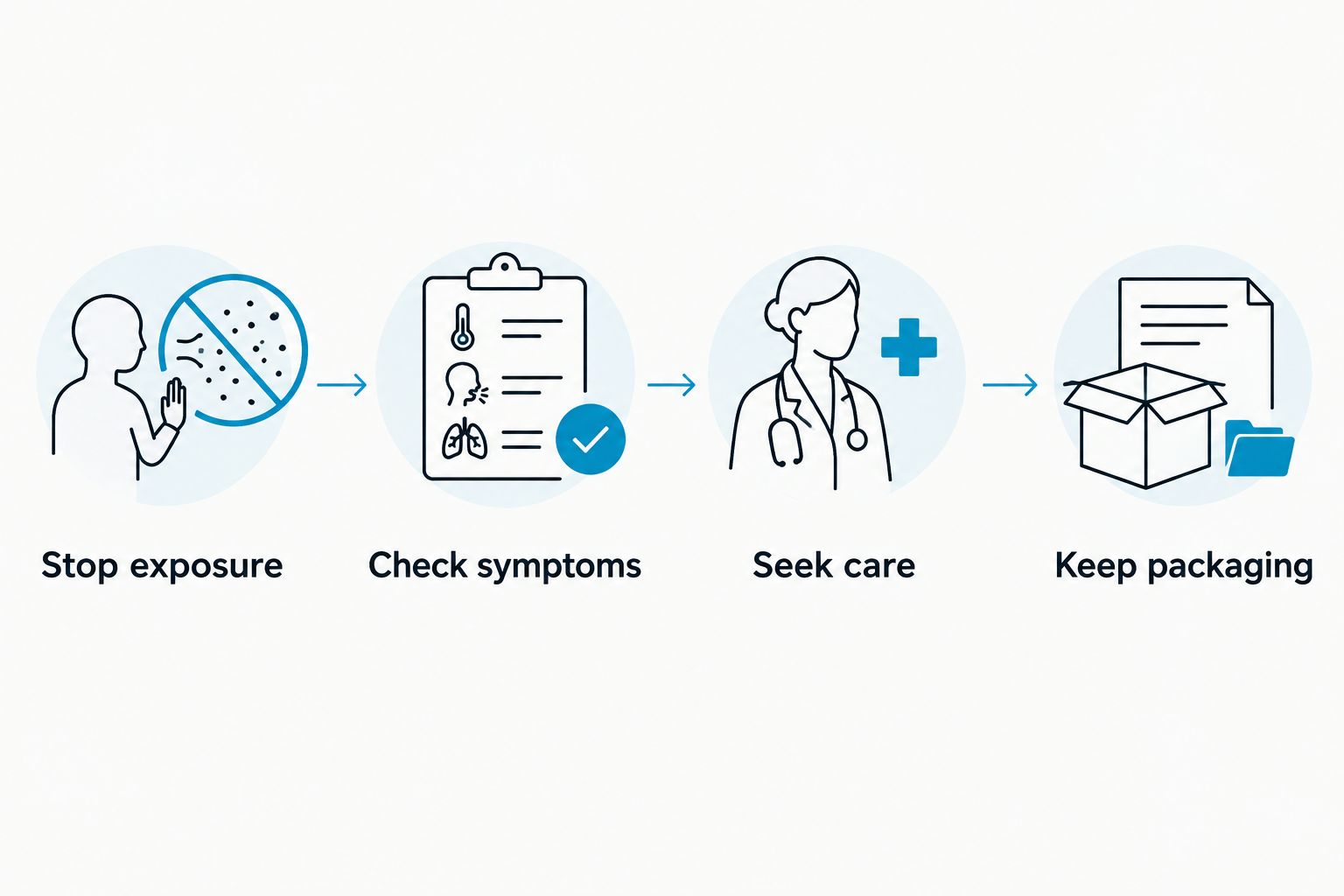
Stop using the product and get medical advice rather than testing whether another inhalation causes the same problem. Tell the clinician that you used a cannabis vaping product, even if the package described it as hemp or THCA.
- Stop exposure. Do not continue using a product associated with breathing symptoms, chest pain, or significant illness.
- Check symptoms. Note breathing difficulty, chest discomfort, fever, vomiting, confusion, or worsening symptoms.
- Seek care. Call 911 for severe breathing difficulty, collapse, seizure, or inability to wake the person. Other new or persistent symptoms need prompt medical assessment.
- Keep packaging. Preserve the label, batch information, and laboratory report for clinicians or a poison specialist without handling leaking material unnecessarily.
For suspected poisoning in the United States, Poison Control is available at 1-800-222-1222. If the person has emergency symptoms, call 911 instead of waiting for symptoms to resolve.
Do not drive yourself if you are impaired or seriously unwell. Accurate information about the product and other substances helps clinicians assess what happened.
What can a cannabis laboratory report actually tell you?
A certificate of analysis can show measured cannabinoid concentrations and results for specified contaminants in the submitted sample. Its usefulness depends on matching the sample to your product and understanding the methods, reporting limits, and applicable standards.
For a 2026 report review, check these details before interpreting a pass result:
- Batch match: The report’s batch or lot identifier should correspond to the package.
- Laboratory identity: Identify the testing laboratory and verify its authorization through the relevant jurisdiction where applicable.
- Sample type: Determine whether the laboratory tested source material, finished oil, or emitted aerosol. Those are not interchangeable.
- Testing scope: Read which contaminants were tested rather than relying on a summary badge.
- Reporting limits: Not detected means below the method’s detection or reporting threshold, not necessarily absolute absence.
- Dates: Check collection, testing, and report dates; a report for another batch does not characterize yours.
Testing requirements differ across U.S. jurisdictions and product categories. A result that meets one jurisdiction’s limits does not establish universal legal compliance or safety.
A passing contaminant panel does not establish long-term inhalation safety. It also cannot rule out impairment, dependence, allergic reactions, or every substance formed during heating.
How should you handle recalls, storage, and disposal?
If you suspect a recall, check the notice issued by the relevant state cannabis regulator, health department, or federal agency involved. Match the product name and batch information; a recall involving one batch does not automatically describe every item carrying the same brand.
For a confirmed affected product, stop use and follow the notice’s handling instructions. Keep identifying information so you can report an illness or provide details to a clinician.
Store cannabis products locked away, out of sight and reach of children and pets, preferably in their original labeled packaging. Child-resistant packaging is not childproof, and leaving a device on a counter creates an avoidable exposure risk.
Cannabis residue and batteries complicate disposal. Do not pour liquids down drains, open sealed devices, puncture batteries, or burn discarded products; follow local waste guidance and any recall-specific directions.
EPA guidance says lithium-ion batteries and devices containing them should not go into household garbage or ordinary recycling bins. Tell the local waste service that the item contains both a battery and cannabis residue so you receive appropriate instructions.
Is cannabis vaping safer than smoking cannabis?
Neither cannabis vaping nor smoking is harmless, and avoiding combustion does not establish overall safety. Smoking produces combustion-related toxicants, while vaping introduces concerns involving aerosol composition, additives, metals, and heating products.
A comparison depends on the outcome being measured. Evidence about one smoke-related chemical cannot answer every question about lung injury, dependence, or long-term disease.
The evidence available for this 2026 overview does not support a precise, universal percentage by which cannabis vaping is safer than smoking. Avoid treating reduced exposure to a particular substance as proof of reduced overall harm.
Does a THCA or hemp label remove THC-related risks?
A THCA or hemp label does not remove THC-related risks. Heat can convert THCA into THC, so the wording on the front of a package does not establish that inhalation will be non-intoxicating.
Legal classification and medical safety are separate questions. Neither a hemp label nor lawful sale establishes that a product is safe for your lungs, free of contaminants, or appropriate for your health circumstances.
What remains uncertain in 2026?
Long-term cannabis-vaping evidence is less developed than the evidence needed to make confident comparisons across diseases, devices, formulations, and patterns of use. Product changes and differences in other substance use complicate research.
Observational studies can identify associations without proving that vaping alone caused an outcome. Laboratory studies can identify hazards without directly establishing the rate of disease in people.
The practical distinction is straightforward: uncertainty is not evidence of safety. Known impairment and dependence risks remain relevant while researchers investigate longer-term respiratory and cardiovascular outcomes.
FAQ
Can cannabis vaping permanently damage your lungs?
Cannabis vaping can cause serious lung injury, and some people need ongoing care after an acute illness. Long-term outcomes differ, so persistent cough, chest pain, or breathlessness needs medical assessment rather than a prediction based on the product label.
What symptoms after cannabis vaping mean I should get help?
Chest pain, shortness of breath, persistent cough, fever, or repeated vomiting after cannabis vaping warrant prompt medical advice. Call 911 for severe breathing difficulty, collapse, seizure, or inability to wake the person.
Does a passing cannabis lab test mean a vape is safe?
A passing cannabis lab test does not prove that a vape is safe. It reports results for specified tests on a particular sample and does not eliminate impairment, dependence, or all aerosol-related hazards.
Can I get addicted to cannabis if I only vape it?
Yes, vaping cannabis can lead to cannabis use disorder because the route of exposure does not remove THC's dependence risk. Difficulty cutting down or continuing despite problems are reasons to speak with a healthcare professional.
Can I drive if I feel normal after vaping cannabis?
Do not use feeling normal as proof that you can drive safely after vaping cannabis. THC affects attention, coordination, reaction time, and judgment, and combining cannabis with alcohol increases impairment.
Is secondhand cannabis vape aerosol harmless?
Secondhand cannabis vape aerosol should not be treated as harmless air. Avoid exposing other people, particularly children, and do not assume that little visible aerosol means no exposure.
Should I tell my doctor that the vape was labeled hemp or THCA?
Yes, tell your doctor the exact labeling and that the product was inhaled. Bring batch information or a package photo if available, because a hemp or THCA label does not rule out THC exposure or contamination.
One last thing
Photograph the package and batch identifier before disposal when a product is associated with illness or a recall. In 2026, that small record still answers a question that a brand name alone cannot: which specific material was involved? Do not delay medical care to collect it.


Leave a comment
This site is protected by hCaptcha and the hCaptcha Privacy Policy and Terms of Service apply.