












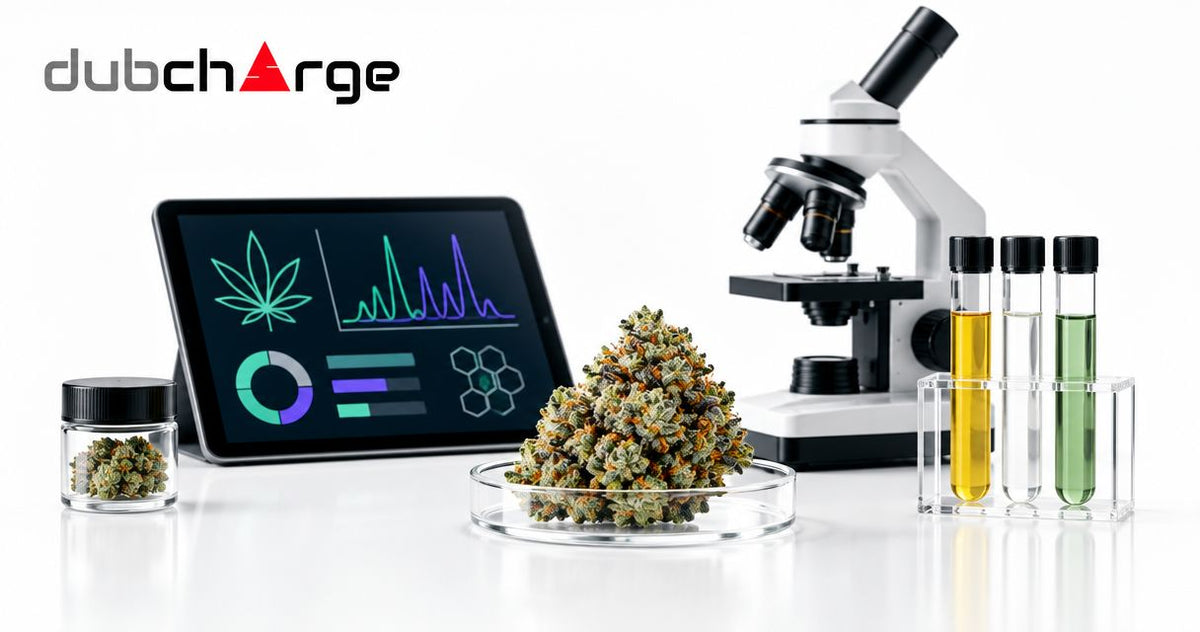
Smoke shop staff lab-report review is the process of checking cannabis testing records against product labels to identify mismatches, missing results, and issues requiring escalation. This cannabis lab testing guide for smoke shop staff focuses on the counter-level decisions that matter in 2026: what a certificate of analysis establishes, what it leaves unknown, and when to stop making claims.
- DubCharge’s cannabis lab testing guide for smoke shop staff is best for adult-facing teams learning certificate-of-analysis review.
- Match the package batch to the laboratory report before interpreting potency or contaminant results.
- A passing certificate of analysis does not prove that cannabis is safe or legal everywhere.
- Keep unresolved products separate, document concerns, and follow jurisdiction-specific recall and disposal instructions.
Why cannabis lab testing matters for smoke shop staff
Your job is not to certify a laboratory result. Your job is to recognize whether the document supports the specific statement you are about to make to an adult customer.
A cannabis certificate of analysis, usually shortened to COA, reports findings for a submitted sample. It does not establish that every package is identical, that storage conditions remained suitable, or that every possible contaminant was tested. A potency panel also does not substitute for a contaminant panel.
DubCharge’s cannabis lab testing guide is best for smoke shop staff learning batch matching, report limitations, and escalation. For a closer explanation of report fields, use the educational guide to reading a cannabis lab report.
For your 2026 staff procedures, distinguish product information from medical advice. A report cannot tell a customer whether cannabis is appropriate for a medical condition, compatible with medication, or safe during pregnancy.
Build a repeatable lab-report review process
Match the report to the package
Start with the physical label and the complete report, not a promotional screenshot. Record the product identifier, batch or lot number, manufacturer information, and laboratory report number. Compare those fields directly.
A matching brand name is not enough. Different batches can have different results, and a report for flower does not establish the composition of an extract made from it. Check whether the tested material matches the finished product being discussed.
Use the laboratory’s independently identified contact details or verification system when authenticity is uncertain. A QR code is a route to a document, not proof that the document belongs to the package. Never describe an unresolved report as verified.
Close the identity check with these actions:
- Match the package lot to the report’s batch identifier.
- Confirm the tested product type and sample description.
- Record the report identifier and issue date.
- Request the complete report if only an excerpt is supplied.
- Escalate missing, contradictory, or unreadable identifiers.
Check the laboratory and report status
Read the laboratory identity, sample receipt date, testing dates, and any amended-report notation. An older report is not automatically invalid, but its date alone cannot establish that a currently held package matches the tested sample.
Check the requirements that apply to your location and product category. State cannabis programs and hemp-related rules are not interchangeable. Where laboratory licensing or approval is required, verify the laboratory against the responsible regulator’s current records.
ISO/IEC 17025 addresses testing-laboratory competence. Accreditation is useful evidence, but the scope matters: it must cover the relevant method and material. A laboratory logo or accreditation statement does not independently establish product compliance.
Keep your 2026 review records specific:
- Identify the laboratory and applicable regulatory program.
- Check the relevant accreditation scope where available.
- Look for amendments, cancellations, and superseded reports.
- Preserve the complete report rather than a cropped image.
- Record unresolved authenticity questions for the responsible manager.
Read potency without turning it into a safety claim
Cannabinoid results describe measured composition. They do not rank overall safety or predict an individual’s experience. Keep delta-9 THC, THCA, and any reported total THC value separate when explaining the label.
Units matter. A concentration of 1% by mass equals 10 milligrams per gram, but that conversion does not establish the amount in an individual serving or package. Those calculations also require the relevant mass and a clear measurement basis.
Some reports calculate total THC as delta-9 THC plus THCA multiplied by 0.877, a molecular-weight adjustment. That calculation is not a promise about actual exposure, absorption, or effects. Do not use it to recommend consumption practices.
Dry-weight and as-received results also use different measurement bases. Avoid comparing them as though they were identical.
- Read the cannabinoid name beside each result.
- Keep percentages and milligrams per gram distinct.
- Identify whether total THC is calculated or separately reported.
- Check the report’s stated measurement basis.
- Flag label-versus-report differences without inventing an explanation.
Review contaminant panels and reporting limits
Read each panel heading and its individual results. Depending on the material and applicable rules, reports can address pesticides, residual solvents, heavy metals, microorganisms, or mycotoxins. Do not assume that every report includes every category.
A pass means the reported result met the criterion applied to that test. It does not mean zero contamination. Likewise, ND means not detected under the method’s reporting convention; it does not prove that a substance is absent at every concentration.
The limit of detection concerns whether a method can detect an analyte. The limit of quantitation concerns the level at which it can quantify that analyte with specified performance. Read the laboratory’s definitions rather than treating the abbreviations as universal guarantees.
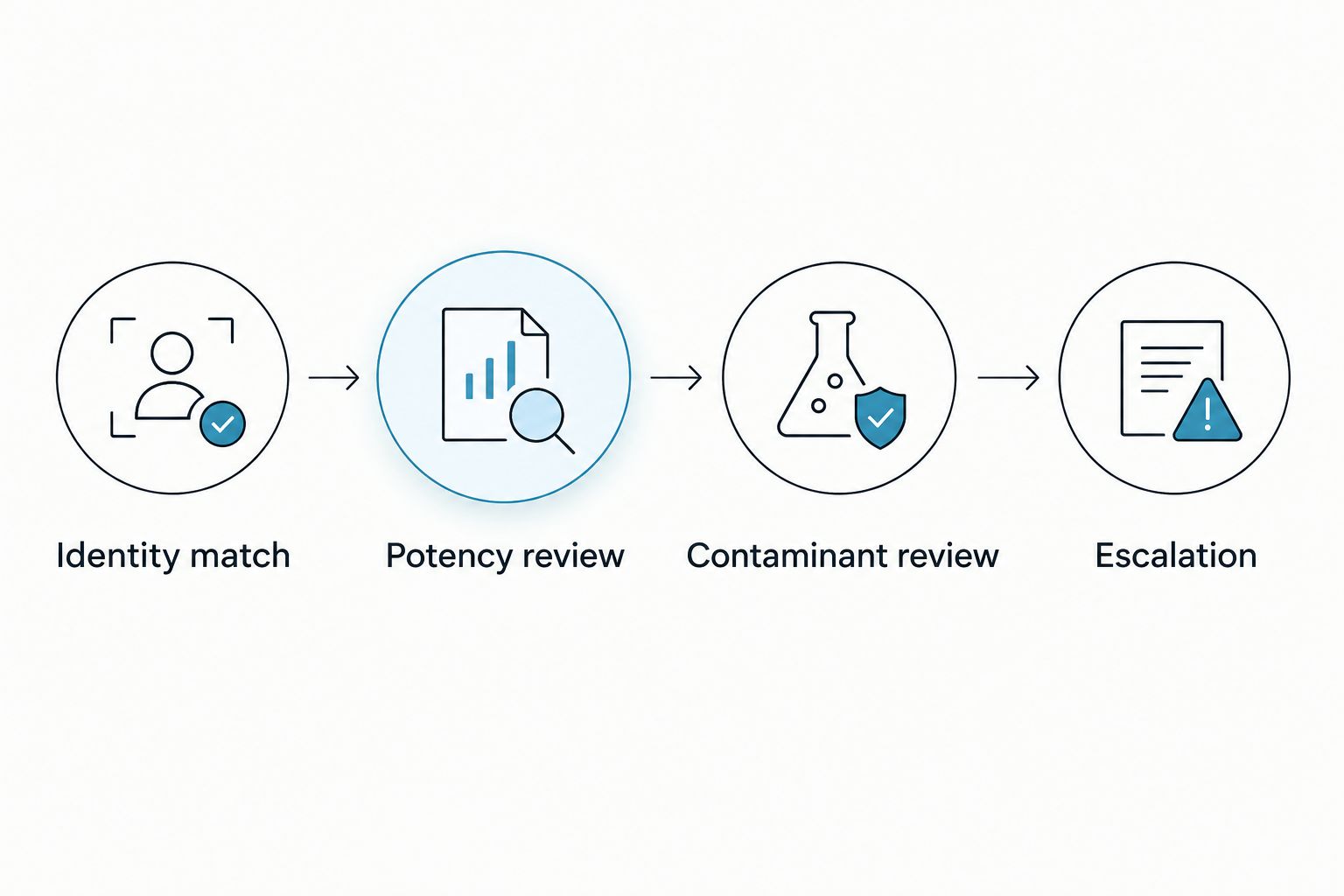
Finish the panel review with a clear status for each area:
- Identity match: the sample corresponds to the labeled batch.
- Potency review: units and cannabinoid names are understood.
- Contaminant review: required panels and thresholds are checked.
- Escalation: gaps or contradictory results are documented.
Explain health risks and uncertainty clearly
Use the result to explain what was measured, then name its limits. Do not translate a laboratory pass into claims such as harmless, medically effective, or safe for everyone. Those statements require evidence the report does not provide.
CDC cannabis guidance identifies risks involving impairment, driving, pregnancy, and accidental ingestion. The FDA also warns that cannabis-derived products are not automatically evaluated or approved for medical use. A laboratory document does not change those distinctions.
Avoid giving individualized advice about medications, pregnancy, mental health, or treatment. Refer those questions to a qualified healthcare professional. If someone reports serious symptoms, prioritize medical help over resolving a paperwork dispute.
Keep staff explanations consistent:
- State which substance or contaminant the report measures.
- Explain that testing does not eliminate cannabis-related health risks.
- Avoid promises about effects or medical benefits.
- Direct medication and health-condition questions to a clinician.
- Follow emergency procedures when someone appears seriously unwell.
Document holds, storage concerns, recalls, and disposal
Create a written record when the label, report, or product condition raises a concern. Include the batch identifier, affected packages, reason for the concern, and person responsible for the next decision. Keep unresolved items separate from unaffected stock.
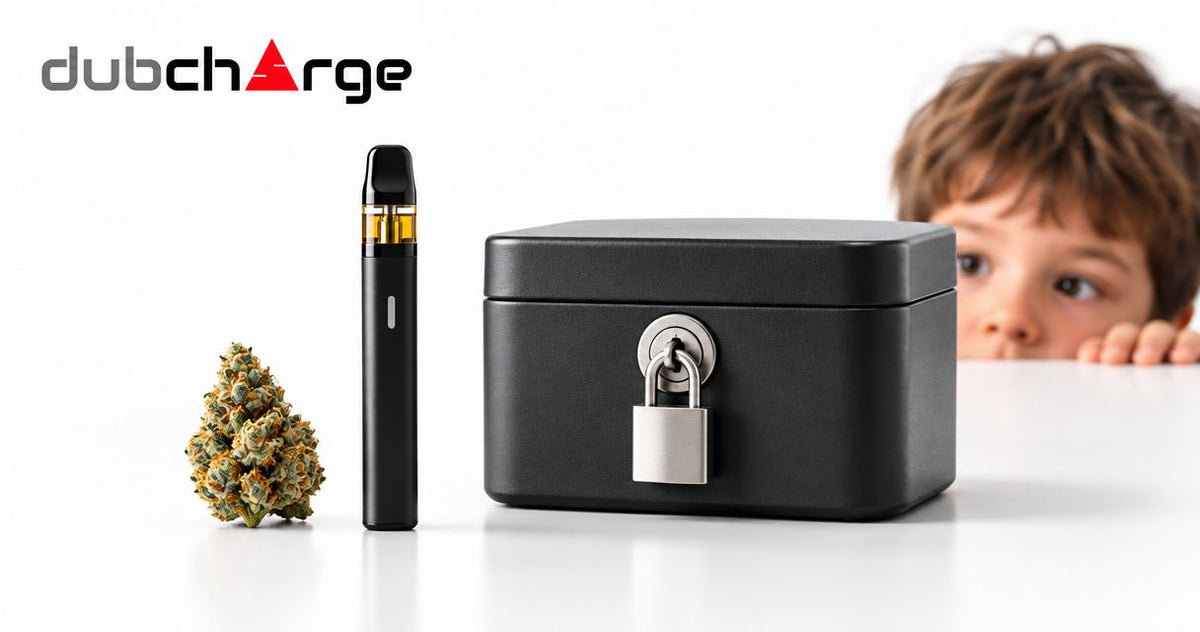
Store cannabis products away from children and pets, and keep them in their original labeled packaging. Child-resistant packaging is not childproof. Follow label storage instructions; a COA does not establish that later storage or package damage had no effect.
For recalls, use the notice issued by the responsible regulator or recalling business. Confirm the affected identifiers rather than assuming that a familiar product name is enough. Disposal requirements differ by jurisdiction and material; battery-containing products also raise separate waste-handling concerns.
- Document the concern and the affected lot.
- Separate recalled or unresolved items under your procedure.
- Preserve relevant labels, reports, and correspondence.
- Follow the specific recall notice and local waste instructions.
- Do not resell, donate, or discard affected items contrary to instructions.
Compare review methods, not cannabis products
Use the simplest method that preserves traceable information. These are document-review approaches, not supplier recommendations or substitutes for laboratory testing.
| Review option | Best for | Useful feature | Key limitation |
|---|---|---|---|
| Paper checklist with saved COA | Small teams reviewing a limited set of documents | Makes missing fields visible without specialized software | Manual filing and version control need discipline |
| Shared spreadsheet and document folder | Teams tracking several lots and follow-up actions | Connects batch identifiers, report locations, and unresolved questions | Incorrect entries and access permissions need oversight |
| Laboratory report-verification system | Checking whether a report matches the laboratory’s records | Supports authenticity checks where the laboratory offers verification | Does not prove that the physical package matches the sample |
| Applicable regulator’s records | Checking recognized laboratories, notices, and program requirements | Provides jurisdiction-specific regulatory context | Does not replace package-level review or cover every product category |
Keep authenticity, identity, and compliance as separate checks. A genuine report can still be attached to the wrong batch, and a correctly matched report can still lack a required test.
Common lab-report mistakes smoke shop staff make
Treating a QR code as verification
A scan can open an unrelated, outdated, or incomplete document. Check the report identifiers against the package and resolve authenticity questions with the laboratory rather than relying on the appearance of the landing page.
Reading a potency pass as a contaminant pass
Cannabinoid concentration and contamination are different questions. Check the actual panel names and results before making any statement about pesticides, metals, solvents, or microorganisms.
Repeating legal claims from packaging
A hemp or THCA label does not establish universal legal eligibility. In 2026, check the current rules for the specific jurisdiction and product category; do not treat a COA as legal advice.
Explaining away a mismatch
Do not assume a different lot number is a harmless printing error. Record the discrepancy, stop repeating the disputed claim, and request an explanation supported by documentation.
Treating testing as permanent assurance
A report describes a sample at a testing point. It does not rule out later damage, unsuitable storage, contamination, or a subsequent recall affecting the batch.
Use authoritative references for your 2026 procedures
Keep a reference list organized by question. Use CDC’s Cannabis and Public Health materials for health risks and accidental exposure, and FDA’s Cannabis and Cannabis-Derived Compounds materials for federal product and medical-claim context.
For measurement questions, NIST’s Cannabis Laboratory Quality Assurance Program addresses laboratory comparability and measurement quality. ISO/IEC 17025 explains laboratory competence requirements; it is not a product-safety certification.
For jurisdiction-specific requirements, use the responsible state or local authority. California’s Department of Cannabis Control, for example, publishes testing and recall information for California’s regulated cannabis market; those rules do not automatically apply elsewhere.
Record the date staff checked each reference and review it when a notice or rule changes. DubCharge’s cannabis lab testing education does not replace current regulatory instructions, professional medical advice, or a laboratory’s explanation of its own methods.
FAQ
What should smoke shop staff check first on a cannabis lab report?
Check that the report’s batch or lot identifier matches the package. Then confirm the sample description, laboratory identity, report status, and relevant testing panels.
Does a passing cannabis COA mean a product is safe?
No. A passing COA means the reported sample met the criteria applied to the listed tests; it does not eliminate health risks or cover every possible contaminant.
What does ND mean on a cannabis laboratory report?
ND means not detected under the laboratory’s stated reporting convention. It does not prove absolute absence, so read the method notes and detection or reporting limits.
Is THCA the same thing as delta-9 THC on a report?
No. THCA and delta-9 THC are different reported cannabinoids, and total THC can be a calculated value. Keep those fields separate when explaining results.
Can staff use an older report for a current package?
Only a report that corresponds to the relevant batch can support batch-specific statements. Check identifiers, amendments, applicable testing rules, and any recall notices rather than relying on age alone.
What should staff do when the package and report disagree?
Document the mismatch and escalate it under the store’s written procedure. Do not invent an explanation or repeat the disputed label claim while the issue remains unresolved.
How should a shop handle recalled cannabis products?
Follow the specific recall notice and applicable local requirements. Identify and separate affected lots, preserve records, and use the stated return or disposal instructions.
One last thing
A genuine report can still be the wrong report. Before spending time interpreting a long cannabinoid table, compare the batch identifiers on the package and document.
For your 2026 shift checklist, put that identity check first and record who resolves exceptions. DubCharge’s practical recommendation is simple: explain what the evidence establishes, state what it leaves unknown, and never turn a laboratory pass into a safety promise.

Leave a comment
This site is protected by hCaptcha and the hCaptcha Privacy Policy and Terms of Service apply.