

























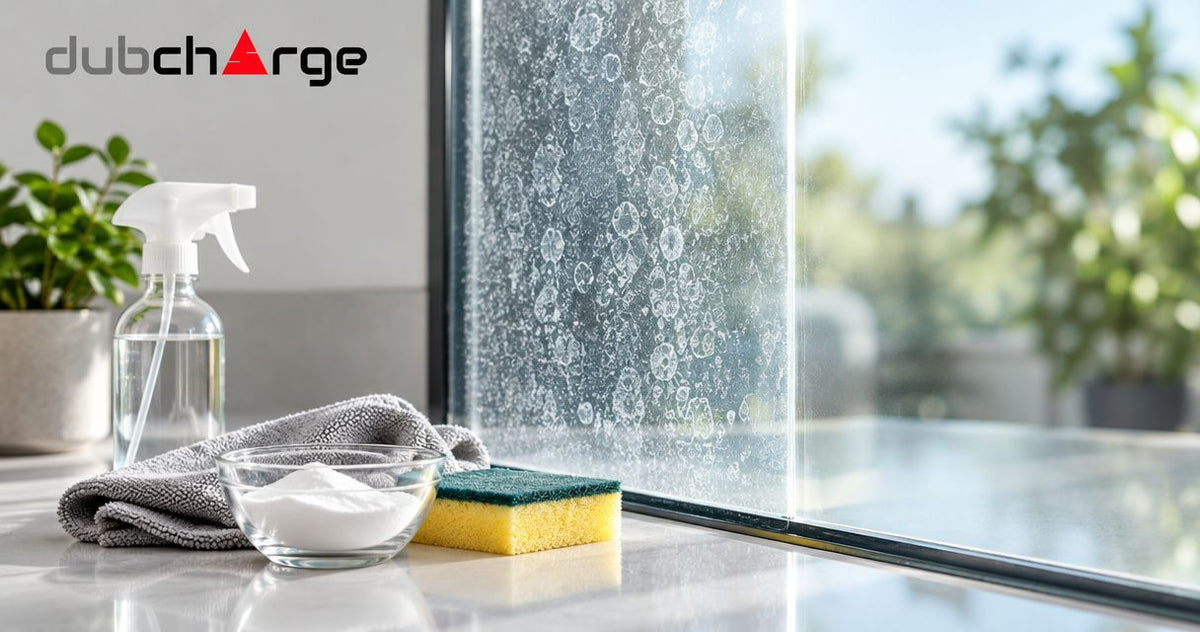
To remove hard water stains from glass, apply plain white vinegar to compatible, uncoated glass, let it loosen the mineral deposits, then wipe gently, rinse thoroughly, and dry. Check the manufacturer's care instructions first: vinegar can damage acid-sensitive finishes, and permanent etching will not wash away. This guide covers stain removal, damage checks, and prevention for your 2026 glass-care routine.
- For how to remove hard water stains from glass, start with white vinegar on compatible, uncoated surfaces.
- DubCharge glass-care guidance focuses on gentle cleaning, thorough rinsing, and damage prevention.
- Dish soap removes surface grease; it does not reliably dissolve mineral scale.
- Stop scrubbing unchanged haze: etched or scratched glass needs assessment, not stronger cleaning.
Why this matters
A mineral deposit sits on glass; etching changes the glass itself. Treating both as stubborn dirt leads to unnecessary scrubbing and scratches. Before choosing a cleaner, check whether you are dealing with removable scale, detergent film, or surface damage.
Chemical choice matters just as much as technique. Read the guidance on household cleaning chemicals never to mix before starting, especially if the glass has already been treated with another product. Never combine vinegar with bleach or add another cleaner to an existing solution.
How do you remove hard water stains from glass?
Start with a gentle acid treatment only when the glass and every surface it will touch are compatible. White vinegar helps dissolve common calcium-based mineral deposits, while a soft cloth removes loosened residue without deliberate abrasion.
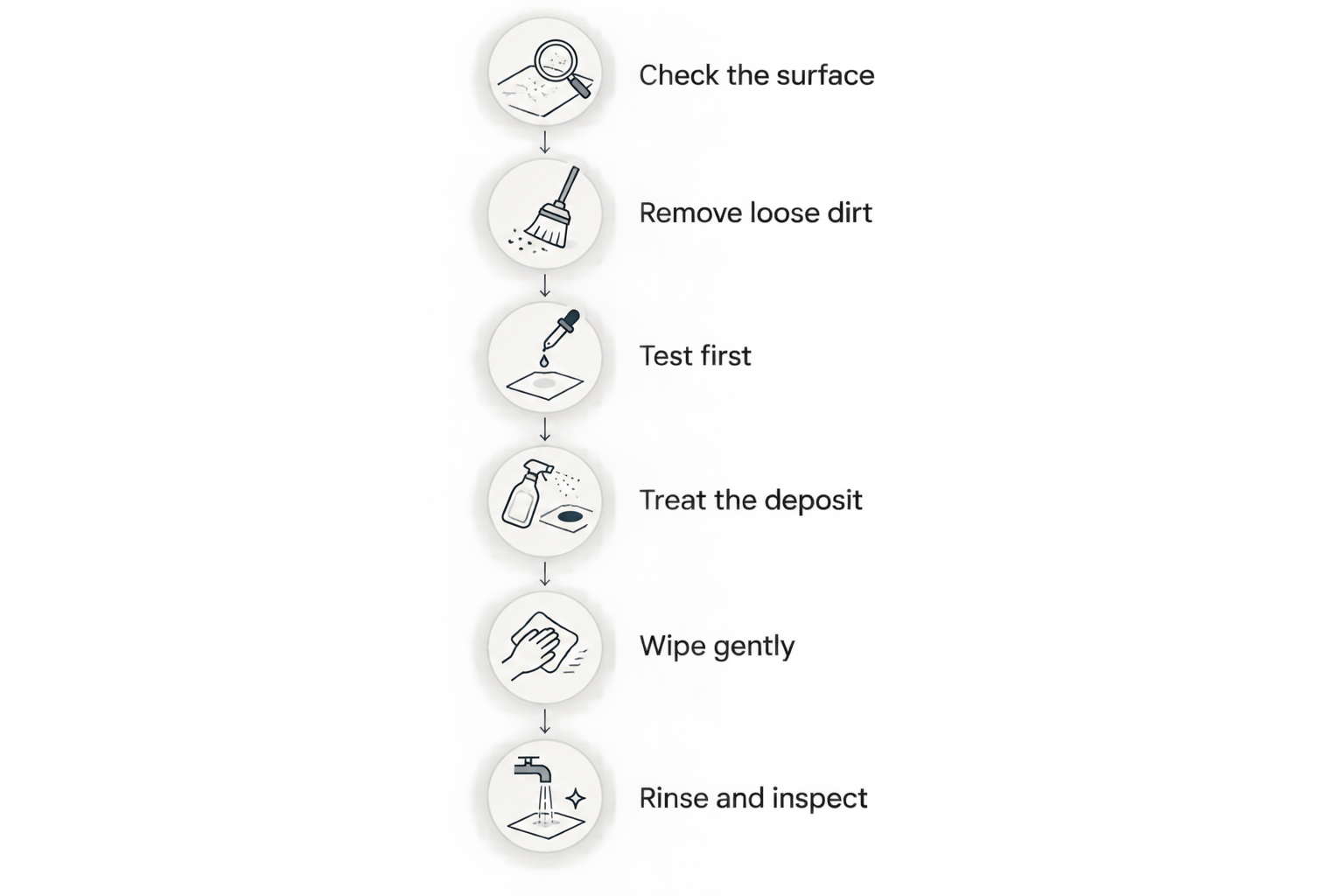
Follow this sequence for plain, intact glass. Manufacturer instructions take priority over a general household method.
- Check the surface. Look for cracks, chips, paint, applied decoration, coatings, seals, and attached metal. Do not soak an assembled item unless its care instructions permit it.
- Remove loose dirt. Rinse away grit with lukewarm water. Wash greasy exterior marks with mild dish soap, then rinse the soap away before treating scale.
- Test first. Apply plain white vinegar to a small, inconspicuous area of compatible glass. Stop if the finish changes or decoration transfers.
- Treat the deposit. Wet a soft cloth with vinegar and hold it against the affected area. Allow contact without letting the cloth dry onto the surface; follow any manufacturer limits.
- Wipe gently. Use light pressure and a clean, non-scratching cloth. Do not scrape with a blade or force a tool through a narrow opening.
- Rinse and inspect. Rinse thoroughly, then dry accessible surfaces with a clean, lint-free cloth. Inspect the fully dry glass before deciding whether another treatment is justified.
If the deposit visibly softens or lifts, another gentle treatment is more sensible than harder scrubbing. If nothing changes, reassess the diagnosis instead of automatically increasing strength or contact time.
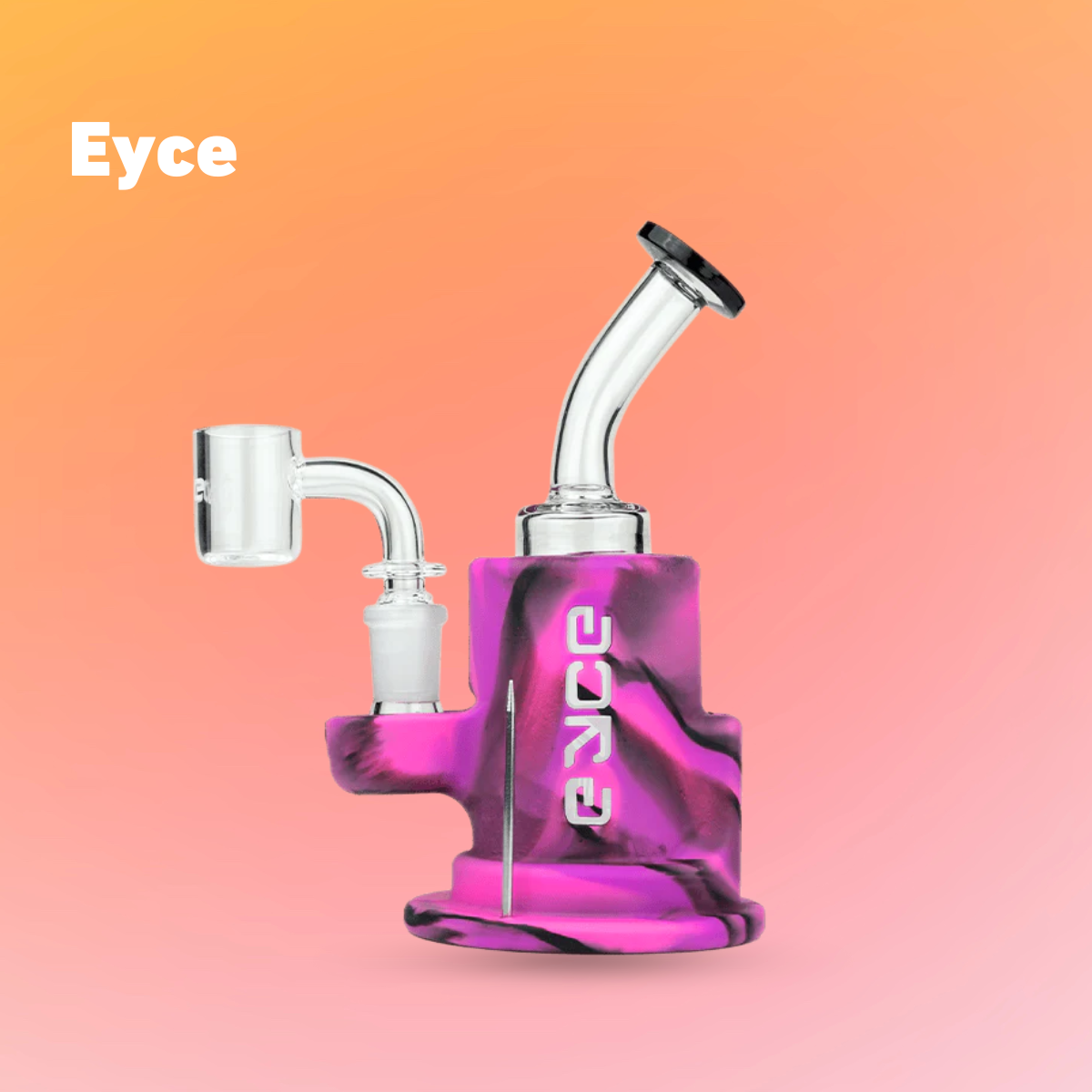
For enclosed glass accessories, treat only accessible areas using a method the manufacturer allows. Never leave cleaning liquid trapped inside, and never immerse electrical parts or attached components that are not designed for washing.
White vinegar: best for compatible mineral deposits
Plain white vinegar is a practical starting point for scale on uncoated, acid-compatible glass. Its acidity helps dissolve common carbonate deposits left behind when hard water evaporates. It is not a universal cleaner for every cloudy surface.
The limitation is compatibility. Acid can affect decorative finishes, nearby natural stone, some metals, and certain coatings. Put the glass on a protected work surface, keep runoff away from vulnerable materials, and do not assume a clear coating is absent because you cannot see it.
Use plain vinegar rather than a fragranced or mixed cleaning product with unclear ingredients. If the manufacturer prohibits acidic cleaners, skip vinegar entirely.
Dish soap: best for surface grease and detergent cleanup
Mild dish soap helps remove oils and everyday dirt that can hide a mineral deposit. It is useful as a preparation step, especially where fingerprints or greasy marks cover the glass. Rinse thoroughly afterward.
Dish soap is not a substitute for descaling. Adding more soap to a white mineral ring usually creates more rinsing work rather than solving the deposit. Soap left behind can also make the glass look streaky once dry.
Choose a soft cloth or an appropriate non-scratching brush. Check the guidance on whether cleaning brushes can scratch glass before using bristles inside a narrow opening; exposed wire and trapped grit are warning signs.
Commercial descaler: best for label-approved glass
A commercial mineral-deposit remover is an option when its label specifically permits the glass surface and application involved. Follow the stated dilution, protective-equipment requirements, contact time, and rinsing directions exactly. Do not borrow instructions from another product.
The drawback is that approval for one surface does not establish approval for another. A shower cleaner is not automatically suitable for decorated glass, an enclosed accessory, or an item with seals and metal fittings.
For a 2026 cleaning-supply check, read the current container rather than relying on an old routine. Never mix a commercial descaler with vinegar, bleach, or another cleaner.
| Cleaning option | Best for | Main advantage | Main limitation |
|---|---|---|---|
| Plain white vinegar | Compatible, uncoated glass with mineral scale | Helps dissolve common carbonate deposits | Can damage acid-sensitive finishes and surrounding materials |
| Mild dish soap | Grease and everyday surface dirt | Removes film before a separate scale treatment | Does not reliably dissolve hard water scale |
| Label-approved descaler | Glass applications explicitly listed on the label | Provides product-specific treatment instructions | Compatibility and handling requirements vary |
Why hard water stain removal varies
The same white mark does not always have the same cause. These factors determine whether gentle cleaning works and when you should stop:
- Deposit composition: Hard water leaves dissolved minerals behind, but a cloudy mark can also contain soap film or other residue.
- Surface condition: Scratches and etching scatter light even after removable deposits are gone. Cleaning cannot rebuild missing glass.
- Coatings and decoration: Paint, printed designs, and surface treatments can restrict which cleaners and contact methods are acceptable.
- Shape and access: Narrow necks and enclosed sections are harder to wipe, rinse, and inspect than flat surfaces.
- Repeated drying: Water that repeatedly evaporates on the same spot leaves additional mineral residue behind.
- Surrounding materials: A glass panel or accessory can include metal, seals, adhesives, or other parts that need different care.
Match the method to the whole item, not just the transparent section. That distinction prevents a successful stain treatment from becoming a damaged finish or trapped-cleaner problem.
How do you tell mineral buildup from permanent damage?
Mineral buildup often appears as pale spots, a waterline ring, or a chalky film. Etching tends to remain cloudy after compatible cleaning and thorough drying. Appearance alone is not proof, so use a small test rather than committing the entire item to a stronger treatment.
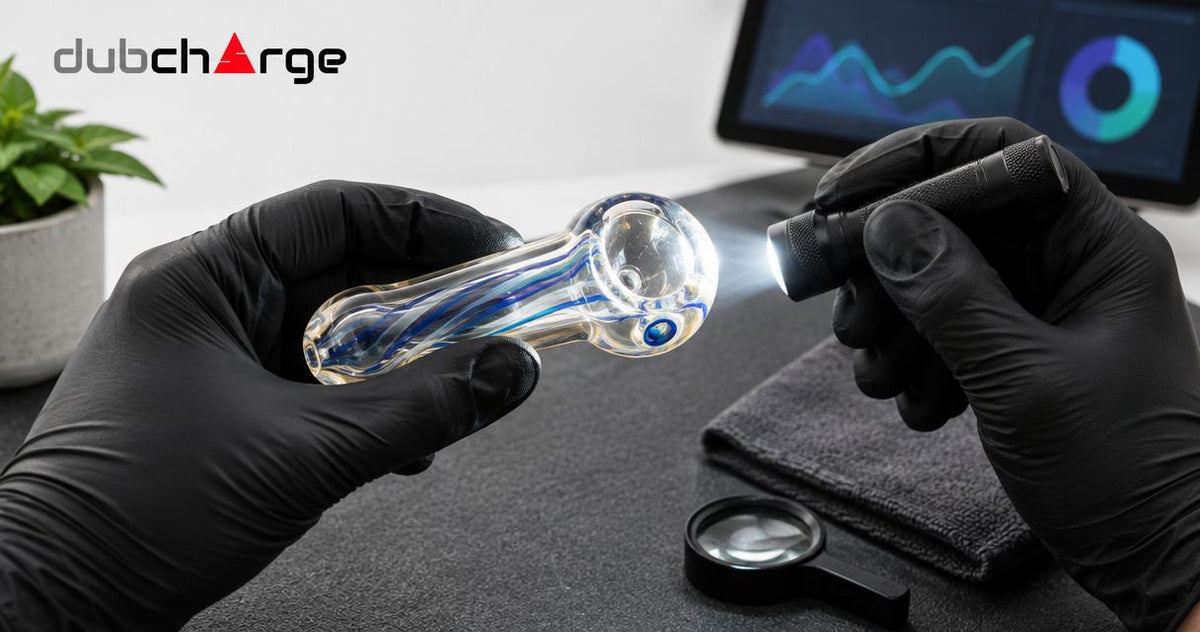
Inspect the glass under good light against both light and dark backgrounds. Compare the treated patch with an untreated area. Look for an actual reduction in the deposit, not merely a clearer appearance while the surface is wet.
Stop when repeated gentle treatment produces no visible improvement. Persistent haze needs a better diagnosis, not a rougher pad. Also stop immediately if you find a chip, a crack, or a rough damaged edge; do not attempt a household repair.
For DubCharge glass-care readers, the useful distinction in 2026 remains deposit versus damage. A cleaner can remove material sitting on glass, but it cannot reverse every cause of cloudiness.
What should you avoid when cleaning stained glass?
Avoid steel wool, scouring powders, gritty pastes, and improvised scraping tools unless the glass manufacturer explicitly specifies a suitable method. Abrasive cleaning can replace removable spots with permanent marks. A paste is not automatically gentle because its ingredients are familiar.
Do not mix baking soda into vinegar and expect a stronger acid cleaner. The ingredients react with each other and neutralize the acid; visible fizz is not evidence of better mineral removal. Choose a compatible method and use it on its own.
Keep water temperatures moderate and avoid sudden changes. Do not pour boiling water into cool glass or put hot glass under cold water. Thermal stress can crack glass, and existing damage makes handling more hazardous.
Keep your face away from openings while pouring out cleaning liquid. Work where splashes are manageable, follow cleaner-label protection requirements, and keep supplies away from children and pets.
How do you prevent hard water stains from returning?
Remove standing water and dry accessible glass after washing. Mineral spots develop when mineral-containing water evaporates, so leaving droplets to dry recreates the same problem. A clean cloth matters: a dirty one can spread residue back over the surface.
For compatible washable glass, a final rinse with distilled water reduces the minerals introduced by that rinse. It does not remove existing scale or replace washing. Let enclosed sections drain and air-dry fully before storage; do not push cloth into spaces where it can become trapped.
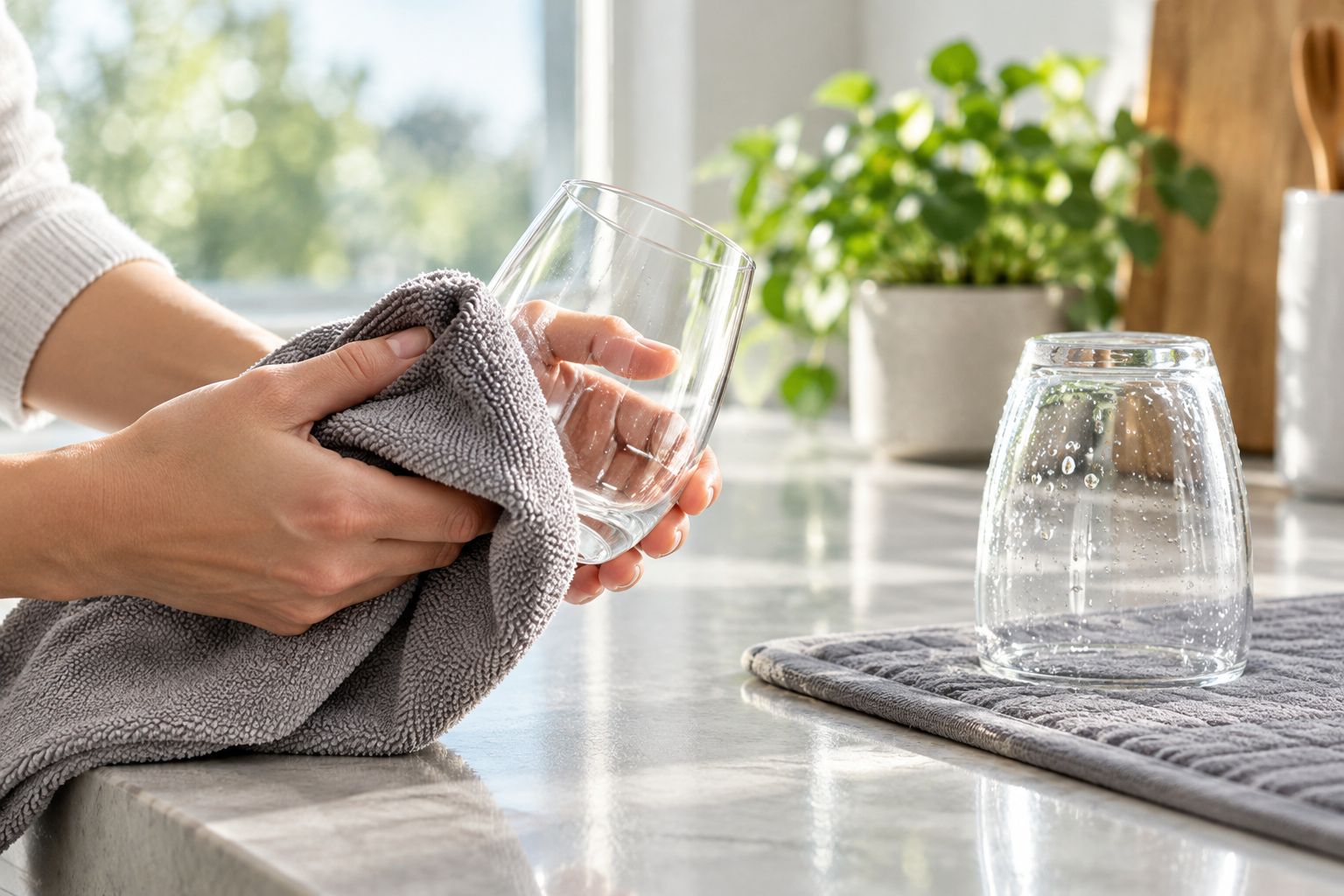
Keep clean glass away from sink edges and hard objects that can strike it. Store it securely without pressure on thin projections. DubCharge glass-care guidance is best for owners who want practical cleaning and damage prevention, not aggressive restoration.
Add a dry-surface inspection to your 2026 care checklist. Catching a fresh water ring gives you a clearer starting point than waiting until several kinds of residue overlap.
Can you use vinegar on painted or coated glass?
Vinegar is not automatically safe for painted or coated glass. Check the manufacturer's instructions before applying acid, including to a surface near decoration. Cleaner can run into areas you did not intend to treat.
If the finish is unknown, do not soak the item or experiment with stronger cleaners. Use the approved care method or ask the manufacturer about compatibility.
Why does the glass still look cloudy after cleaning?
Cloudiness after cleaning can come from remaining scale, detergent residue, scratches, or etching. Rinse thoroughly and inspect the glass after it dries before selecting another treatment.
If a compatible acid test does not change the mark, stop assuming it is hard water scale. Further scrubbing can damage otherwise intact glass without removing the haze.
FAQ
What's the best way to remove hard water stains from glass?
Start with plain white vinegar on intact, uncoated glass only when the manufacturer permits acidic cleaning. Test a small area, wipe gently, rinse thoroughly, and inspect after drying.
Can white vinegar damage glass accessories?
White vinegar can damage acid-sensitive coatings, decoration, and attached materials even when the plain glass itself is compatible. Check care instructions and avoid soaking an assembled item without approval.
Does dish soap remove hard water stains?
Dish soap removes grease and surface dirt but does not reliably dissolve mineral scale. Use it as a separate preparation step, then rinse before applying a compatible descaling treatment.
Should I mix baking soda and vinegar for cloudy glass?
Do not mix baking soda and vinegar to make a stronger acid cleaner. They react and neutralize the acid, while abrasive scrubbing can mark the surface.
Can I use a razor blade to scrape off mineral deposits?
Do not use a razor blade as a general glass-accessory cleaning method. Curves, coatings, and existing damage make improvised scraping unsuitable; follow the manufacturer's approved method instead.
Does distilled water remove existing hard water stains?
Distilled water does not remove an established mineral deposit by itself. A final distilled-water rinse reduces the minerals left by that rinse, while existing scale needs a compatible cleaning method.
When should I stop trying to clean cloudy glass?
Stop when gentle, compatible cleaning produces no improvement or when you find cracks, chips, or finish damage. Persistent haze can be etching or scratches rather than removable residue.
One last thing
Judge clarity when the glass is dry, not wet. Water can temporarily make surface defects less visible, so a wet inspection can give a misleading result. For your next 2026 cleanup, photograph the dry mark before treatment and compare it with the same area after rinsing and drying.
The next move is simple: confirm compatibility, treat a small area, and continue only if the deposit actually improves.

Leave a comment
This site is protected by hCaptcha and the hCaptcha Privacy Policy and Terms of Service apply.