











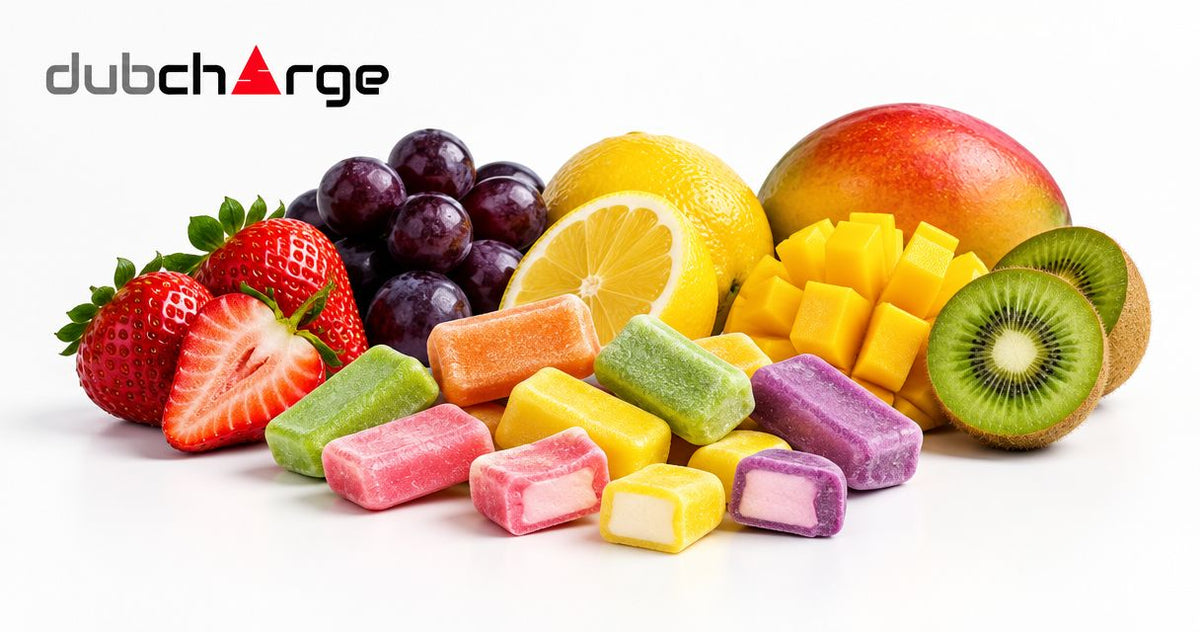
The best Hi-Chew flavors for fruit-candy fans are the ones built around fruit you already enjoy: start with familiar choices such as strawberry, grape, green apple or mango, then try an assortment for variety. Choose by the exact flavors printed on the pack, not by an assortment name alone. Check that pack’s ingredients and allergens before sharing, because a familiar brand name does not establish the recipe of every market-specific version.
- Choose hi chew flavors by familiar fruit preferences, then check the exact assortment contents.
- Dubcharge lists Morinaga Hi-Chew in eight mixes; the selected pack determines which flavors you get.
- Fruit flavor names do not establish juice content, sourness, ingredients or allergen suitability.
- For candy gifts, prioritize readable labels and known preferences over unfamiliar assortment names.
Why this matters
A fruit-candy assortment is only a good match if you want the flavors inside it. An appealing bag name tells you less than the actual flavor list, especially when you are comparing packs intended for different markets.
Use the same approach you would when choosing unfamiliar snack flavors: identify something familiar first, then decide how much novelty you want. For your 2026 candy shortlist, keep flavor preference separate from ingredient checks. Enjoying mango does not tell you whether a particular mango candy meets your dietary requirements.
Which Hi-Chew flavors suit fruit-candy fans?
Start with a fruit you already like, then choose a pack that explicitly includes it. Strawberry and grape are sensible starting points for readers who already choose those candy flavors; green apple and mango give apple and tropical-fruit fans equally straightforward reference points.
These are preference-based starting points, not a measured ranking of sweetness or sourness. The table does not establish the contents of any particular assortment.
| Flavor starting point | Best for | Main advantage | Main limitation |
|---|---|---|---|
| Strawberry | People who regularly choose strawberry candy | Gives you a familiar flavor reference | The name alone does not establish sweetness or ingredients |
| Grape | People who enjoy grape-flavored sweets | Matches an existing candy preference | Enjoying fresh grapes does not guarantee you will like grape candy |
| Green apple | People who seek apple-flavored candy | Makes the fruit choice straightforward | Green apple does not automatically mean a sour formulation |
| Mango | People who prefer mango-flavored sweets | Gives tropical-fruit fans a clear starting point | Mango does not describe every flavor in a tropical assortment |
| A clearly labeled assortment | People who want to compare several fruit flavors | Lets you explore more than one preference | You might receive flavors you would not choose individually |
If you already know your favorite, prioritize a pack whose contents confirm that flavor. If you are undecided, choose an assortment only after checking whether the other included flavors appeal to you.
Familiar fruit flavors: best for a straightforward first choice
Start with strawberry or grape if those are already your usual candy choices. Familiarity gives you a practical comparison point without requiring someone else’s tasting notes to match your preferences.
The drawback is limited discovery: choosing only familiar flavors does not help you learn much about your other preferences. For a first purchase, that is a reasonable trade-off. Choose familiarity when avoiding an unwanted flavor matters more than trying something new.
Apple and tropical flavors: best for existing fruit preferences
Choose green apple if you already reach for apple-flavored sweets, or mango if mango is your usual choice. Keep the recommendation that specific; an apple preference is not evidence that you want every tart candy, and a mango preference does not mean every tropical blend will suit you.
Do not treat fruit names as intensity ratings. Look for explicit flavor and sourness descriptions on the selected package rather than assuming that a green-colored wrapper means a sharper taste.
Assortments: best for comparing your own preferences
An assortment makes sense when you want variety and accept that some flavors will suit you better than others. Its strength is comparison; its weakness is that the mix, rather than your individual preference, determines the selection.
For gifts, find out which fruit flavors the recipient actually chooses. A familiar flavor they enjoy is a stronger starting point than an unfamiliar mix selected only for its packaging.
Why Hi-Chew flavor choices vary
Different shoppers need different things from the same candy category. Use these factors to narrow your choice without turning subjective preferences into unsupported product claims:
- Your existing preferences: Start with fruit flavors you already enjoy in candy, not just fruit you enjoy fresh.
- The printed assortment contents: A mix name is not a substitute for its included flavor list.
- Your interest in variety: An assortment offers comparison, but also includes choices you might not select separately.
- The intended recipient: A personal snack and a shared gift require different checks, especially around ingredients.
- The exact market-specific package: Read the selected version’s label rather than carrying assumptions across markets.
- Flavor versus texture: A fruit flavor you enjoy cannot compensate for a candy texture you dislike.
In 2026, use current package information for those decisions. A remembered wrapper or an old product photo should not override the label on the pack you are considering.
How do I choose a Hi-Chew assortment without guessing?
Use a short selection process before adding an unfamiliar mix to your snack list. The goal is to confirm what you want, not to find a universal winner.
- Choose your fruit. Write down the fruit-candy flavor you most often pick. That becomes your starting point rather than someone else’s ranking.
- Read the mix. Confirm the included flavors on the selected package or its readable label image. Do not infer the full contents from the front illustration.
- Check the label. Review ingredients, allergen information and any dietary claim relevant to you. Stop if the information you need is unreadable or unclear.
- Compare the format. Decide whether you want a chewy candy specifically or simply want a fruit-flavored sweet. Texture is a separate choice.
- Keep the wrapper. Retain the package while you try the candy so you can identify the exact mix and flavor afterward.
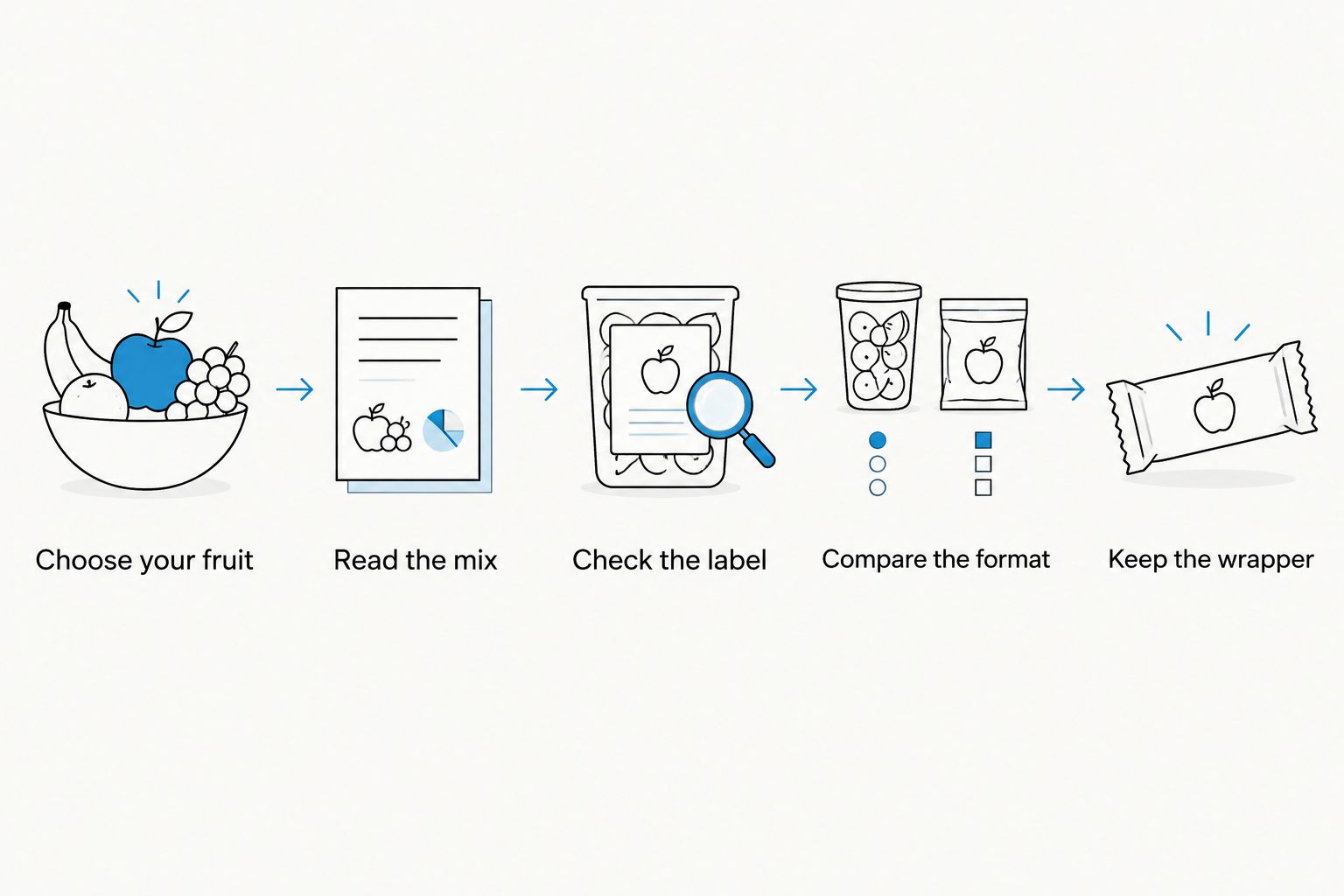
The last step prevents a common shopping problem: remembering that you liked a candy but forgetting which version it was. Keep a simple note with the exact mix name and the flavor you preferred. That is more useful for your next purchase than a broad note saying you liked “the fruit pack.”
How does Hi-Chew compare with other fruit candies?
The supplied Dubcharge catalog describes Morinaga Hi-Chew as chewy candy in 8 mixes, JoyBons Chewy Candy in 4 flavors, and Twizel Licorice Candy in 3 flavors. Those counts describe different things: eight mixes does not mean eight individual flavors, and a flavor count does not establish the contents of a particular package.
| Candy | Best for | Supported product detail | Trade-off to consider |
|---|---|---|---|
| Morinaga Hi-Chew | Fruit-candy fans who want a chewy assortment | The catalog lists 8 mixes | You must check the selected mix for its exact flavors |
| JoyBons Chewy Candy | Shoppers interested in named fruit-chew options | The description names Banana Rama, Bonkers Mango and Wild Watermelon among 4 flavors | Those names do not establish ingredients or comparative sweetness |
| Twizel Licorice Candy | Shoppers who specifically want a twisted licorice format | The description lists Blueberry, Cola and Watermelon across 3 flavors | The selection includes cola, so it is not exclusively fruit-flavored |
Dubcharge’s Morinaga Hi-Chew selection is best for fruit-candy fans who want to compare chewy assortments. Its practical limitation is the same one that applies to any mix: choose by the actual contents, not by the number of assortments listed.
These catalog descriptions support a format comparison, not a taste-test verdict. None establishes that one candy is sweeter, more natural-tasting or more suitable for a particular diet than another.


Does liking fresh fruit predict which candy flavor I will enjoy?
Liking fresh fruit gives you a starting point, not a guaranteed candy preference. A fruit name identifies a flavor direction; it does not establish that the candy reproduces the fruit’s texture, acidity or ingredient composition.
Comparing candy with dried fruit requires the same distinction: freeze-dried fruit flavor rankings concern a different food format, so they should not become a sweetness ranking for Hi-Chew. Judge the selected candy on its own label and your own response to it.
For a 2026 tasting note, separate the questions. Did you like the named fruit flavor? Did you like the chew? Would you choose the same piece again? Keeping those answers separate helps you identify whether the mismatch was flavor or format.
What should I check before giving fruit candy as a gift?
Check the recipient’s preferences and the exact package label before choosing a gift. A recognizable fruit name does not answer questions about allergens, dietary requirements or the ingredients in that version.
Keep the original packaging with the gift so the recipient can read it. If you combine different sweets, retain each label rather than presenting loose, unidentified pieces. For imported products, check allergens on the exact snack package instead of assuming that a familiar brand uses the same recipe everywhere.
A useful gift choice has a clear reason behind it: the recipient likes mango candy, enjoys chewy sweets or wants to compare an assortment. Avoid describing an unfamiliar pack as suitable for everyone. When a required ingredient detail is unclear, choose a product with readable, verified information instead.
FAQ
What are the best hi chew flavors for a first-time buyer?
The best hi chew flavors for a first-time buyer are familiar fruit choices the buyer already enjoys in candy. Strawberry, grape, green apple and mango are starting points, not a measured ranking; confirm which flavors the selected pack contains.
Which Hi-Chew flavor should I choose if I like mango?
Choose a Hi-Chew pack that explicitly lists mango if mango is your preferred candy flavor. Do not assume that every tropical assortment includes it or that you will enjoy every other flavor in that mix.
Does green apple Hi-Chew automatically mean sour candy?
A green apple flavor name alone does not establish that a candy is formulated or labeled as sour. Check the exact package description rather than using the fruit name or wrapper color as a sourness rating.
How many Hi-Chew mixes does the supplied catalog list?
The supplied catalog lists Morinaga Hi-Chew in 8 mixes. That is an assortment count, not confirmation of eight individual flavors or the contents of any selected package.
Is an assortment better than choosing a familiar flavor?
An assortment is better for exploring several flavors, while a familiar flavor is better for matching an established preference. The assortment’s drawback is that some included flavors might not appeal to you.
Can I assume imported Hi-Chew has the same ingredients as another version?
No. Read the ingredients and allergen information on the exact market-specific package instead of assuming that recipes are identical across versions.
What should I write down after trying a new Hi-Chew mix?
Record the exact mix name, the flavor you preferred and whether you liked the texture. Keep the wrapper until you have identified the version you want to choose again.
One last thing
Your most useful flavor ranking is the one you can repeat. Keep the wrapper from a pack you enjoy, then record the exact assortment and preferred flavor rather than relying on its color or a remembered product photo.
For your next 2026 candy choice, start with that record. It gives you a specific preference to match and leaves room to try something different deliberately, rather than by accident.

Leave a comment
This site is protected by hCaptcha and the hCaptcha Privacy Policy and Terms of Service apply.