







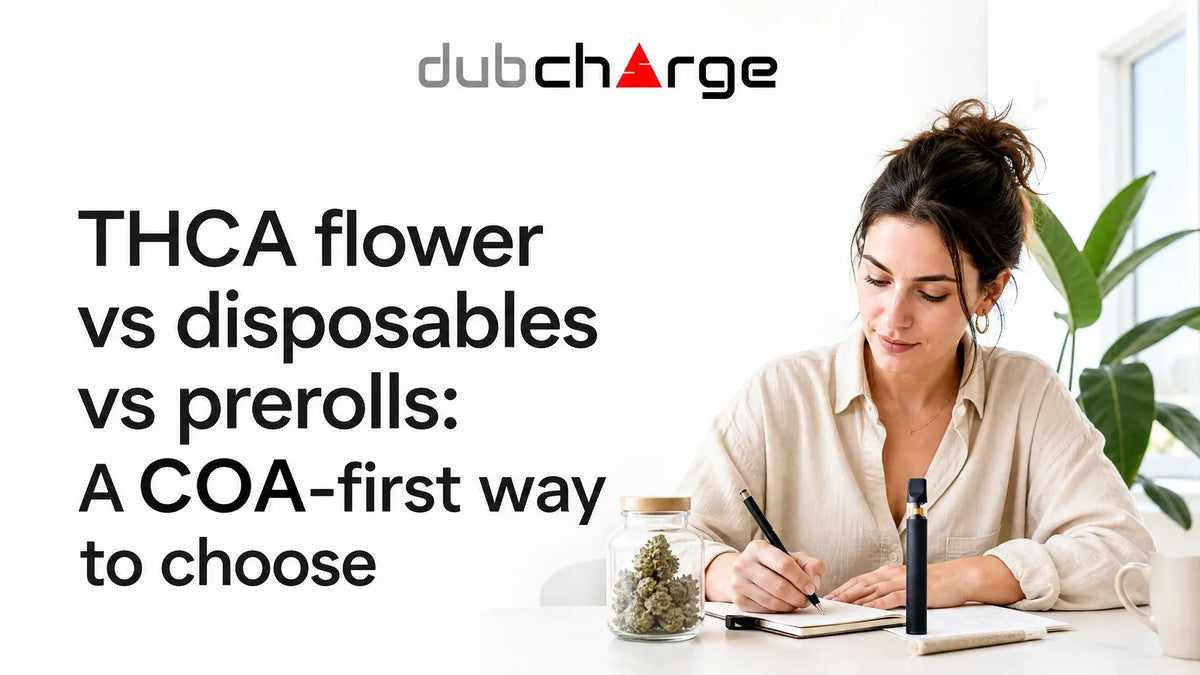
THCA flower vs disposables vs prerolls daily
For daily use, THCA flower is usually better if you want control and can verify the batch, disposables are better if you need maximum discretion and zero prep, and prerolls are only “better” when the brand proves the inputs are not shake. The real separator is not hype or convenience.
Here’s what matters most right now:
- THCA flower gives the most control over grind, pack, and session-to-session consistency.
- Disposables are the most discreet option for public use with the least setup.
- Prerolls are the highest quality risk when the brand will not prove inputs.
- A real COA check starts by matching the batch on the COA to the listing.
- “Daily buy” quality comes from curation, not the loudest strain name.
- Before ordering, confirm your state eligibility and total-THC compliance requirements.
At DubCharge, we build our daily-use recommendations around verification and consistency across 10,000+ SKUs, so you can compare DubZotics THCA flower, premium-brand disposables, and vetted prerolls or hash holes without guessing what is actually in the tube or tank.
Next, use a simple daily-use answer box to see what actually changes between THCA flower, disposables, and prerolls when you care about quality risk, discretion, and COA transparency.
Daily-use answer box: what changes between flower, disposables, and prerolls

Fast rule for daily use: verify first, pick second. The format is secondary to whether you can match a real batch to a real COA, because most “mislabeled” problems start with vague sourcing and untraceable lots.
Daily default is simple: flower tends to win on flavor and control, while disposables tend to win on discretion and zero-prep. Prerolls only earn a spot when the inputs are clearly disclosed and tested.
Quality risk by format
Your quality risk changes by where variability can hide. Flower shows you problems in the jar. Disposables can hide problems in the oil supply chain.
Prerolls can hide them in what got ground up.
With flower, curing variance is the tell. Watch for muted aroma, harsh smoke, and overly dry buds that crumble or burn hot; those are practical signals that the cure was rushed or inconsistent even when potency looks fine.
With disposables, the main risk is oil source opacity: you are trusting that the extract and hardware came from what the label implies, and that the oil was not blended across lots without clear traceability. With prerolls, assume a higher shake-preroll probability unless the brand explicitly states “whole flower” (not trim or shake) and backs that up with lot-level testing.
- Lower hidden-variance: well-cured flower with intact buds and a clearly labeled lot
- Medium hidden-variance: disposables with unclear extract origin or no batch traceability
- Highest hidden-variance: prerolls with no statement of inputs or grind source
Discretion and zero-prep reality
Disposables are the most “grab-and-go” option, but discretion is not just smell in the moment. It is how long the odor sticks, how much gear you need, and how annoying storage becomes across a week of daily use.
Odor persistence typically runs: flower highest, prerolls next, disposable lowest, which aligns with medical cannabis vaporization research describing reduced odor and easier use in places where smoking is not permitted.
Setup and cleanup also diverge: disposables are effectively zero setup and zero ash; flower and prerolls require a flame plus ash management, and flower adds grinding and packing. Carry and storage friction follows the same pattern: a disposable is one item, while flower usually becomes a kit (container plus grinder plus lighter), and prerolls add crush protection and a way to carry finished tips.
How easy COAs are to verify
If you are trying to avoid mislabeled or poorly tested THCA products from resellers, COA verification is where formats separate. The key is batch ID matching: the product label (or packaging) should match the COA lot or batch number exactly, not “strain name only.”
Flower COAs are usually simpler to audit because you are looking at a single input. Vape COAs often require more careful reading because you may see additional fields tied to extracts and hardware-relevant risk, and the batch may refer to oil filling rather than the original biomass.
Prerolls are the hardest when inputs are vague. If the COA does not clearly state what was tested (the finished preroll vs the flower lot used inside), or if there is no disclosure of whether it is whole flower or shake, you cannot confidently trace what you are actually smoking.
- Batch ID: match the exact lot/batch number on packaging to the COA
- Flower COA focus: cannabinoids plus common contaminant panels tied to plant material
- Vape COA focus: cannabinoids plus panels that matter for extracts, with clarity on what “batch” represents
- Preroll disclosure: explicit statement of inputs (whole flower vs shake) and whether testing applies to the finished preroll or the source lot
THCA flower for daily use: best control, highest reward when it is cured right

For daily use, flower is the easiest format to judge before you buy, if you use strain pages plus batch COAs instead of relying on a name alone. A legitimate listing should make it simple to match the COA to the exact flower you are ordering and confirm it is a real test, not a recycled PDF.
Once you have it, storage decides whether it stays enjoyable: keep buds in a sealed jar and use humidity packs to slow terpene loss and texture drift. Flower is also the least portable option; if you need true pocket convenience and minimal odor, vapes usually win on logistics.
Flavor and control you can feel
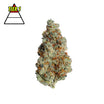
Flower is the daily-driver choice when you care about strain-specific flavor and the ability to steer a session in real time. When it is cured well, the terpene profile is more obvious and you can tell one cultivar from another without guessing.
Control is practical, not theoretical: grind size changes burn rate and intensity. A slightly coarser grind tends to burn slower and smoother; a finer grind typically hits faster and can feel stronger because it packs tighter and increases surface area.
Flower also supports pacing. You can take a couple of pulls, pause, and decide whether to continue, instead of committing to a fixed dose. If you are shopping our DubZotics THCA flower on DubCharge, use the strain page to set expectations (dominant aromas, intended vibe) and then confirm the COA matches that batch before you treat it as a repeat buy.
Why some online flower feels flat
Flat-tasting flower is usually a handling problem: rushed dry and cure strip aroma and leave you with potency numbers but little character. That is why two products can look similar on paper yet smoke completely differently.
The first tell is the nose. Instead of clear strain notes, you get muted aroma or a hay-like smell that suggests chlorophyll never had time to break down. The second tell is texture.
Overdry buds feel crispy, crumble too easily, and tend to smoke hotter and harsher because they burn fast.
- On arrival, buds should feel slightly springy, not brittle, and should not dust apart when you pinch them lightly.
- A quick jar check should give a distinct scent within seconds; if you have to “hunt” for aroma, expect the flavor to be thin.
- Avoid listings that do not clearly present a batch-specific COA alongside the strain details, because you lose your main verification tool before you ever open the bag.
THCA disposables for daily use: simplest for beginners and most discreet in public

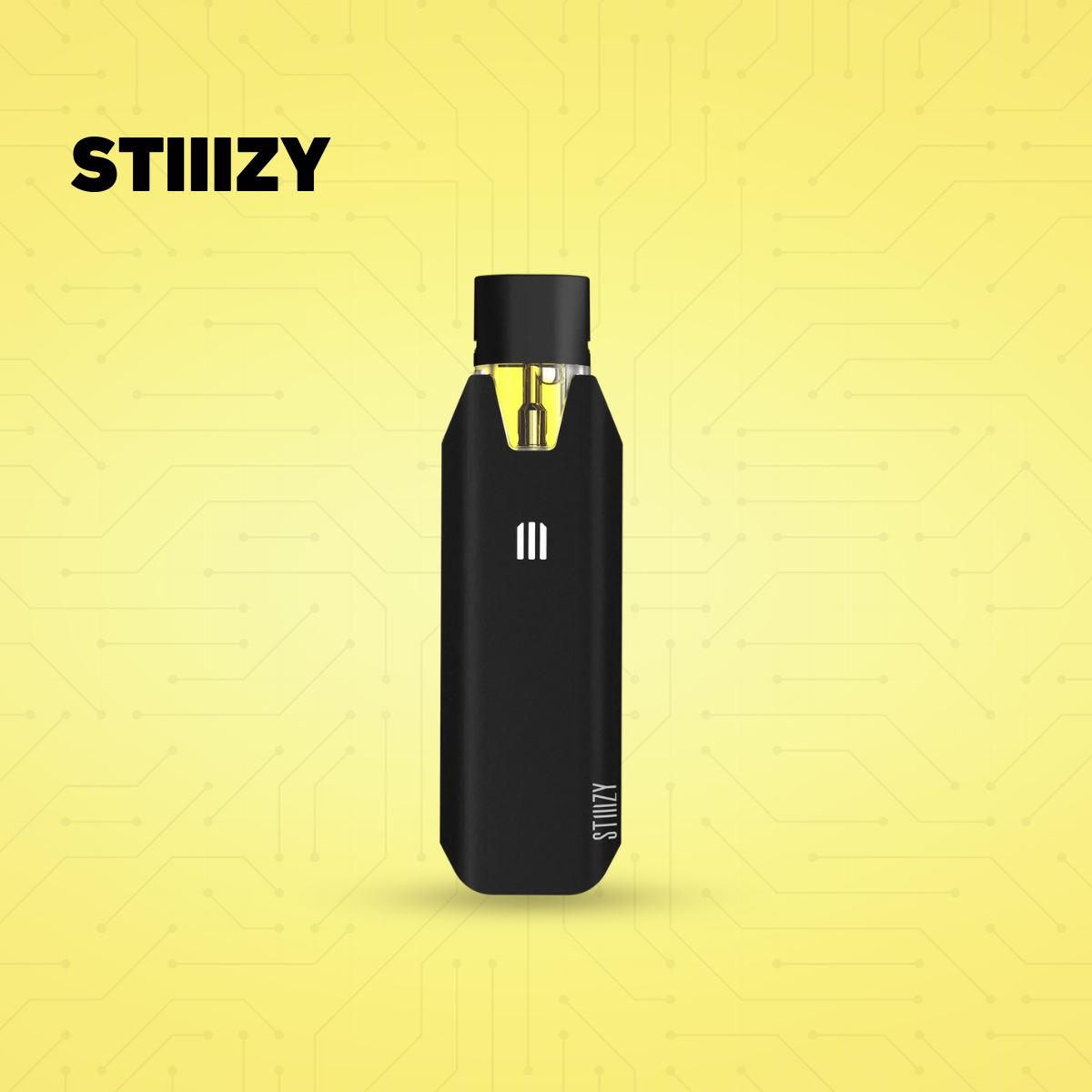
Disposables are the simplest daily-use format, but they also concentrate your downside into one variable: oil quality. A mislabeled or poorly tested unit can look “legit” on the outside and still be weak on basic documentation.
Treat the product page like a screening tool: stick to reputable brand lines with a consistent track record and a COA you can actually audit, not a logo and a number. Credit where due, IndaCloud, Secret Nature, and The Hemp Collect have earned mindshare by being more consistent than the average reseller in this category.
Beginner-friendly by design
A THCA disposable removes the two biggest beginner friction points with flower: preparation and consistency. You are not buying a new skill set (grinding, packing, rolling, lighting) just to get a repeatable session.
Consistency is still not automatic, it comes from how the device is filled and tested. On a COA, look for a clear cannabinoid potency panel (THCA, Delta-9 THC, and totals) plus safety panels that match how the oil was produced (at minimum, heavy metals and pesticides; add residual solvents if it is an extract that uses solvents). If the COA cannot be tied cleanly to the exact product or batch, skip it.
This is also where retailer curation matters. On DubCharge, you can compare disposable options side by side and check the posted COA fields before you commit, which is the cleanest way to reduce the “mystery reseller” problem.
- No grinder, papers, or lighter: you avoid the most common prep mistakes that waste material and spike odor
- Metered puffs: you can take a short pull, wait, and repeat without rebuilding a bowl or re-lighting
- Lower learning curve errors: fewer variables (pack density, airflow, burn rate) means fewer sessions that feel “off” for no obvious reason
Discretion versus flower
Disposables are more discreet than flower because sessions are shorter and the smell dissipates faster. That is not marketing language; medical cannabis vaporization research specifically notes portability, discretion, and decreased odor as reasons people prefer handheld devices in real-world settings.
They also fit real carry needs. Pocketability means you can take a brief session and put it away without carrying grinders, jars, or anything that looks like “gear.”
- Reduced lingering odor: vapor typically does not hang the way smoke does, especially after a single short pull
- Quick sessions and pocketability: you can take one or two pulls and end the session without ash, relighting, or cleanup
- Public use risk reminders: discretion does not equal permission, follow local rules, respect no-smoking policies, and never use where it can create legal or workplace consequences
THCA prerolls and hash holes for daily use: only worth it when inputs are proven
Hash holes deliver higher intensity because you are adding a concentrate “core,” but you trade away control: they are harder to dose, harder to relight cleanly, and you are trusting both the flower and the hash input at once.
Potency is also less straightforward than the label makes it feel. A preroll can test well and still hit softer than the same batch as loose flower because grind size, packing density, and airflow change how efficiently you can pull and combust it.
Credit where it is due: brands like Secret Nature and TribeTokes have helped normalize clearer testing and better curation expectations, which is exactly what prerolls need to be daily-worthy.
Why shake-filled prerolls happen
Shake-heavy prerolls exist because prerolls are the easiest format to hide inputs you would never choose as loose flower. You cannot see bud structure, moisture level, or trim quality once it is milled and stuffed into paper.
Sourcing is the root issue: the supply chain can include bulk, blended material where the consumer never learns whether it was smalls, trim, sweepings, or a mix of lots. Without batch-specific documentation and a seller willing to name what went in, you are buying on packaging.
Older material is also easier to move as a preroll. Fine grinding, added botanical terpenes, or aggressive flavor profiles can cover muted aroma, but they rarely fix the underlying stale taste or harshness.
The practical tell is performance. Shake-heavy or over-dry inputs tend to canoe, run hot, clog, or drop ash that will not hold a clean coal, so the session feels inconsistent from first pull to the last.
- Hidden inputs: the grind prevents visual inspection of buds and makes “blend” sourcing hard to audit
- Mask tactics: heavy flavoring or loud aromas can distract from older, oxidized material
- Inconsistent burn: uneven airflow and fast, hot combustion often show up as harsh taste and constant re-lights
When prerolls make sense
Prerolls are a rational daily choice only when convenience is the priority and the brand proves what is inside. For many people, the win is a no-prep micro-session that does not require a grinder, tray, or cleanup.
They also make sense for travel within legal contexts where you need something self-contained and easy to carry without loose material and tools. The format is straightforward, and the odds of mess are low.
Consistency is the other advantage: when a producer has tight control of grind, moisture, and packing, you get repeatable session length and draw resistance. That matters more for daily use than novelty formats like hash holes, where potency can jump quickly and the burn can be finicky.
- No-prep micro-sessions: one short session, then extinguish and move on
- Travel-friendly: simpler carry and less handling in compliant, legal settings
- Consistent size and packing: easier to predict how long a session lasts and how it draws
The COA quick-check you should do before any daily buy

Treat the COA like a matching exercise, not a vibe check: the batch or lot on the COA should match what the listing claims. Sanity-check the test date and the lab name, and skip anything that is only a cropped screenshot with no batch identifier or page numbers.
Potency fields that matter
For daily buying, potency mistakes usually come from reading the wrong THC line or ignoring totals. You want the COA to make it easy to confirm what you are actually buying across flower, disposables, and prerolls.
- THCA percent and totals: confirm the THCA percentage and look for a clear cannabinoid table that includes totals, not just a single headline number
- Delta-9 THC below 0.3%: verify the delta-9 THC line stays under 0.3% on the COA for that batch
- Terpenes listed when available: terpene results are not always provided, but when they are, they help validate that the product was tested with more than a minimal potency screen
Safety and contaminant screens
A clean-looking potency result does not tell you whether the batch passed basic contamination testing. The quickest way to reduce mislabeled-product risk is to confirm the COA includes pass results for the main contaminant categories.
- Heavy metals panel: look for a dedicated metals section with pass status (commonly including lead, arsenic, cadmium, mercury)
- Pesticides and solvents: confirm pesticides are screened, and confirm residual solvents are included for oil-based products when provided
- Microbials where provided: check for microbial results (such as mold and yeast) when the lab reports them
This is also where standards vary by state and product type, so a complete panel on a single batch matters more than broad claims on a product page; cannabis contaminants research notes California tests up to 3% of cartridges prior to sale, depending on the manufacturer's batch size.
Before you order: confirm state eligibility and total-THC compliance

THCA rules are not uniform across the U.S., and the fastest way to avoid a failed order is to confirm your ship-to eligibility before you add anything to cart. A product that is available online can still be restricted in your specific state, county, or city based on how local law treats hemp-derived cannabinoids and enforcement priorities.
Use our DubCharge ship-to-states check first, then shop. It is the practical filter that prevents payment, fulfillment, or carrier delays caused by destination restrictions that only show up after the order is submitted.
Also pay attention to how “Farm Bill compliant” is applied in practice. The 2018 Farm Bill framework is commonly tied to delta-9 THC limits on a dry-weight basis, but many jurisdictions and labs focus on total THC (delta-9 plus potential THC that can result from THCA). For formats you plan to heat, that total-THC view is the one most likely to determine whether a product is treated as compliant in your state.
Checkout is age-gated for adults 21+ only, so have ID-ready details available if your order requires age verification.
Pick your format, verify the batch, then order without compliance surprises
If you want maximum control over flavor and daily consistency, start with DubZotics THCA flower and verify the batch COA on the product page before you buy. If your priority is zero prep and discretion, shop our premium-brand THCA disposables and use the COA to confirm you are not guessing on potency and screening. If you prefer a no-prep session you can share, only choose a preroll or hash hole when the inputs are clearly documented and the COA is easy to validate.
Next step: pick one format, compare options within that category on DubCharge, and check the COA before you add anything to cart. Then confirm your eligibility on our ship-to-states page so your discreet order does not get held up by state restrictions. For adults 21+ only.
Frequently Asked Questions
Will a THCA preroll get you high?
It can, because THCA converts when heated, but the experience depends heavily on what the preroll is packed with. If the brand cannot back the inputs with a clear COA and reputable sourcing, you are taking a bigger quality risk than you would with verified flower or a well-documented disposable.
Are THCA pre-rolls worth it?
They are worth it when you specifically want no prep and the brand proves it is not trim or shake in a tube. If you care most about verifying quality and avoiding mystery material, verified flower typically gives you the most control per purchase.
Why shouldn't you smoke THCA?
This is a personal risk decision, but the practical concern discussed here is verification, not health claims. If you choose to use THCA products, reduce avoidable risk by buying only from reputable sellers that publish clear COAs and by confirming state eligibility before ordering.


Leave a comment
This site is protected by hCaptcha and the hCaptcha Privacy Policy and Terms of Service apply.